
A lethal new Ebola outbreak in Congo is exposing once again how global health crises abroad can land on America’s doorstep while elites push open borders and globalism at home.
Story Snapshot
- Congo has declared its 17th Ebola epidemic after about 80 suspected Ebola deaths in Ituri Province, with officials confirming a Bundibugyo strain outbreak.
- Africa’s health agencies and the World Health Organization say response teams, supplies, and funding are on the way, but the situation remains unstable and fast moving.
- The outbreak is unfolding in an urban, conflict‑hit, highly mobile border region, raising risks of cross‑border spread into Uganda and beyond.
- For Americans, this is a reminder that weak borders and dependence on global bureaucracies can turn distant outbreaks into direct homeland threats.
What Is Happening in Congo’s Deadly New Ebola Outbreak
Health authorities in the Democratic Republic of the Congo have confirmed a new Ebola epidemic in the northeastern Ituri Province, the seventeenth recorded in the country since 1976. National laboratory testing at the Institut National de Recherche Biomédicale in Kinshasa identified Ebola virus in multiple samples, confirming that a cluster of severe illnesses and deaths in the Mongbwalu and Rwampara health zones is caused by the Bundibugyo species of Ebola. World Health Organization reports describe roughly 80 community deaths suspected to be linked to this outbreak so far, with patients suffering fever, weakness, vomiting, and bleeding before rapidly deteriorating and dying.[3]
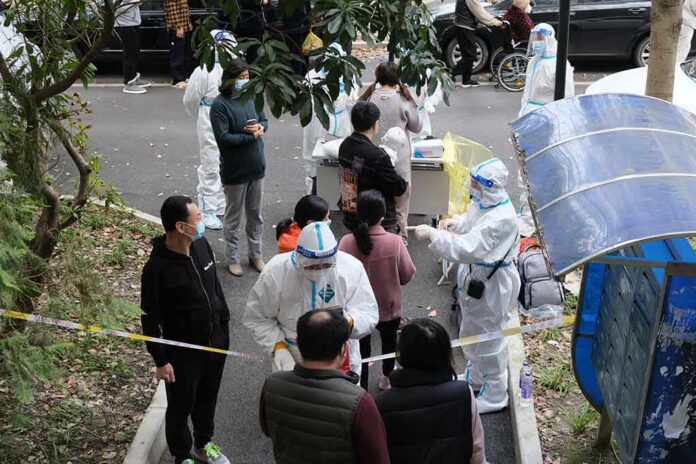
The Africa Centres for Disease Control and Prevention and Congo’s own health ministry have triggered an emergency response and called an urgent regional coordination meeting. Officials say they are focusing on surveillance, laboratory support, infection prevention and control, safe and dignified burials, and getting basic protective gear into frontline clinics.[1] The World Health Organization adds that it has already deployed teams into Ituri, released emergency funding, and sent medical supplies and protective equipment to Bunia, the provincial capital, to support local authorities struggling to contain the virus.[2][3]
Why This Borderland Outbreak Is Hard to Contain
Unlike earlier Ebola eruptions confined to remote villages, this outbreak is unfolding in and around more urbanized areas like Bunia and the mining zones of Mongbwalu, with intense population movement, cross‑border travel, and serious insecurity.[1][3] Africa’s health agency itself warns that mining‑related mobility, gaps in contact‑tracing lists, and violence in affected areas all threaten to outrun response capacity.[1] Previous research on the 2018–2020 North Kivu and Ituri epidemic found that denial, rumors, and armed groups repeatedly blocked safe burials, delayed isolation, and disrupted vaccination campaigns, turning Ebola control into a “perfect storm” of obstacles.[4]
World Health Organization timelines also show that the first field tests on suspect cases initially came back negative before later confirmation in Kinshasa, underscoring how diagnostic delays complicate early containment.[2] On top of that, Africa’s health authorities say sequencing is still underway and preliminary results point to a non‑Zaire strain, raising questions about how well existing vaccines—designed for the Zaire variant—will match this Bundibugyo outbreak.[1][3] In short, officials are moving, but there is still no hard evidence that transmission is slowing, and the highly mobile border setting makes it easier for one missed chain of infection to jump into neighboring Uganda or beyond.[1][3]
What This Means for American Security and Sovereignty
For Americans watching from thousands of miles away, this is not just another overseas health scare. The same World Health Organization, United Nations network, and global health establishment that struggled for years to tame Ebola in eastern Congo are now central players again.[3][4] They acknowledge that operations are in the deployment phase, not the victory lap phase, and they lack independent audits or outcome data proving that their efforts are reducing spread.[1][3] Yet these unelected global bureaucracies still expect Western taxpayers to write checks while they lecture nations like ours about borders, travel rules, and “equity” during emergencies.
Under President Trump’s second term, American conservatives know exactly what is at stake. A serious outbreak in a conflict‑torn region like Ituri can quickly become an argument for more refugee flows, looser screening, and expanded authority for international agencies that do not answer to the United States Constitution. The lesson from Congo’s seventeenth Ebola epidemic is not panic, but prudence: secure our borders, insist on transparent, verifiable results from global health bodies, and protect American families first rather than outsourcing our safety to distant institutions that are still racing to catch up with a deadly virus.[1][3][4]
Sources:
[1] Web – Africa CDC Calls Urgent Regional Coordination Meeting Following …
[2] YouTube – BREAKING: WHO Confirms Ebola Cases in DR Congo
[3] Web – Democratic Republic of the Congo confirms new Ebola outbreak …
[4] Web – Two Obstacles in Response Efforts to the Ebola Epidemic in … – PMC