
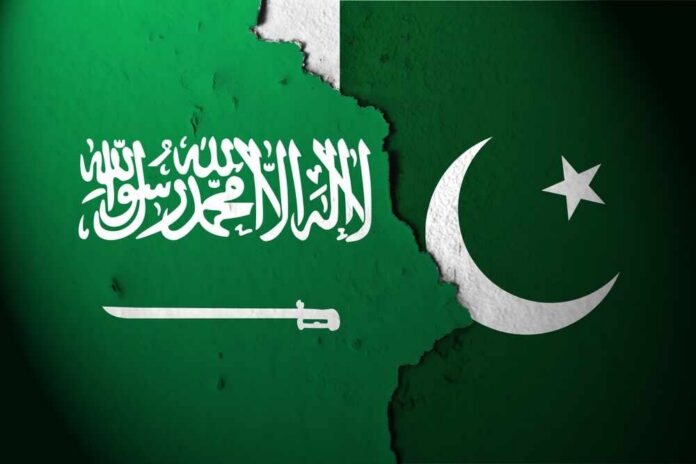
Pakistan’s quiet deployment of 8,000 troops and a jet squadron to Saudi Arabia under a secretive mutual defense pact raises big questions about where American interests and tax dollars fit in a Gulf security game we do not control.
Story Snapshot
- Pakistan has reportedly sent 8,000 troops, fighter jets, drones, and air-defense systems to Saudi Arabia under a mutual defense pact.
- The Strategic Mutual Defence Agreement treats aggression against either country as aggression against both, formalizing a long-standing security axis.[3]
- Riyadh is reportedly financing the deployment while Pakistan supplies combat-ready forces, giving both governments leverage with Washington.[3]
- Opaque terms, nuclear ambiguity, and rising Iran tensions create risks for U.S. forces and energy prices even as America tries to step back from endless Middle East entanglements.[3][5][6]
Pakistan’s New Combat Deployment To Saudi Arabia
Multiple reports based on a Reuters dispatch say Pakistan has deployed about 8,000 troops, a squadron of roughly 16 JF‑17 fighter jets, two drone squadrons, and a Chinese HQ‑9 air-defense system to Saudi Arabia under a mutual defense pact. Commentators describe this as a combat-capable package, not a small training team or symbolic honor guard.[1] Saudi Arabia, facing threats from Iran and its proxies, gains a ready-made foreign force while avoiding politically difficult mass mobilization at home.
Sources say the equipment is operated by Pakistani personnel and financed by Saudi Arabia, underscoring how Riyadh increasingly uses checkbook diplomacy to import security.[4] Reports add that open-source monitors saw Pakistani airlifts of military gear into the kingdom in the months before the deployment was publicly acknowledged, suggesting the move was carefully prepared rather than improvised.[3] The force reportedly builds on thousands of Pakistani troops already stationed in Saudi Arabia under older agreements, but clearly goes beyond routine advisory presence.[4]
The Strategic Mutual Defence Agreement And Its Hidden Teeth
The deployment rests on the Saudi‑Pakistan Strategic Mutual Defence Agreement, signed in Riyadh in September 2025 by Crown Prince Mohammed bin Salman and then–Prime Minister Shehbaz Sharif. Public summaries state that “any aggression against either country shall be considered an aggression against both,” language that echoes alliance guarantees but without the transparency Americans expect from a treaty.[3][5] Analysts at Georgetown University say the pact formalizes decades of security cooperation that already saw thousands of Pakistani troops cycle through the kingdom.[5][6]
Leaked descriptions reported by Drop Site indicate the agreement obligates Pakistan to send forces if Saudi Arabia requests them and may allow deployment of up to 80,000 Pakistani troops to help secure Saudi borders.[3][1] One Pakistani government source who reportedly saw the text claimed it also covers warships, further extending the footprint.[4] Pakistan’s defense minister has at times hinted that Saudi Arabia sits under a Pakistani “nuclear umbrella,” then tried to walk that back, leaving dangerous ambiguity about how far this partnership might go in a true crisis.[5][6]
Gulf Tensions, Iran, And The Risk To U.S. Interests
Coverage by global outlets ties the deployment to rising tensions involving Iran and fears of strikes on Saudi infrastructure.[1][4] Pakistan has simultaneously tried to position itself as a mediator in the ongoing confrontation between Iran and the United States, even as it quietly reinforces Saudi defenses.[4][5] That dual role gives Islamabad leverage on both sides, but it also means American forces and energy supplies could get caught in the middle of a feud between Tehran and a nuclear-armed Pakistan acting on Saudi soil.
For American conservatives who want out of endless Middle East wars, this should trigger serious concern. Saudi Arabia is again relying on foreign muscle—this time Pakistani—to shield oil facilities and royal palaces, while Washington still stations ships, air wings, and missile defenses across the Gulf.[5] The more Riyadh and Islamabad make their own opaque security deals, the more U.S. troops and taxpayers are exposed to fallout from decisions made in capitals that do not answer to the United States Congress or the American people.
Opacity, Credibility Gaps, And What We Still Do Not Know
Despite the barrage of reports, major gaps remain. Pakistan has not issued a detailed, unit-level confirmation of the deployment, and the full treaty text plus any annexes or implementing protocols have not been released.[3][5] That opacity leaves outside observers guessing about mission rules, geographic limits, and conditions that would trigger larger troop flows. It also allows both governments to spin the same deployment as “training” for some audiences and “combat-ready” deterrence for others, depending on what suits them politically.[3][6]
Past experience shows that Pakistani troops have long served in Saudi Arabia in training and internal security roles, with estimates decades ago reaching tens of thousands of personnel. That history can make today’s numbers sound less dramatic, but the addition of modern fighter jets, drones, and Chinese-made air defenses suggests a step-change in capability.[1] Until satellite imagery, official documents, or independent inspections clarify what is really on the ground, Americans should treat both the most alarmist and the most dismissive narratives with caution.
What This Means For America-First Conservatives
For an America-first, constitution-first audience, this story underscores why energy independence, fiscal discipline, and a smaller footprint in foreign quarrels matter. Saudi Arabia is paying Pakistan to shoulder more of the immediate combat risk, but Washington still underwrites regional stability with naval escorts, intelligence, and diplomatic backing that cost real U.S. dollars.[5] As foreign powers cut secret deals that could drag us toward confrontation with Iran or embroil our allies in nuclear brinkmanship, the United States needs clear red lines and far less strategic dependence on Gulf monarchies.
Sources:
[1] YouTube – 8000 Pakistani Troops & JF-17 Jets Deployed In Saudi Arabia
[3] Web – Leaked Documents Reveal Details of the Secret Saudi Arabia …
[4] YouTube – Pakistan Sends Troops To Saudi Arabia
[5] Web – The Saudi-Pakistani Defense Pact and U.S. Force Posture in the Gulf
[6] Web – Understanding the Pakistan–Saudi Defense Agreement