

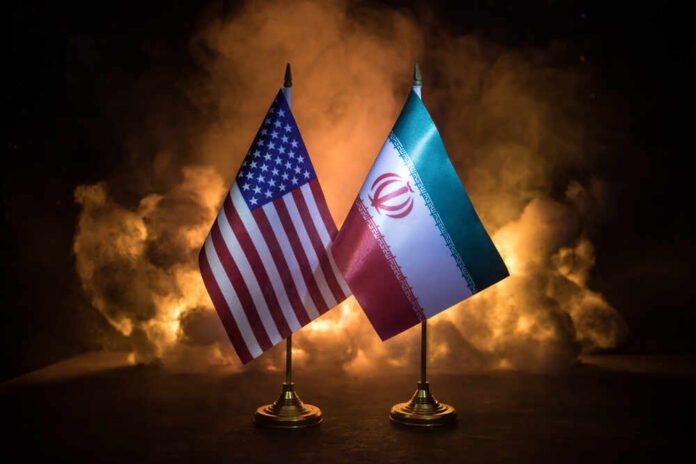
Iran’s rejection of a comprehensive U.S. ceasefire proposal has triggered Israeli warnings of devastating military strikes, pushing the Middle East closer to a full-scale war that could disrupt global oil supplies and drag American forces deeper into conflict.
Story Snapshot
- Iran rejected a 15-point U.S. ceasefire plan demanding nuclear dismantlement in exchange for sanctions relief
- Israel threatens “even more painful” strikes after Iran’s refusal and continued attacks on Israeli and Gulf Arab targets
- Failed 21-hour negotiations led by VP JD Vance expose deep divisions, with hardline Islamic Revolutionary Guard Corps blocking compromise
- Strait of Hormuz tensions threaten one-fifth of global oil shipments as approximately 1,000 U.S. troops prepare for potential deployment
Ceasefire Negotiations Collapse in Pakistan
Twenty-one hours of intensive negotiations concluded without agreement in Pakistan on Sunday, with U.S. Vice President JD Vance and Iranian Parliament Speaker Mohammad Bagher Ghalibaf unable to bridge fundamental differences. American officials acknowledged the parties “were really not close to an agreement,” exposing the diplomatic gulf between Washington and Tehran. By Wednesday, Iran officially rejected the American ceasefire plan and launched additional attacks on Israel and Gulf Arab countries, including an assault on Kuwait International Airport. Vice President Vance characterized the failed talks as “much worse news for Iran than it is for the United States,” signaling continued military pressure.
Competing Proposals Reveal Irreconcilable Demands
The U.S. 15-point proposal demanded Iran dismantle its nuclear program and end all uranium enrichment, offering full sanctions relief, assistance in developing civilian nuclear energy, and removal of automatic UN sanctions mechanisms. The plan also addressed missile limits and reopening the Strait of Hormuz, through which one-fifth of the world’s oil normally ships. Iran countered with its own five-point plan via state television, demanding an end to killings of Iranian officials, security guarantees against future wars, war reparations, cessation of hostilities, and Iranian sovereignty over the Strait of Hormuz. The competing frameworks demonstrate how far apart both sides remain on core security and economic issues.
Military Escalation Accelerates Despite Diplomatic Efforts
Israeli forces completed “a wide-scale wave of strikes” across Iran, including heavy bombardment around Isfahan on Thursday morning. Israel’s Ambassador to the United States, Yechiel Leiter, acknowledged that “avoiding war would be preferable if possible,” but emphasized Iran’s unwillingness to abandon nuclear weapons pursuit as the insurmountable obstacle. U.S. Central Command released video footage of strikes on Iranian military targets, while approximately 1,000 soldiers from the 82nd Airborne Division are reportedly being prepared as a ready unit for potential deployment. White House Press Secretary Karoline Leavitt warned that “more strikes could come if they’re unsuccessful,” confirming the administration’s willingness to escalate military action absent diplomatic breakthrough.
Deep State Obstruction Undermines Peace
The Islamic Revolutionary Guard Corps, led by Commander Ahmad Vahidi, refused to allow Iranian negotiators authority to compromise on nuclear and military matters, revealing how unelected military-security apparatus can override diplomatic channels. This mirrors frustrations Americans across the political spectrum share about unaccountable bureaucracies and shadow power structures constraining elected leaders. Iranian Foreign Minister Abbas Araghchi’s public statement that “no negotiations have happened with the enemy until now, and we do not plan on any negotiations” directly contradicts White House claims that talks remain “productive,” exposing either deliberate deception or fundamental communication failure between governments. Either scenario demonstrates the dysfunction plaguing international diplomacy when hardline elements refuse accountability to civilian leadership.
If Iran refuses US proposal, Israel vows 'even more painful' strikes: ministerhttps://t.co/GLbPDnPpZZ
— Global.TV (@GlobalTelevsion) April 16, 2026
UN Secretary-General António Guterres expressed alarm that the fighting “has broken past limits even leaders thought imaginable,” specifically calling on the U.S. and Israel to end military operations. The conflict’s expansion to include attacks on Kuwait International Airport demonstrates Iran’s willingness to strike American allies, potentially triggering broader U.S. military commitments under mutual defense agreements. No additional negotiation rounds have been scheduled, and senior officials from both sides have returned home, signaling diplomatic efforts have reached a dead end. Experts express skepticism about near-term breakthrough prospects, leaving military escalation as the likely trajectory absent significant policy shifts from Tehran or concessions from Washington that the Trump administration appears unwilling to make.
Sources:
The Jerusalem Post – Iran-US Ceasefire Negotiations
WHEC – Iran Dismisses US Ceasefire Plan and Issues Counterproposal