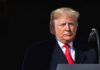

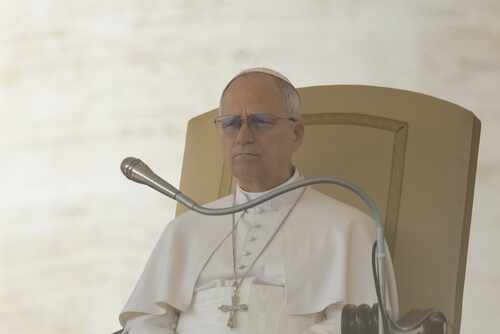
A one-image AI meme from the President has now spiraled into a public clash with the Vatican—raising fresh questions about how America’s leaders handle faith, diplomacy, and the internet age.
Quick Take
- Vice President JD Vance defended President Trump’s now-deleted AI-generated “Jesus” image as a misunderstood joke.
- The Vatican and Pope Leo XIV criticized the post, turning an online controversy into a broader political and religious dispute.
- Trump and Vance offered different explanations for the post, fueling confusion about intent and accountability.
- The episode highlights how AI content and impulsive posting can create avoidable friction with religious voters and foreign institutions.
What Vance said—and why it matters politically
Vice President JD Vance addressed the controversy on Fox News, arguing that President Donald Trump was “posting a joke” and removed it after people failed to understand his humor. Vance also suggested the Vatican should focus on internal church matters, framing the blowback as an overreach into American political discourse. It ties a domestic culture-war-style internet moment to international religious authority—and to Catholic voters who take sacred imagery seriously.
The broader political context is hard to ignore. Republicans control the White House and Congress, while Democrats are eager to portray the administration as reckless or disrespectful of institutions. For conservative voters frustrated with elite gatekeeping—media, academia, and international bodies—Vance’s pushback may read as a defense of national sovereignty and free expression. For religious Americans, including many conservative Catholics, the argument turns on whether humor excuses imagery that some consider irreverent.
Trump’s deletion and the conflicting explanations
President Trump deleted the post after backlash, but reports indicate he offered a different explanation than Vance’s “joke” framing. Trump suggested he believed the image portrayed him as a “doctor,” not Jesus, creating a credibility problem: either the image was posted as intentional satire, or it was posted without recognizing what it clearly depicted. That contradiction has become central to the story, because it shifts the debate from taste and reverence to competence and message discipline.
In politics, mismatched talking points are not a minor detail. When a president’s defenders say one thing and the president says another, critics gain an opening to argue the administration is improvising rather than governing. Supporters, meanwhile, often see the pile-on as selective outrage. The challenge for the White House is that this incident is tied to religion, where many Americans—across parties—expect public leaders to show baseline respect even while defending free speech.
How the Vatican row escalated from meme to diplomatic friction
The Vatican’s criticism, attributed to Pope Leo XIV in reporting, escalated the controversy beyond typical social-media blowback. Vance’s response—telling the Pope to focus on church affairs—effectively reframed the Vatican’s reaction as political commentary rather than pastoral concern. That framing may appeal to Americans who distrust global institutions, but it also risks needlessly widening a conflict with a major faith community that has deep roots in U.S. civic life and a presence in key swing-state populations.
AI, virality, and why “it was a joke” may not be enough anymore
The underlying driver here is not just Trump’s posting style but the new speed and realism of AI-generated images. A provocative AI meme can travel instantly, outpace clarifications, and harden impressions before anyone issues a correction. Even if a post is intended as humor, the backlash can be predictable when it touches religious iconography. The episode illustrates a simple governance reality: digital discipline is now part of statecraft, not an optional communications preference.
For Americans already convinced that government is run by insulated elites, the spectacle is a reminder that leaders often prioritize narrative combat over practical problem-solving.
For the administration, the political risk is straightforward: turning a self-inflicted viral moment into a prolonged controversy that distracts from policy goals and alienates religious voters who otherwise align with Republican priorities on life, family, and education. For the broader public, the lesson may be even more basic: as AI blurs the line between satire and provocation, elected officials will face growing pressure to act like adults online—because the consequences now reach far beyond the screen.
Sources:
Vance defends Trump’s Jesus image as ‘joke,’ tells Pope to focus on ‘Catholic Church’ matters
Vance says Trump’s Jesus image post was a joke amid Vatican row
Vance Says Trump Was ‘Posting a Joke’ With Now-Deleted Jesus-Like Image