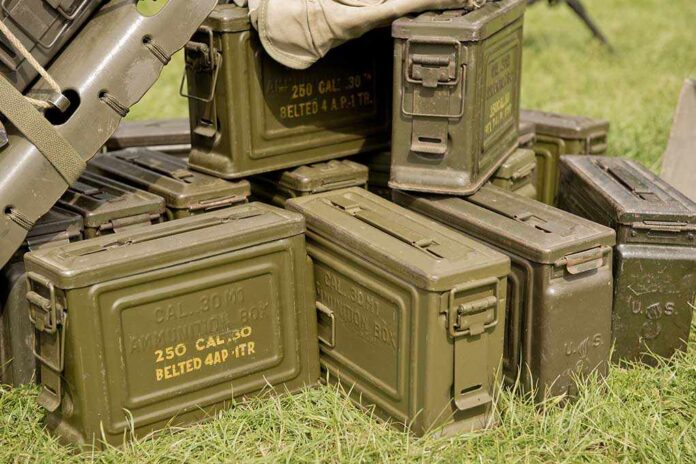
As the Iran war strains America’s weapons supply, President Trump insists the U.S. has “far more munitions than we need,” raising fresh questions about what Washington tells the public when the arsenal is under pressure.
Story Snapshot
- President Trump denies any meaningful munitions shortage, saying the U.S. has massive stockpiles and can fight “forever.”
- Defense officials echo that message in public while quietly warning Congress that some advanced weapons will take months or years to rebuild.
- Independent fact-checkers and analysts say overall supplies are strong but some high-end missiles and bombs are clearly tight.
- The gap between confident public claims and cautious expert views fuels distrust among Americans across the political divide.
Trump’s Public Rejection Of Munitions Shortage Claims
President Trump has forcefully rejected reports that the United States is running low on munitions during the ongoing war with Iran. He told the Wall Street Journal and other outlets that America has “far more munitions than anyone in the world, and far more than we need,” and even “massive amounts” of weapons. In video remarks, he added that the country is “in very good shape,” though he admitted the military “would certainly like to have more” of some advanced systems.
The White House has backed this message with formal statements, saying the United States military has more than enough ammunition and stockpiles to meet President Trump’s goals. Trump has also warned that people who leak details suggesting a shortage could face jail, arguing that talk of weakness helps enemy nations. These strong denials aim to assure Americans that the military can defend the country and keep fighting abroad without risking national security or readiness.
Defense Officials, Congress, And Quiet Warnings On Stockpiles
Senior defense officials have mostly supported the President’s public line, but their more detailed comments show a mixed picture beneath the surface. Pentagon Chief Pete Hegseth told a national news program that there is no general shortage, yet he previously testified that restoring certain weapons systems could take “months and years.” That kind of timeline usually points to tight supplies of specialized missiles, smart bombs, or other complex weapons that take longer to build and test.
Reports on internal Pentagon meetings describe concern about “weapons shortfall” in specific categories, even as the administration demands more production from United States companies. One White House push has been to force defense firms to increase output of the types of munitions used most in the Iran conflict. This dual track—public confidence, private urgency—fits a long pattern in defense politics, where leaders try to avoid panic while still pressing Congress for more money to refill the shelves.
Fact-Checkers And Experts Describe A More Nuanced Reality
Independent fact-checkers and defense analysts say Trump’s broad claims of “virtually unlimited” munitions go too far, even if the United States still holds huge overall stockpiles. A recent review found that the country is well supplied for many basic types of ammunition but could face shortages in some high-end systems if the war drags on. These include long-range precision missiles and advanced guided bombs, which are central to modern warfare but harder to replace quickly once they are fired.
Levin, you’re always spot on with everything.
I give President Trump a lot of credit for the initial Operation Epic Fury and confronting Iran like no other administration has. Long overdue. But I’m concerned that his only goal is to get a deal done. Using the military only to…
— Ben (@GiantFanInGB) August 4, 2026
Past analysis of Trump’s earlier claims about ammunition showed the same pattern: it was false to say the military simply “didn’t have ammunition,” yet there were real gaps in certain precision weapons as the Pentagon shifted from one administration to another. Today’s Iran conflict has sped up the use of these tools, putting more pressure on factories and supply chains. For many citizens, hearing “we have more than we need” while experts warn of narrow bottlenecks feels like another example of Washington speaking two different languages at once.
Why This Debate Resonates With A Distrustful Public
Americans on the right and left already suspect that national leaders are not straight with them about war, spending, and security. Many conservatives see years of globalist wars, wasteful budgets, and poor planning as proof that the federal government mismanages both money and military power. Many liberals worry that “forever wars” drain public funds from schools, health care, and basic support for working families while powerful insiders stay rich and protected.
The munitions debate taps into those shared fears: people hear talk of “unlimited” weapons at the same time they read that some missiles might run low if fighting continues. When defense officials say there is “no shortage” but also admit it could take years to rebuild certain systems, it feeds the belief that elites hide tradeoffs behind polished talking points. That perception does not depend on hating the military; it grows from watching presidents of both parties avoid hard truths about how long wars strain the country.
What It Means For Transparency And Public Oversight
The current dispute over munitions shows how hard it is for citizens to get clear information about national defense in real time. Much data on stockpiles and war plans is secret for real security reasons. At the same time, broad statements like “far more than we need” or “virtually unlimited” bypass the fine print that matters: which weapons, at what levels, for how long. That gap between simple slogans and complex reality is where mistrust grows and spreads.
For readers who are tired of spin from both parties, the key is to track actions as well as words. Requests to Congress for more production, crisis meetings at the Pentagon, and rushed contracts with defense companies all signal that some systems are under stress, even if overall strength is still high. Demanding clearer, more honest briefings—without revealing sensitive war plans—is one way the public can push back against a culture in Washington that often seems more focused on avoiding blame than sharing hard facts.
Sources:
cbsnews.com, bbc.com, klzradio.com, cnn.com, youtube.com, aljazeera.com, mid-day.com, facebook.com, politifact.com, defensepriorities.org