

When six relatives can be shot dead across one small Iowa town before anyone stops it, many Americans are asking what, exactly, their government is protecting them from anymore.
Story Snapshot
- Police say a 52-year-old Muscatine man killed six family members at three locations before taking his own life when officers confronted him.[1][2]
- The shootings are officially described as a domestic dispute, not terrorism or gang violence, underscoring how danger often comes from within the family.[1][2]
- Authorities insist there is “no active threat,” yet release almost no underlying records, leaving the public to simply trust the official story.[2]
- The case highlights how an overstretched, politically consumed system reacts after tragedy rather than preventing it in the first place.
What Police Say Happened In Muscatine
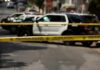
Muscatine Police Chief Anthony Kiess said that just after noon on Monday, June 1, 2026, dispatchers received a report of a shooting at a home at 210 Park Avenue in Muscatine, Iowa.[2] Officers and emergency medical personnel arrived to find four people inside the residence, all dead from gunshot wounds.[1][2] The suspect had already left, but police quickly identified him as 52-year-old Muscatine resident Ryan Willis McFarland, described as a relative of the victims.[1][2] That identification set off a search that would uncover two more bodies and end with the suspect’s death.
According to the chief’s public statement, officers located McFarland on the riverfront trail near a pedestrian bridge in Muscatine shortly after the first scene was discovered.[1][2] Police say that while they were talking with him, McFarland took his own life, and emergency personnel were unable to save him.[1][2] As investigators began piecing together what happened, they received information suggesting there could be additional victims connected to the same incident.[2] That intelligence prompted officers to expand their search beyond the Park Avenue home.
Multiple Crime Scenes, One Family Tragedy
Following the initial discovery, officers went to a residence at 1509 Mill Street, where they found an adult man dead from an apparent gunshot wound, believed to be tied to the same suspect.[1][2] Police then responded to a business at 808 Grandview Avenue and located another man deceased from an apparent gunshot wound.[1][2] Across the three locations, authorities reported six victims in addition to the suspect, bringing the total number of dead to seven.[1][2] Investigators emphasized that all the shootings appeared linked as part of one sequence rather than unrelated crimes.
Chief Kiess said the preliminary investigation indicates the killings stemmed from a domestic dispute rather than a random attack on the wider public.[1][2] At this stage, police say all six victims are believed to be family members of McFarland, though they have not yet publicly released detailed relationship records.[1][2] The Muscatine Police Department is leading the investigation, with assistance from the Muscatine Fire Department, the Muscatine County Sheriff’s Department, the Iowa State Patrol, and the Iowa Division of Criminal Investigations.[2] Officials describe the probe as active and ongoing, with detectives processing multiple scenes and interviewing witnesses.[2]
“No Active Threat” – But Many Unanswered Questions
Chief Kiess stressed to residents that there was “not an active threat to our community,” a familiar phrase in modern America where officials often reassure the public only after the worst has already happened.[2] For now, the entire public record outside Muscatine consists mostly of local and national news outlets repeating his briefing almost word for word.[1][2] Investigators have not released the full incident report, autopsy findings, or a detailed timeline, meaning citizens are asked to accept the suicide ruling and the domestic-dispute framing without seeing the underlying evidence.[1][2]
BREAKING: Mass shooting in Muscatine, Iowa
Chief of Police says 6 people were found dead including 2 children.
Suspect fatally shot himself after being chased by police.
The suspect is Ryan Willis McFarland and the victims are believed to be his family. pic.twitter.com/fOxjazepLf
— Washington Above (@WashingtonAbove) June 2, 2026
The Muscatine case fits a broader pattern seen in domestic mass killings where initial police narratives quickly harden into the accepted version of events long before primary records are public.[1][2] Researchers who study family massacres note that these attacks often occur in private homes, involve close relatives, and are driven by intense personal or economic stress rather than ideological causes. That pattern resonates with the frustrations many Americans feel: while Washington fights partisan battles, families under financial and emotional strain struggle largely out of view until tragedy erupts and everyone is told, again, that “the system worked” because the threat is now over.
Sources:
[1] Web – Iowa Gunman Kills 6 Family Members Before Shooting Himself: Police
[2] Web – Watch Family Massacre: Season 1 Free | Fandango at Home (Vudu)