

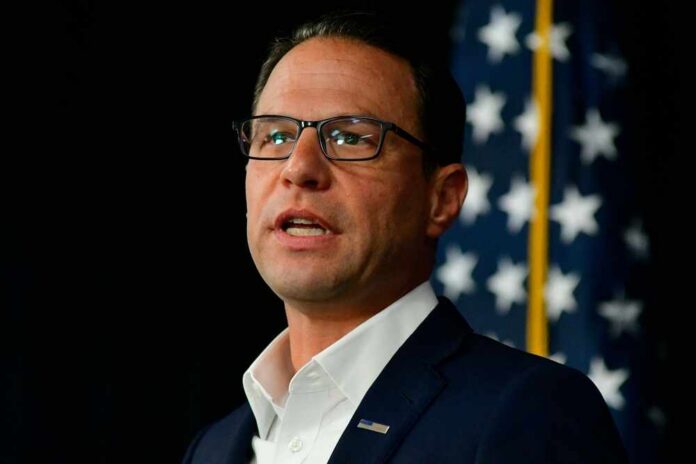
A taxpayer-funded security upgrade at Pennsylvania Gov. Josh Shapiro’s private home has escalated into a property-rights showdown that now includes dueling lawsuits and allegations that state police were used to control disputed land.
Quick Take
- Gov. Josh Shapiro and his neighbors, Jeremy and Simone Mock, filed competing lawsuits over a roughly 2,900–3,000-square-foot parcel along their shared property line in Abington Township.
- The dispute intensified after a 2025 security review following an arson attack on Shapiro’s Harrisburg residence led to major security upgrades at his private home, reported at about $1.1 million in taxpayer costs.
- The Mocks allege trespass and constitutional violations tied to state police activity on land they say is deeded to them; the Shapiros argue decades of open use and seek an adverse possession ruling.
- No court has ruled yet; the case is split between federal claims by the neighbors and a county-court countersuit by the Shapiros.
How a Fence Project Turned Into a Court Fight
Abington Township’s boundary dispute would normally look like a common suburban headache: an old fence line and tree line don’t match the deed. Reporting indicates the Shapiros bought the home in 2003 and treated the fence-and-trees line as the practical boundary for years. The Mocks bought next door in 2017. The conflict erupted when Shapiro’s team sought to build an 8-foot security fence and a zoning process highlighted a deed mismatch.
The timeline matters because Pennsylvania adverse possession claims generally depend on long, open, and continuous use. The Shapiros’ filings argue they used the disputed strip for more than two decades and that the neighbors previously acted as if it was Shapiro property. The Mocks argue records—such as surveys, tax maps, and deed descriptions—place the parcel on their side, and they say the governor’s position turned an ordinary disagreement into something far more coercive.
Taxpayer-Funded Security at a Private Home Raises Accountability Questions
The dispute took on political weight after an arson attack, prompted a state police security review for Shapiro’s private Abington home. Multiple outlets report the subsequent security work totaled about $1.1 million in taxpayer-funded upgrades. In practice, the security context explains why the governor wanted a hardened perimeter, but it does not erase the basic issue conservatives care about: public power and public money must be tightly limited, transparent, and lawfully applied.
Local reporting describes the fence plan running into trouble when the zoning and permitting process revealed the boundary problem. The Shapiros reportedly approached the neighbors about buying or leasing the land to resolve the issue amicably. Negotiations failed, and the dispute shifted from a neighborly disagreement into litigation. As the conflict escalated, landscaping and other changes became part of the fight, with each side painting the other as unreasonable and the courts now positioned to decide what the boundary legally is.
State Police Allegations Put Constitutional Concerns Front and Center
The neighbors’ federal lawsuit goes beyond property lines and focuses on state action—an especially sensitive issue for Americans who believe government should not pressure citizens into surrendering rights. The Mocks allege state troopers patrolled or controlled access on land they say is theirs, and they describe being blocked from using a surveyor or building their own fence. The Shapiro side disputes the wrongdoing narrative, but the presence of armed state authority is what makes this case so combustible.
Even if the security mission began for legitimate reasons, conservatives will watch for a clear standard: government protection should not become an unofficial tool in a private dispute. Courts will need to sort out what orders were given, what authority existed to restrict access, and whether any “clearly established” constitutional rights were violated as the Mocks allege.
What Happens Next—and What the Public Still Doesn’t Know
The lawsuits are active and unresolved: the Mocks filed in federal court, while the Shapiros countersued in Montgomery County Court of Common Pleas seeking an adverse possession ruling. Key uncertainties remain because the dispute hinges on evidence that has not been fully tested in court, including historical use of the land, survey documentation, and the precise scope of any state police role on the ground.
Hypocrite Josh Shapiro Uses Squatter's Rights to Build Himself a Security Barrier on Neighbor's Property https://t.co/x64q0c51k9
— Matthew Newgarden (@a_newgarden) March 12, 2026
The broader takeaway is less about personality and more about principle. Property rights are foundational, and the line between legitimate security needs and government overreach must be bright and enforceable. If the governor’s long-term use meets Pennsylvania’s legal standard, the county court could affirm it. If the neighbors can prove improper state interference, the federal case could become the bigger story. Either way, the public deserves full transparency when taxpayer resources intersect with private benefit.
Sources:
Josh Shapiro, neighbors sue each other in property dispute
Neighbors sue PA governor accusing him of illegally taking over part of their property
Neighbors sue PA governor accusing him of illegally taking over part of their property
Pennsylvania Gov. Josh Shapiro, neighbors file competing lawsuits over security fence
Neighbors claim Pennsylvania governor forcibly annexed property using state police