
Trump’s quiet plane swap from Turkey now reads like a warning sign about how fast presidential security can change when Iran is part of the equation.
Quick Take
- Reports say U.S. officials found a credible threat from Iranian proxy forces before Trump left Turkey.
- Multiple outlets said the Secret Service urged Trump to use the older aircraft as a safety step.
- Trump also said Iran had him on its assassination list, which matched the security concerns in the reports.
- Some coverage says the public record still lacks the exact threat memo or order that drove the switch.
What the reports say happened
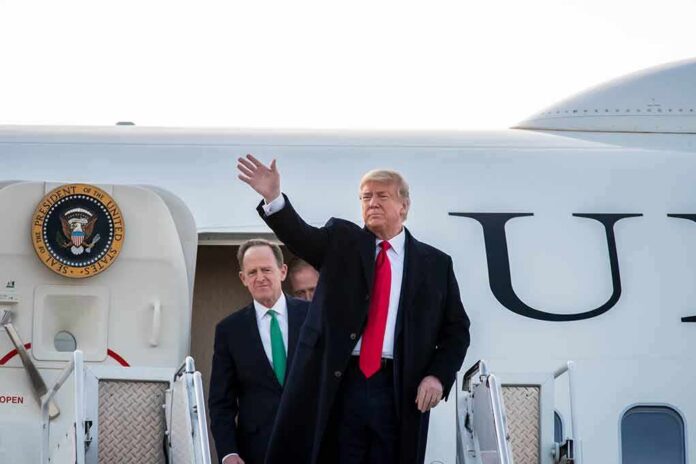
News reports say President Trump left Turkey on the older Air Force One after U.S. officials judged that Iranian proxy forces posed a credible threat to him and the aircraft. The New York Times said the Secret Service urged the change after the threat was picked up, and later reports echoed that basic account. Other outlets said Trump had first arrived on the newer, Qatar-donated jet, then switched planes for the return flight.
The reported move happened during a tense stretch in the U.S.-Iran conflict. Reports tied the aircraft change to recent U.S. strikes on Iran and to fears that Trump himself could be targeted. Trump had already told reporters that he was “number one on the kill list for Iran,” which helped fuel the public focus on the trip and the plane swap. That made the security story politically charged before officials offered much detail.
Why the older plane mattered
The core reason for the swap was security, not comfort. Several reports said the older Air Force One had stronger defensive systems than the newer plane Trump had flown into Turkey. One report said officials did not believe the threat was aimed only at the new aircraft, but at Trump and whatever aircraft he used. That distinction matters because it suggests the switch was a protective move, not a message about the plane itself.
At the same time, the public record still leaves gaps. The reports available here do not include the exact threat bulletin, the internal approval memo, or a detailed technical comparison of the two aircraft. That leaves readers with a clear outline of the decision, but not the full chain of proof. In a security case like this, that kind of secrecy is normal, but it also invites suspicion from people across the political spectrum.
Trump Moved in Secret Food-Truck Transfer Over Iran Retaliation Fears
According to The Washington Post, U.S. President Donald Trump was secretly transported from Turkey to Britain amid intelligence warnings of Iranian retaliation.
The paper detailed that he was shuttled to the… pic.twitter.com/NOPNVHuDEh
— Hurriyat Radio English (@HurriyatEN) August 11, 2026
Trump also gave a different public explanation at one point, saying the plane choice was for “old time’s sake” and that the newer aircraft was being sent ahead for inspection. That comment did not directly deny the threat story, but it did leave room for doubt about how much the security concern shaped the move. Separate reporting about an Israeli warning of a possible plot adds another layer, though outlets said it was distinct from the trigger for the plane swap.
What remains unanswered
The biggest unanswered question is simple: what exactly made officials call the threat credible? The reporting says the Secret Service acted on intelligence, but it does not publish the underlying facts, such as the alleged method, timing, or target details. That gap matters because it leaves the public dependent on unnamed sources. In a country where trust in institutions is already low, that is enough to keep the story alive long after the flight ended.
This episode also shows how fast national security stories can split into competing narratives. One camp sees a necessary protective move. Another sees a leak-driven story with too many missing pieces. Both reactions are shaped by the same reality: presidential protection is secret by design. Until officials release more records, the public will keep weighing the same facts through very different lenses, and that will only deepen the distrust around elite decision-making.
Sources:
mediaite.com, nytimes.com, chosun.com, newsmax.com, youtube.com, nypost.com, timesofisrael.com, nbcnews.com, wsj.com