
The Pentagon’s move against Frank Kendall turns a classified-access dispute into a public political fight over Air Force One.
Quick Take
- The Department of War said it revoked former Air Force Secretary Frank Kendall’s access to classified information immediately.
- Sean Parnell said the action followed an “unauthorized disclosure” about Air Force One’s capabilities to a media outlet.
- Kendall served as Secretary of the Air Force from July 2021 to January 2025, so the decision involves a former top defense official.
- Public reporting repeats the Pentagon’s claim, but the available record does not show the underlying remarks or a formal adjudication.
Pentagon Says the Action Was Immediate
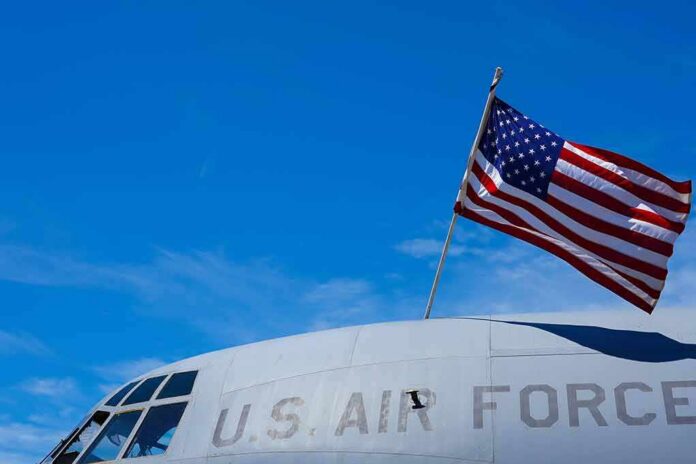
The Department of War said Frank Kendall lost his eligibility for classified access effective immediately. Sean Parnell’s statement also said Kendall could no longer hold any sensitive position. The public announcement tied the move to an alleged disclosure about Air Force One’s capabilities, not to a broader policy shift. That makes this more than a routine paperwork change. It is a direct sanction aimed at a former senior defense official.
Multiple outlets reported the same basic claim within hours of the announcement. Fox News, CBS News, and The Wall Street Journal all described the action as a revocation tied to Air Force One disclosures. That consistency matters, but it still leaves one key gap. The reporting cites the Pentagon’s allegation, not the underlying words Kendall allegedly said. The public record here shows the accusation clearly, not the proof behind it.
Why Kendall’s Past Role Matters
Kendall’s resume gives the story added weight. The Air Force biography lists him as Secretary of the Air Force from July 2021 to January 2025. That job would have placed him near sensitive aircraft and security issues. So a later revocation is not just symbolic. It signals that the government believes a former top official crossed a line serious enough to end access after leaving office. The action also fits a broader pattern where clearance decisions are used as public signals.
That broader pattern explains why this story lands so hard. Clearance disputes often unfold with one side holding the stronger institutional voice. The government can cite classified concerns, while the affected person may not be able to answer in detail. CBS News reported that Kendall said he had tried to avoid saying anything classified and did not know what he was accused of revealing. That response adds context, but it does not settle the underlying question.
What Still Is Not Public
The biggest limitation is simple: the public sources do not identify the exact statement at issue. They also do not name the media outlet that allegedly received the disclosure. No declassified record, formal security ruling, or inspector general finding appears in the material provided here. That means readers can see the outcome, but not the full case file. For now, the public story is about an allegation and a punishment, not a fully tested record.
🇺🇸 US defense officials have stripped ex-Air Force chief Frank Kendall of his security clearance over allegations he leaked safety vulnerabilities regarding a Qatar-gifted presidential aircraft. Kendall denies the claims, stating he was not given details of the alleged leak. pic.twitter.com/RLCWMaGmkr
— Secret Feeds (@TheSecretFeeds) August 8, 2026
That gap is why this episode feeds distrust on both sides of the political divide. Supporters of the action will see a needed defense of secrecy and discipline. Skeptics will see another example of a powerful institution making a serious claim without opening its evidence. Both reactions flow from the same fact pattern. The Pentagon made the charge public first, and the detailed record remains out of view.
Sources:
redstate.com, foxnews.com, washingtonexaminer.com, newsday.com, wsj.com, reddit.com