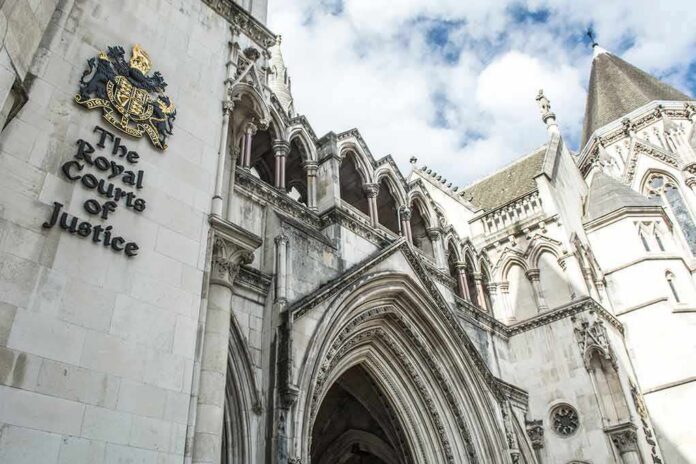
Former British Conservative minister Ann Widdecombe was struck 21 times with a hammer in her own kitchen, prosecutors told a London court.
Quick Take
- Widdecombe, 78, was found dead with serious injuries at her Devon home on July 8, 2026.
- Prosecutors say she was hit 21 times with a hammer during lunch, then her wallet was stolen.
- A 28-year-old man has been charged with murder after an earlier suspect was arrested and released.
- Counter-terrorism police took over the case to check for a political motive, but investigators say there is no proof of one.
A Former Cabinet Minister Found Dead at Home
Devon and Cornwall Police were called by ambulance crews at around 11:40 a.m. on July 8, 2026, to a home in Haytor, Devon. Officers found Ann Widdecombe, 78, with serious injuries. She died at the scene, and police opened a murder investigation soon after. Widdecombe served as a Conservative Member of Parliament for years and later worked as an immigration spokesperson for Reform UK.
Prosecutors Describe a Hammer Attack and Theft
At a hearing in Westminster Magistrates’ Court on July 21, prosecutors said Widdecombe was struck 21 times on the head with a hammer while eating lunch in her kitchen. They said closed-circuit camera footage showed a man entering her home wearing black gloves and hiding the hammer from her view. He allegedly asked, “Don’t suppose you have bank cards and ID?” before attacking her and taking her wallet. Police say more than 800 leads have been chased down and that they are not looking for any other suspects. A 28-year-old man was arrested and later charged with murder. An earlier suspect, a different man, had been arrested and then released without charge, an early misstep that shows how fast-moving these investigations can shift direction before formal charges are filed.
Terror Police Step In, But Motive Remains Unproven
Police first said there was nothing pointing to a political motive. Assistant Chief Constable Matt Longman told reporters there was “no information that this is a politically motivated crime” and that it was not being treated as terror-related. Days later, on July 13, counter-terrorism officers took over the case after new information from searches and the arrest raised questions about a possible ideological angle.
The Guardian reported investigators were looking into whether leftwing or anarchist beliefs played a role, but the killing has not been formally labeled a terrorist attack. That gap between suspicion and proof matters. Calling in counter-terrorism police is often a precaution while evidence is sorted out, not confirmation that an attack was political.
A Familiar and Troubling Pattern for British Politics
Widdecombe’s death follows a grim pattern seen before in the United Kingdom. Labour MP Jo Cox was shot and stabbed to death in 2016 by a man later proven to be a neo-Nazi extremist. Conservative MP David Amess was stabbed to death in 2021 by a man tied to Islamic State sympathies. Both cases started with confusion over motive before trials revealed the full picture months later. That history suggests caution is warranted now. Early reporting on Widdecombe’s case has already shown mismatched details, including disagreement over a suspect’s age, and a first arrest that led nowhere. For a public already skeptical of institutions managing crises, these shifting facts are a reminder that officials often move faster to reassure the public than to nail down the full truth. The court process, not early headlines, will ultimately determine what happened and why.
Sources:
thegatewaypundit.com, bbc.com, theguardian.com