
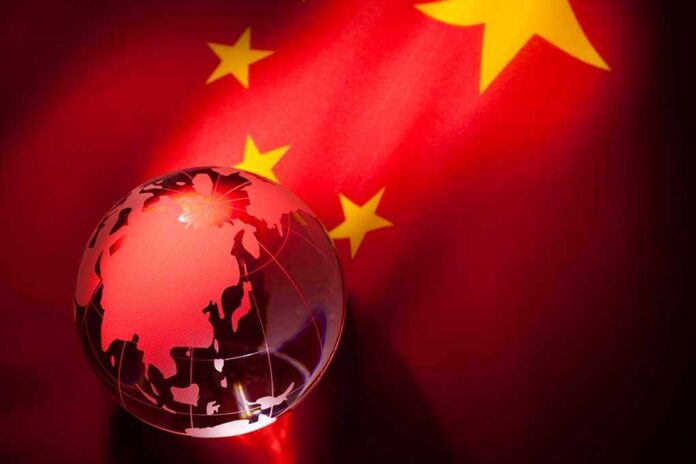
Washington’s new message to allies is stark: choose the U.S. in the global artificial intelligence push or lose a seat at America’s table.
Story Snapshot
- Reuters says the U.S. will warn partners not to join both Washington’s and Beijing’s rival AI frameworks.
- State Department language points to exporting a U.S.-led “AI stack” to aligned countries.
- China pitches open cooperation and training for developing nations as it builds its own AI alliances.
- Brazil’s moves show countries testing “multi-alignment” between the tech giants.
What Washington Plans To Tell Allies
Reuters reported that U.S. officials plan to tell dozens of countries they must pick sides in the artificial intelligence race with China or risk exclusion from a U.S.-led coalition. The reported draft warns partners against joining both Washington’s framework and Beijing’s competing effort. The State Department has also said it will explore chances to export a U.S. “AI stack,” which suggests a full bundle of tools, rules, and secure networks for aligned nations. The move formalizes a clear line in the sand.
The U.S. push comes as officials and lawmakers argue that leadership in artificial intelligence is a security and economic need. Congress and the administration have framed the next wave of innovation as something America must lead to protect data, supply chains, and values. The Trump administration also rolled out steps to stop what it calls improper use of American models by Chinese developers, reflecting hardening policy around core technology and know-how. This is about more than software. It is also about chips, data centers, and standards.
China’s Counter-Offer To The World
China has pitched a different story to the world. Beijing’s foreign ministry says it is ready to work with all countries on artificial intelligence capacity building and infrastructure, including joint labs and training. China announced plans to provide 5,000 training and seminar slots for developing nations over five years and to set up application centers with regional groups in Latin America, Africa, and Asia. This offer targets nations seeking skills, funding, and tools without having to pick one political camp outright.
Beijing’s outreach has already found takers. Brazil joined a China-backed cooperation effort on artificial intelligence, with local coverage framing the move as a path to digital sovereignty and open-source governance models. Brazil also advanced its own national artificial intelligence plan worth billions of reais to spur socially focused uses at home. These steps show how many governments want options and leverage in a world of rising technology blocs. They also show how hard it will be for Washington to force a clean split.
What This Means For Allies Caught In The Middle
U.S. warnings place partners on a tightrope. Countries that rely on American security ties and capital may see value in a U.S. “stack” with stronger safeguards and trusted networks. Yet many also trade deeply with China and seek Chinese funding, training, and market access on flexible terms. Brazil’s multi-alignment hints at a common playbook: join both conversations, attract investment from both sides, and keep national options open as technology and rules evolve. That approach now faces fresh pressure.
Allies also worry about becoming collateral damage in a power struggle. Leaders on the right fear theft of intellectual property, supply chain coercion, and security risks if Chinese systems spread inside their networks. Leaders on the left fear that a rigid bloc split will raise costs, slow global standards, and harden a digital divide. Both camps share a deeper frustration: when great powers draw hard lines, regular people pay higher prices, face fewer choices, and watch elites cut the deals. The new warning risks feeding that view.
How The Stakes Reach Everyday Life
Artificial intelligence now drives energy use, data rules, jobs, and even food supply tools. When the U.S. and China lock in rival standards, partners get locked into different chips, clouds, and rulebooks. That can raise costs for hospitals, farms, and schools that must pick one path and cannot switch easily later. It can also shape speech rules and privacy across borders. Today’s diplomatic signal is really about who writes the code of daily life for the next decade.
Taiwan has just had its house broken into by as many as eight AI agents.
A China-linked threat actor used open-source tools to operate multiple AI agents simultaneously. They functioned like an autonomous cyberattack team: surveying 21 Taiwanese government…
— Tsao sung te (@TsaoTe) August 16, 2026
There are limits to what we know. The reported U.S. draft sets a tone, but final language and exact penalties were not published. China’s offers sound generous, but delivery will vary by project and politics. What is clear is the pattern: Washington is tightening its coalition and signaling costs for straddling, while Beijing is widening its welcome mat with training and infrastructure. Countries will now test how far they can stretch between them before either side says “enough.”
Sources:
reddit.com, cryptobriefing.com, state.gov, mfa.gov.cn, brookings.edu, cnbc.com, agenciabrasil.ebc.com.br, un.china-mission.gov.cn