
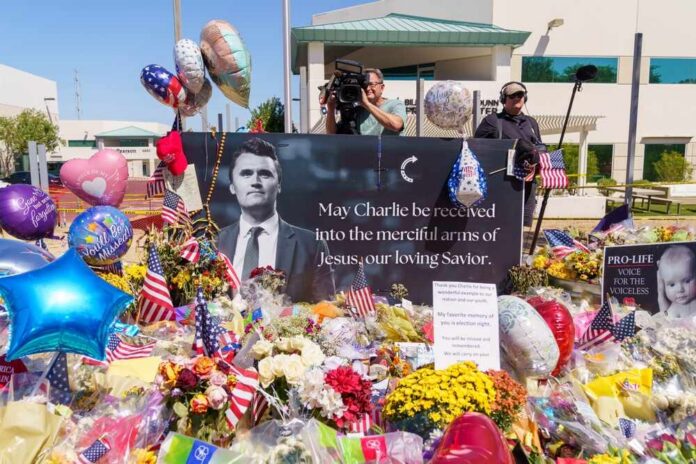
A Utah judge’s refusal to ban cameras in the Charlie Kirk murder case sharpened a national test: can courts deliver a fair trial in the glare of nonstop, politicized coverage without closing the courtroom to the public?
Story Highlights
- Judge Tony Graf denied a blanket ban on cameras in the Tyler Robinson proceedings, citing public access and accountability [2][3].
- The court acknowledged some media used footage to fuel out-of-court commentary that “vilified the defendant,” yet kept cameras with limits [3].
- Coverage requests will be managed case by case, including camera placement changes to reduce prejudice risk [3].
- Both transparency advocates and fair-trial defenders claim partial validation, reflecting wider distrust in institutions [1][2][3].
Ruling Balances Transparency Against Pretrial Prejudice
State District Judge Tony Graf denied the defense motion to categorically bar cameras from the proceedings against Tyler Robinson, charged in the killing of conservative activist Charlie Kirk, finding that Utah law does not support a total ban on electronic media based only on potential prejudice [2][3]. The court emphasized the public’s right to observe the justice system and hold government accountable, a rationale often invoked in high-profile cases where courtroom space and access are limited [3]. The defense’s request for secrecy failed on this threshold showing [2].
Judge Graf nevertheless recognized the downside risk. He noted that some outlets had used courtroom video as a springboard for out-of-court commentary and to generally vilify the defendant, an admission that modern media ecosystems can distort trial narratives beyond the evidentiary record [3]. Rather than grant a blackout, the court opted to tailor conditions. Reports indicate requests will be evaluated individually, with camera placement shifted to the rear of the courtroom, behind Robinson, to reduce intrusiveness and potential juror exposure [3].
Defense Concerns Reflect Familiar High-Profile Case Patterns
Defense attorneys argued that pervasive televised coverage could poison the jury pool by amplifying biased commentary and sensational framing, a concern that routinely surfaces in nationally watched prosecutions [2]. The court’s approach aligns with a system-wide norm: judges rarely impose blanket bans and instead rely on targeted limits, robust jury selection, continuances, or venue changes to protect fair-trial rights while preserving public access [1][2]. The ruling keeps that balance in place, while leaving room for narrower restrictions if concrete prejudice emerges later [3].
The record shows a partial validation of each side’s claims. The defense can point to the judge’s own words that some coverage “vilified the defendant,” underscoring the risk that clips and commentary shape perception outside evidentiary rules [3]. Prosecutors, media organizations, and victim advocates can point to the access ruling and the court’s transparency rationale to argue that public oversight is essential in a case with national attention [2][3]. The practical question now shifts to implementation: how strictly courts manage feeds, angles, and timing to avoid tainting jurors.
What The Decision Signals About Courts, Media, and Public Trust
The decision tracks a broader American tension: people across the political spectrum doubt that powerful institutions will police themselves, yet they also doubt that public theater produces justice. Conservatives who fear media bias and liberals who fear state overreach often converge on the belief that elites bend the rules; both will scrutinize whether camera access exposes truth or rewards spin. Judge Graf’s compromise—access with controls—implicitly asks the public to judge the system on the record, not the commentary [2][3].
🚨BREAKING NEWS🚨
Cameras just got FULL ACCESS to the Charlie Kirk murder trial starting in July. The judge shut down Tyler Robinson’s lawyers who were fighting tooth and nail to keep it hidden from the public.
Transparency just scored a massive victory.
No more backroom deals… pic.twitter.com/UsdPPcVyhJ— ShadowJ (@shadowJ47) May 26, 2026
Next steps will matter more than headlines. Voir dire and juror questionnaires can test exposure to coverage, while content reviews can flag segments that misstate evidence or recycle excluded material. If specific harms surface, the court’s case-by-case model can tighten rules without erasing transparency [3]. If they do not, the ruling may stand as another instance where courts trusted process over panic. Either way, this outcome underscores a shared worry: a justice system must be open enough to be trusted and disciplined enough to be fair [1][2][3].
Sources:
[1] Web – BREAKING: Utah judge denies Tyler Robinson’s latest request to hold …
[2] Web – Charlie Kirk murder: Judge rules cameras allowed in courtroom for …
[3] Web – Judge rejects request to ban cameras in court from man charged …