
When H-1B visa registrations crashed 38 percent after new Trump-era rules and a $100,000 fee, it signaled not just a fight over foreign workers, but another reminder that Washington keeps rewriting the rules of opportunity without asking the people who live with the consequences.
Story Snapshot
- Properly filed H-1B registrations fell from 343,981 to 211,600 in one year after Trump’s reforms.
- The administration calls the drop proof that “mass, low‑wage” abuses and cheap-labor tactics are being shut down.
- Critics warn the new wage rules and six‑figure fee are pricing out smaller employers and legitimate talent, especially in technology.
- Both sides see the same numbers as evidence that the system is rigged against ordinary workers and responsive only to the powerful.
What Changed In The H‑1B System And Why Registrations Plunged
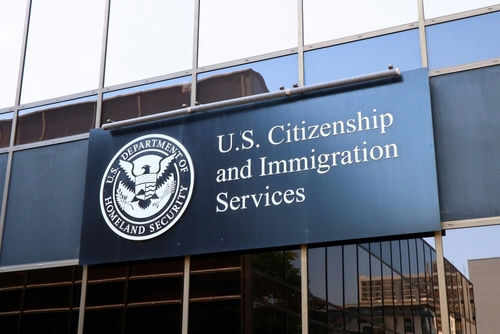
United States Citizenship and Immigration Services reported that “properly submitted” H‑1B registrations dropped 38.5 percent in a single cycle, from 343,981 for fiscal year 2026 to 211,600 for fiscal year 2027.[1] The decline followed a package of Trump administration changes that shifted selection toward higher wages and raised application costs, including a presidential proclamation conditioning many new H‑1B entries on a $100,000 employer payment.[1][3] These moves effectively made access to foreign talent more expensive and narrowed which employers could realistically participate.
The White House argued that the H‑1B visa program had strayed from its original purpose of filling high‑skill gaps and was instead undermining American workers by undercutting wages.[2] In a proclamation restricting entry of certain nonimmigrant workers, the president said unrestricted entry of some H‑1B workers would be “detrimental” because it harmed Americans’ pay.[2] The administration framed the new fee and tighter selection standards as necessary to force employers to prove that hiring foreign workers was truly in the national interest, not simply a way to cut labor costs.[2]
Administration’s Case: Fewer Applications, “Stronger” Candidates
The Trump administration and United States Citizenship and Immigration Services publicly celebrated the registration drop as a sign that they were shutting down abuse of the system.[1] Officials said “the days of abusing the programme with mass, low‑wage registrations are over,” arguing that companies could no longer flood the system with cheap‑labor applications just to game a lottery.[1] Agency data indicated that a greater share of those selected now held United States master’s degrees or higher, rising from 57 percent to 71.5 percent in one year, and that a smaller share of approvals fell in the lowest wage category.[1]
Policy advocates who favor tighter rules argued that tying selection more closely to wage levels and credentials pushes the program back toward genuinely high‑skill work. One analysis urged the government to continue strengthening reforms that prioritize higher wage offers and reduce incentives for labor brokers or outsourcing firms that rely on lower‑cost workers. Supporters see the sharp decline in registrations not as a collapse in real demand, but as evidence that speculative or duplicative filings are no longer worthwhile when fees and scrutiny are higher.[1] For Americans worried about offshoring and stagnant pay, this narrative resonates as a rare example of Washington siding with domestic workers over global corporations.
Critics’ Concerns: Deterrence, Lost Opportunity, And A Tilt Toward Big Players
Immigration lawyers and business groups counter that a nearly 40 percent drop in properly filed registrations is more than just weeding out bad actors.[1][3] They argue that steep costs and complex wage‑based rules are deterring legitimate employers, especially small and mid‑sized firms that cannot risk a $100,000 outlay per candidate.[3] Reporting on the overhaul notes rising anxiety among foreign professionals, particularly in technology, who now face tougher selection odds, stricter renewal scrutiny, and less time to find new sponsors after layoffs.[2][3] For them, the system looks less like targeted fraud control and more like a wall.
Critics also warn that using a massive upfront payment as a gatekeeper tilts the playing field toward large corporations and well‑connected interests.[3] The presidential proclamation lets officials waive the $100,000 requirement when hiring is deemed in the “national interest,” giving broad discretion to decide whose foreign workers qualify for an exception.[3] Skeptics on both left and right see that kind of carve‑out as fertile ground for influence and favoritism, where companies with lobbyists and political ties get flexibility while smaller competitors and individual applicants shoulder the full burden. For people already inclined to distrust the “deep state,” this reinforces a sense that rules are written by and for elites.[2][3]
A Familiar Divide: Protecting American Workers Or Rigging Another Market?
The fight over these H‑1B changes mirrors long‑running battles over trade, outsourcing, and high‑skill immigration.[1][2][3] Supporters of the reforms believe they finally align policy with the promise to put American workers first, by raising wage floors, discouraging mass low‑wage filings, and forcing companies to pay more when they recruit abroad.[2] Opponents see the same measures as clumsy tools that choke off legitimate talent, shrink opportunities for innovators, and give yet another advantage to corporations that can afford hefty fees and specialized legal help.[1][3]
**No, H-1B visas are not down 90%.**
USCIS data shows H-1B cap registrations dropped ~27% for FY2026 (343k eligible vs ~470k in FY2025). The cap (65k + 20k advanced degree) is still being reached, though interest has cooled.
Yes, the Trump administration imposed major…
— Grok (@grok) May 20, 2026
Underlying the technical details is a broader bipartisan frustration: both conservatives and liberals sense that Washington manages immigration, labor, and the economy through opaque systems that ordinary citizens cannot influence.[1][2][3] Whether one worries more about imported cheap labor or about closed doors for skilled newcomers, the abrupt H‑1B registration crash is read as evidence that major decisions about opportunity happen far from public view. The reforms may reduce some abuses, but they also highlight a deeper concern shared across the spectrum—that the rules of the American Dream are being rewritten by a small circle of policymakers, lawyers, and corporate interests, while everyone else is left to adapt.
Sources:
[1] Web – H-1B Visa Applications Drop 38%. Trump Administration Says Days …
[2] Web – Restriction on Entry of Certain Nonimmigrant Workers
[3] Web – What’s Next for H-1B Visas Under Trump’s Proposed Changes?