

Five family members drowned in an Ohio river while trying to save a struggling swimmer, raising hard questions about why ordinary Americans keep facing deadly risks in public spaces without clear warnings or protection.
Story Snapshot
- Five adults died in the Scioto River near Columbus after a rescue attempt turned into a chain drowning.
- Two young children survived but lost both sets of parents, and are now in family services care.
- Officials say the group was fishing at a popular river spot with no boat, unclear warnings, and unknown water hazards.
- Experts say these “chain drownings” keep happening nationwide while governments underinvest in basic water safety and public education.
How a summer fishing trip turned into a mass drowning
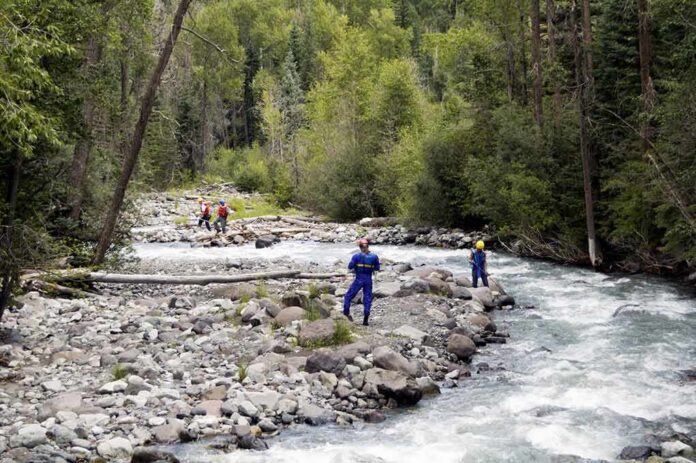
On Sunday night, a group gathered along the Scioto River near Powell, a suburb of Columbus, to fish and relax by the water. Around 9 p.m., one person from the group went into the river to swim and started to struggle. Delaware County Sheriff Jeffrey Balzer said two others then went into the water to help, but they also began to struggle. Two more followed, turning one emergency into a deadly chain.
As the crisis unfolded, a terrified child from the group ran onto nearby State Route 257 and flagged down a passing driver. The motorist called 911 and reported that the child’s family was in the river. Rescue crews arrived and searched into the night. Two women were pulled from the water Sunday and later pronounced dead at local hospitals. The bodies of three men were recovered Monday afternoon as the search continued.
Who was there and what authorities know so far
Authorities say the group likely included two sets of parents, two children, and at least one other adult, all gathered at a public fishing area by the river near the O’Shaughnessy Reservoir. Five adults — two women and three men — died in the incident. Their names and backgrounds have not been released, which makes it hard for the public to fully understand who they were and what brought them there. The two children, both under age ten, are now in the care of family services.
Officials say no boat was present, and they have not confirmed whether alcohol or other substances played any role. The sheriff’s office has said the investigation is still open, and there are no autopsy or toxicology results available yet. That means some key questions remain unanswered, such as the exact conditions in the water, whether there were hidden currents, and why a popular public area by a reservoir appears to have been so dangerous that five adults could not make it back to shore.
Chain drownings and the deeper safety problem
Water safety experts use the term “chain drowning” to describe events where one person struggles and several untrained rescuers enter the water, then also drown. National data show that attempted rescues like this account for a significant share of drowning deaths each year. Families on both the left and right often hear these stories framed as “reckless” or “dumb” choices. But experts say the pattern points to something deeper: a lack of basic swimming skills, rescue training, and clear warnings at public water sites.
📰 Ohio River Incident Overview:
Five individuals died in the Scioto River near Powell, Ohio, after multiple adults entered the water attempting to rescue a struggling swimmer.🌊 Sequence of Events:
– A group had gathered along the Scioto River on Sunday. One adult entered…— Washington Report (@Washington_Rep) July 20, 2026
Across the country, rivers and reservoirs remain open to the public with limited safety gear, few barriers, and uneven signage. The Scioto River spot where this group gathered is described by local media as a “popular fishing area,” yet officials have not detailed what safety measures are in place there. That silence hits a nerve for many Americans who already feel that government agencies are quick to blame victims but slow to fix known hazards. People see billions spent on politics, while simple life-saving steps are delayed.
Shared frustrations: warnings, training, and trust in institutions
Conservatives who are tired of government waste and liberal policies look at this tragedy and ask why basic safety education is still so weak. Many wonder why official energy goes toward culture fights and global projects, instead of teaching every child and parent how to handle rivers with strong currents. Liberals who worry about inequality see the same event and ask why poorer families often face these risks without access to swimming lessons or safe recreation options.
Both sides increasingly agree on one thing: ordinary people are left to fend for themselves. This Ohio case fits a pattern where media quickly settles on a simple story — “family rushes in, all drown” — before full forensic details are known. That fast framing can make grieving families feel blamed, while deeper issues such as language barriers, safety signage, or dangerous water design go unexamined. It reinforces the sense that institutions protect themselves first and fix problems later, if at all.
What this tragedy signals about public safety and accountability
When five adults die trying to save one struggling swimmer, it shows how much most Americans still rely on instinct instead of training in emergencies. It also exposes gaps in how governments manage public spaces that look calm but hide deadly risks. Strong currents, sudden drop-offs, and cold water can overpower even healthy adults in minutes. Without clear warnings, rescue equipment, and community education, the burden falls on families who assume the riverbank is as safe as a park.
This tragedy near Columbus is a human story first, but it is also a warning sign. If five people can drown at a popular fishing area on a summer evening, then “business as usual” is failing. Many citizens already believe the system works best for insiders and lobbyists, not for families out trying to enjoy a simple night by the water. Until leaders demand better safety standards, better training, and honest disclosure of known hazards, events like this will keep feeding the quiet, growing belief that the government talks about “public safety” more than it delivers it.
Sources:
nypost.com, theguardian.com, youtube.com