
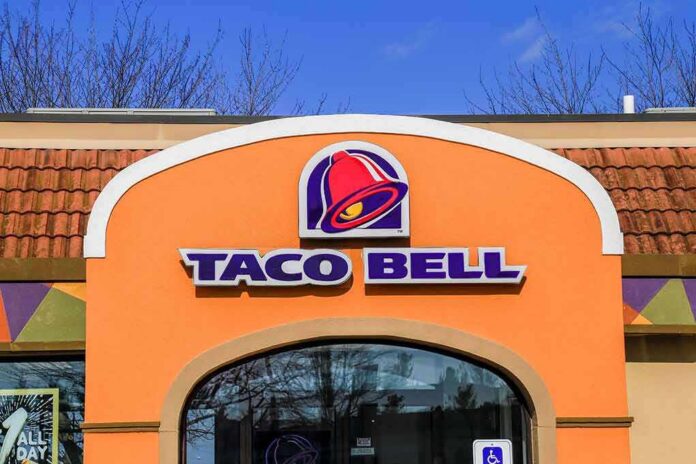
Federal investigators tied Taco Bell’s shredded iceberg lettuce to a nationwide Cyclospora surge, exposing weak food-safety guardrails in a system Americans count on to keep dinner safe.
Story Snapshot
- Centers for Disease Control and Prevention (CDC) linked Taco Bell’s shredded iceberg lettuce to illnesses in five states.
- Food and Drug Administration (FDA) traceback pointed to a single Mexico-based lettuce supplier for affected locations.
- Taylor Fresh Foods said it removed all iceberg lettuce from central Mexico from the U.S. market.
- CDC says Taco Bell cases are only a subset of a larger, multi-state outbreak.
What Investigators Say Ties Lettuce To Illnesses
Centers for Disease Control and Prevention officials reported that people who got sick after eating at Taco Bell in five states likely consumed contaminated shredded iceberg lettuce. The agency’s outbreak page says more than 1,600 people reported Taco Bell exposure during this surge. The Food and Drug Administration traced shipments and found a single supplier in Mexico that served the affected restaurants. These are standard steps when lab tests are hard or too late to confirm parasite contamination.
Food and Drug Administration officials told reporters the implicated lettuce came from one supplier in Mexico. The agency increased screening at the border for that company’s lettuce as a short-term control step. The New York Times reported that Taylor Fresh Foods pulled all iceberg lettuce from the U.S. market after the linkage. Reporters also noted that not every Taco Bell in the five states received the affected product, which helps explain uneven exposure.
How Big The Outbreak Is—And What We Still Do Not Know
CDC tracking shows the outbreak spans dozens of states, and the Taco Bell-linked cases are only part of the total. That pattern suggests more than one source could be involved. Investigators have not publicly reported a positive laboratory test from lettuce that proves Cyclospora was present. The lack of a product-positive test is common in produce outbreaks because items spoil and supply turns fast. Agencies rely on interviews and shipment records to act quickly.
Federal health warnings urge people to seek care if they develop long-lasting diarrhea, cramps, and fatigue. Cyclospora often spreads through food or water contaminated with human waste. Washing lettuce helps, but it may not remove microscopic parasites once they attach or are inside crevices. Public officials say they will update guidance if testing, facility checks, or border screenings find a precise point of contamination in the supply chain.
What Taylor Fresh Foods And Taco Bell Are Doing Now
Taylor Fresh Foods said it removed all iceberg lettuce sourced from central Mexico from the U.S. market after the linkage. The company also said the implicated farm represents less than one percent of the national iceberg supply and that branded Taylor products were not involved. That statement aims to limit consumer fear while backing the pullback. The company’s move goes beyond what rules require and is meant to cut risk while the investigation continues.
Federal health officials are investigating whether shredded iceberg lettuce supplied by California-based Taylor Farms was the source of a nationwide Cyclospora outbreak that has sickened more than 1,600 people in 34 states.
Read on https://t.co/r7KwRzD96Y#TacoBell #Cyclospora… pic.twitter.com/Gm9Ry1mLj0— IOL News (@IOL) July 18, 2026
Taco Bell has faced outbreaks before and often adjusts menus and suppliers during crises. In this case, the CDC’s linkage focused on shredded iceberg lettuce served across five states. Because produce supply chains are complex, officials warned that other restaurants or stores could be involved as more data arrives. People feel whiplash when the target shifts. That is part of why trust erodes: families hear “it is safe” one week and “throw it out” the next.
Why This Matters For Everyone Who Eats Out
When a parasite tied to salad hits thousands, it exposes a chronic gap. Agencies depend on tracebacks and interviews more than lab proof, yet those tools run through a maze of growers, processors, and distributors. Both conservatives and liberals see a system that moves slower than the market. Border screening starts after people are sick. Companies go quiet under legal pressure. Consumers end up paying the price in medical bills, missed work, and lost trust in basic safeguards.
What To Watch Next—And How To Stay Safe
Watch for three things: a public lab confirmation from product or facility samples, a full map of shipments to restaurants, and an environmental report from the Mexico facility. Those would show where and how contamination happened and whether more foods are at risk. Until then, people can lower risk by choosing cooked produce, washing raw greens, and seeking care early if symptoms last more than a few days, as CDC guidance advises during Cyclospora season.
Sources:
youtube.com, stacks.cdc.gov, cdc.gov, facebook.com