
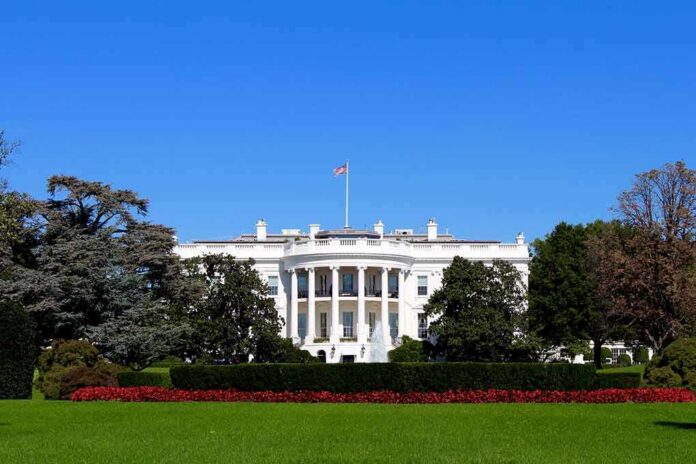
A Chinese state security figure bought a historic office building roughly 650 feet from the White House, igniting fresh alarms about foreign access near America’s seat of power.
Story Snapshot
- A buyer tied to Chinese state security purchased a building about 650 feet from the White House.
- The sale closed July 21, 2026, for $8.4 million, according to reporting.
- Lawmakers have pursued bills to restrict real estate linked to the Chinese Communist Party near sensitive sites.
- Security experts warn proximity can aid surveillance even without proof of misuse.
What Happened: A Sensitive Address Changes Hands
Daily Caller News Foundation reporting, republished by AOL, says the Philip Qiu and Family Foundation bought the 100-year-old Securities Building on July 21, 2026, for $8.4 million. The building sits about 650 feet northeast of the White House grounds, placing it within a tight security zone downtown. The report describes Qiu as linked to Chinese state security and intelligence organs. The sale price, date, and location details are central facts that drive the concern.
The buyer’s ties spotlight a familiar risk: strategic real estate near key federal sites. The building’s age and sightlines add to the unease for people across the political spectrum who already doubt Washington’s guardrails. While the report does not show active misuse, its proximity to the Executive Mansion elevates the stakes. In security planning, location and access often matter more than stated intent, especially for counterintelligence.
Why It Matters: Proximity, Surveillance, and Policy Gaps
The Center for Strategic and International Studies has documented cases where Chinese investors sought real estate and infrastructure near military facilities. Analysts warn such positions could support surveillance or disruption, even without clear proof of operations. That pattern underscores why a property so close to the White House draws attention. The public record often confirms ownership, but not purpose, which is why proximity alone can shape risk management choices.
Congressional Republicans and some Democrats have pushed tighter limits on land and property purchases tied to the Chinese Communist Party. House and Senate Republicans advanced proposals to block such acquisitions outright or near federal land. These include measures from Representative Dan Newhouse and Senators Rick Scott, Tom Cotton, Kevin Cramer, and Katie Britt. The shared aim is to close gaps that current reviews may miss when a deal involves sensitive locations.
How We Got Here: A Long-Running Security Fight
For years, lawmakers and policy groups have flagged national security risks tied to foreign-controlled land, data, and equipment. Proposals have urged stronger screening by the Committee on Foreign Investment in the United States and related agencies. The Heritage Foundation, for example, has called for adding the Department of Agriculture to that process to capture farmland cases more reliably. These debates reflect rising concern about gray-zone threats that exploit legal markets to gain access.
Public frustration grows when major warnings surface only after a purchase closes. Voters on the right and left see a pattern: powerful players navigate rules while agencies react late. People worry that elites in government and business shrug at long-term risks if short-term gains look good. This deal’s location near the White House feeds that view and pressures the federal government to show it can act faster and set clearer guardrails without targeting lawful buyers unfairly.
What to Watch Next: Reviews, Rules, and Real-World Controls
Watch for formal reviews by federal security and financial watchdogs. Key questions include who occupies the building, what renovations occur, and whether any lines of sight or network access could enable surveillance. Expect fresh pushes in Congress to widen screening rules near federal property and critical infrastructure. Effective steps may pair stricter due diligence with practical site controls, like shielding signals and sightlines, to reduce risk while respecting property rights.
Sources:
townhall.com, x.com, foxnews.com, rickscott.senate.gov, westerncaucus.house.gov, columbiamonews.com, csis.org