
Los Angeles’ mayoral race just turned a $5 donation into a $35 political message about who pays to amplify power.
Story Snapshot
- Mayor Karen Bass touted a six-to-one public match that boosts small donations to her reelection bid.
- Campaign filings show Bass qualified for more than $675,000 in public matching funds this cycle.
- Critics say taxpayers are being forced to subsidize campaigns while basic services, like street repairs, lag.
- Los Angeles’ matching system is legal, long-standing, and funded annually by taxpayers, sparking a familiar debate.
Bass Highlights Six-to-One Match Amid Fundraising Push
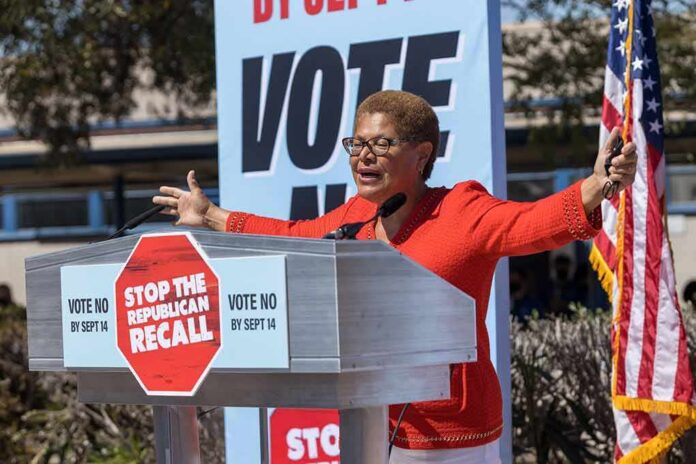
On social media, Mayor Karen Bass urged supporters to give, noting the city will match qualified donations at a six-to-one rate. Her message said a $5 gift becomes $35 under the city’s program, which is run by the Los Angeles City Ethics Commission. The campaign also reported qualifying for more than $675,000 in public matching funds in recent filings, adding to her cash on hand for the general election period. The pitch framed the match as a direct boost for small donors.
Public matching funds are not new in Los Angeles. The program provides set matches for eligible small-dollar gifts that meet strict rules, up to defined limits. The Government Accountability Office has cataloged Los Angeles among cities using a six-to-one match model for qualifying contributions, reflecting a broader trend in local campaign finance reforms nationwide. Supporters argue this system lifts small donors’ voices and can reduce heavy reliance on big checks.
Critics Link Taxpayer Subsidies to Service Shortfalls
Conservative and some independent commentators blasted Bass’s post, saying taxpayers are footing the bill to boost her campaign and others they may not support. The criticism quickly tied the match to city basics, like road repair. One high-profile opponent accused the city of cutting street programs while potholes spread, using the moment to question spending priorities during a tight budget season. The argument resonates with voters who feel City Hall ignores daily problems.
These critics cast the match as forced giving by residents who are already stretched by high costs and uneven services. They say the city should fix streets, clean neighborhoods, and speed permits before it pours more money into politics. That concern is not only partisan anger; it reflects a broader distrust that public money often helps insiders first. When residents see deep holes in the road and a campaign cash surge, they connect the dots, fair or not.
What the Law Allows and What the Public Sees
Los Angeles’ matching funds system is legal and voter-backed. The Los Angeles Times editorial board has noted the program receives about $3 million a year from taxpayers, and past rule changes increased the match to six-to-one to strengthen small-donor participation. Research shows these programs can lift engagement, but real impact depends on details like match caps, eligibility rules, and how campaigns communicate what “matching” means to the public.
Legal does not mean popular. Some watchdogs and analysts warn that messaging about “unlocking” funds can blur lines between private backing and public money, feeding cynicism about who benefits most. Others argue that higher matches risk helping well-known incumbents who already have donor networks, turning a reform into a soft shield for those in power if oversight is weak or rules are gamed. The core question remains trust.
Balancing Small-Donor Reform With City Priorities
Los Angeles faces a practical tradeoff. The city designed matching funds to make campaigns less dependent on large checks, which many residents distrust. At the same time, voters want visible progress on street repair, sanitation, homelessness, and public safety. When leaders spotlight campaign matches during service backlogs, it feeds a shared belief on left and right that the system serves insiders first, not neighborhoods that need help now.
LA Mayor Bass Is Matching Campaign Donations With Taxpayer Funds #news https://t.co/dGFdJ7Z3fc
— Filtered News (@filterednews) August 19, 2026
Clearer reporting could help. City officials can publish plain-language dashboards that show who qualifies, how dollars flow, and which donors are matched. Campaigns can avoid hype that suggests public funds reflect a groundswell of private support. City Hall can pair every financing update with service metrics, like potholes filled and response times. Those steps will not settle the debate, but they can rebuild trust that rules are fair and priorities are sane.
Sources:
twitchy.com, pjmedia.com, latimes.com, enewspaper.latimes.com, x.com, hoodline.com