

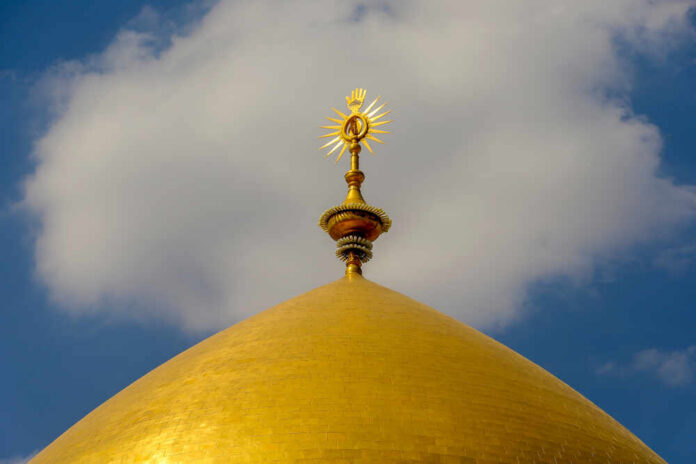
A grenade attack near Damascus’s most sacred Shia shrine has killed a prominent Iranian-backed cleric, igniting accusations of foreign interference while Syria’s fragile transitional government struggles to maintain order amid deepening sectarian fault lines.
Story Snapshot
- Sheikh Farhan Mansour assassinated in grenade attack near Sayyidah Zaynab shrine on May 1-2, 2026
- Iran immediately blames Israel and United States for orchestrating “state-sponsored terrorism”
- Attack targets key Iranian-influenced religious site during Syria’s unstable post-Assad transition
- No arrests made as Syria’s interim authorities face mounting pressure to provide security
Assassination at Sacred Shia Site
Sheikh Farhan Mansour, Friday prayer imam at the Sayyidah Zaynab shrine southeast of Damascus, died after assailants threw a grenade into his vehicle near the Safir Al-Zahra hotel on May 1-2, 2026. Syrian security forces sealed the area following the attack, according to reports from the Syrian Observatory for Human Rights. The cleric was critically injured in the blast and later succumbed to his wounds at a hospital. Mansour served as a prominent member of the Shia scholarly community at one of the religion’s most important pilgrimage destinations, the burial site of Prophet Muhammad’s granddaughter.
Tehran Points Fingers at Washington and Jerusalem
Iran’s Foreign Ministry spokesperson Esmaeil Baghaei issued a statement on May 2 condemning what he called a “heinous crime” and part of broader “devilish plots” by Israel and the United States. Baghaei’s remarks framed the killing as deliberate state-sponsored terrorism designed to destabilize Syria and incite sectarian discord across West Asia. The spokesman demanded Syria’s transitional authorities identify and punish the perpetrators while calling for enhanced regional cooperation against terrorism. Iran’s swift accusation—lacking independent verification—follows a familiar pattern where Tehran positions itself as defender of Shia communities against external threats, particularly actions attributed to Israeli or American interests.
Iran Outraged After Assassination Of Top Shia Cleric In Damascus https://t.co/18wZfsacik
— zerohedge (@zerohedge) May 4, 2026
Syria’s Transitional Government Under Scrutiny
The assassination occurred as Syria’s post-Assad transitional authorities navigate extraordinary security challenges amid ongoing ethnic and religious tensions. The Sayyidah Zaynab area has long functioned as a Shia stronghold with significant Iranian influence, maintained through backing of Assad’s former regime and militia support throughout Syria’s devastating civil war. Recent attacks on religious sites, including a bombing at Damascus’s Mar Elias Church, underscore the interim government’s struggle to protect vulnerable populations. Iran’s statement explicitly held Syrian authorities accountable for citizen safety, applying pressure on leadership already managing the complex aftermath of regime change while balancing competing internal and external forces.
Historical Pattern of Sectarian Violence
The killing echoes previous incidents that inflamed regional tensions, including Saudi Arabia’s 2016 execution of Shia cleric Nimr al-Nimr, which sparked Iranian protests and intensified proxy conflicts across Syria and Yemen. Israeli media outlets have previously incited violence against prominent Shia religious leaders, drawing fury from Iraqi authorities who warned of retaliation. The Sayyidah Zaynab shrine has repeatedly been targeted during Syria’s civil war, attracting Iranian support precisely because of its religious significance and strategic location. These attacks consistently deepen sectarian divides, complicating efforts to stabilize a region already fractured by over a decade of conflict and competing foreign interventions.
Broader Regional Implications
The assassination threatens short-term escalation through potential Shia mobilization and heightened Iran-Syria security coordination, while long-term consequences may fuel proxy conflicts between Iran and Israel-US interests throughout the Middle East. The attack risks disrupting religious tourism and pilgrimage activities that provide economic sustenance to local communities surrounding the shrine. Syria’s transitional authorities face mounting challenges to demonstrate governance capability amid accusations they cannot protect citizens or religious minorities. Whether this incident represents isolated extremism or coordinated foreign operations remains unconfirmed, yet the uncertainty itself destabilizes an already volatile situation where ordinary Syrians—regardless of sect—bear the consequences of great power maneuvering and unresolved sectarian grievances.
Sources:
Iran Condemns Killing of Shia Cleric Near Damascus Shrine, Blames Israel and US – Islam Times
Iran accuses Israel and US of killing Syrian imam in Damascus attack – Caliber.az
Iraqi fury as Israeli media incites killing of top Shia cleric – The New Arab
Saudi Arabia executes top Shia cleric Sheikh Nimr Al-Nimr – Ahram Online