
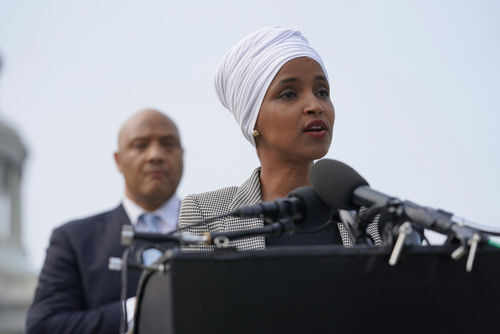
A $250 million COVID-era fraud case is now colliding with Congress after Minnesota investigators said Rep. Ilhan Omar’s office appears in sealed trial exhibits—and she still hasn’t turned over the messages they want.
Quick Take
- Minnesota’s GOP-led Fraud Prevention Committee says it needs Omar’s emails, texts, and call records tied to Feeding Our Future and its convicted leader, Aimee Bock.
- Federal trial exhibits in United States v. Bock reportedly list Omar’s office multiple times, including an item titled “Ilhan’s Office,” though the contents remain sealed.
- Omar has not been charged; the central dispute is transparency and compliance with a state legislative investigation.
- Republicans argue pandemic-era waiver policies—backed by Congress—created openings that scammers exploited, fueling a broader distrust in government oversight.
Why Omar’s Records Are Suddenly a Flashpoint
Minnesota’s House Fraud Prevention Committee, led by Republicans, has escalated its push to obtain communications between Rep. Ilhan Omar’s office and Feeding Our Future figures after trial exhibits in the Aimee Bock case referenced Omar’s office. Investigators point to exhibit listings that include an email titled “Ilhan’s Office” dated Feb. 18, 2021, plus other entries describing contacts with Omar staff. The committee says it needs the underlying messages to assess what was discussed and when.
The committee’s demand is not framed as proof of criminal wrongdoing by Omar; rather, it is an attempt to verify the nature of contacts that appear in the court record. Because the exhibit contents are sealed, the public can’t independently review what the messages say. That gap is driving the political fight: Republicans argue Omar should clear the air by producing the records, while Omar has largely stayed quiet publicly as the request has intensified.
How Feeding Our Future Became a $250 Million Lesson in Government Failure
Feeding Our Future, a Minneapolis nonprofit run by Aimee Bock, participated in federal child nutrition programs and became the center of what prosecutors described as a massive scheme involving claims for meals that were never served. Investigators have said more than 200 sites were used to generate reimbursements, with money allegedly diverted into luxury purchases and other spending. The FBI raided locations tied to the case in January 2022, and Bock was later convicted in federal court.
The scandal didn’t happen in a vacuum. During the pandemic, Congress and federal agencies loosened program requirements to keep assistance flowing while the country shut down. Omar co-sponsored the MEALS Act in March 2020, which expanded flexibility in nutrition programs and reduced certain in-person checks. Republicans on the Minnesota panel argue that those waivers created conditions ripe for exploitation, a warning conservatives have repeated for years: emergency spending plus weakened verification invites fraud at scale.
What the Committee Says It Wants—and What’s Still Unproven
Committee chair Rep. Kristin Robbins has argued that Omar’s office had contacts with Feeding Our Future and that lawmakers need documentation to understand whether those interactions were routine constituent service, policy advocacy, or something more significant. The committee has sought emails, texts, and phone logs tied to Aimee Bock and related entities referenced around the case, including the period when investigators say the fraud was expanding. The panel has discussed subpoenas as a tool to compel production.
At the same time, no prosecutors charging Omar yet and the sealed nature of the exhibits limits what can be responsibly concluded from public information. Exhibit titles and docket listings can establish that records exist and that Omar’s office is referenced, but they do not prove content, intent, or culpability. That uncertainty is why the dispute has shifted toward transparency: if Omar’s communications are ordinary, full disclosure could help resolve questions; if not, continued resistance keeps suspicion alive.
The Political Stakes in a Distrustful Era
For conservatives, Feeding Our Future fits a familiar pattern: big federal dollars, rushed rule changes, weak oversight, and politically connected actors leaving taxpayers to absorb the losses. For many liberals, the case also reads as institutional failure—government programs intended to help children were looted while agencies and politicians argued over responsibility. Minnesota has reportedly recovered only a portion of the funds through seizures, and the reputational damage to legitimate nutrition efforts has been hard to measure.
Rep. Ilhan Omar’s Name Pops Up MULTIPLE Times in $250 MILLION Feeding Our Future Fraud Emails – Including One Titled “Ilhan’s Office” – But the Radical Squad Member REFUSES to Turn Over Documents to Minnesota Investigators https://t.co/vFzqGsOQR5 #gatewaypundit via @gatewaypundit
— Allan M Paull (@chipin8511) May 10, 2026
Omar’s situation now sits at the intersection of those frustrations. If the committee’s subpoena effort succeeds, the released records could clarify whether her office simply handled constituent outreach during COVID chaos or whether the contacts were more troubling. If the dispute drags on through procedural fights, it will reinforce a shared voter belief—right and left—that insiders get one set of rules while ordinary Americans face another. Either way, the clearest public fact remains: no charges have been filed against Omar, but the transparency battle is intensifying.
Sources:
Ilhan Omar accused of hiding messages with Feeding Our Future fraud panel says
Rep. Omar Leads Letter Calling for Answers on Reported Misuse of USDA Meals Funding
Ilhan Omar to release Feeding Our Future messages