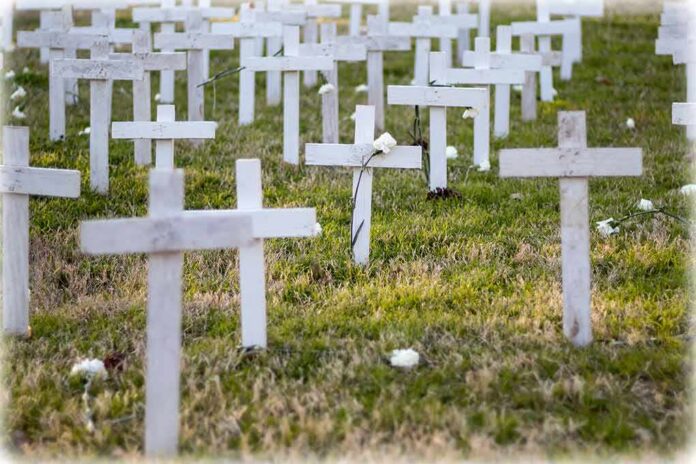
The U.S. Army ran a rare field test at Fort Bragg to practice temporary mass burials for large wartime casualties, a capability not exercised at this scale since the Korean War.
Story Snapshot
- Army units rehearsed digging and managing temporary burial sites for many fallen troops.
- Leaders framed the drill as contingency planning for a high-casualty conflict, not routine work.
- Temporary interment protects health and preserves remains until identification and return.
- This training fits a long U.S. tradition to recover and honor the war dead.
What The Army Practiced At Fort Bragg
Army engineers, logistics troops, and chaplain teams trained to excavate, mark, and refill temporary burial trenches at Fort Bragg during Operation Dragon Covenant Phase II. Soldiers used heavy equipment to build standardized plots designed to hold many remains. The Army described this as a large-scale test of temporary interment procedures meant for a fast-moving, high-casualty fight. Reporters noted this level of training has not been seen in decades, dating back to the Korean War era.
The exercise focused on speed, safety, and record-keeping. Crews rehearsed how to preserve remains for later identification and return to families. Teams practiced trench layout, mapping, and controls to prevent loss or mix-ups. They also drilled how religious-support staff would work on site. The goal was to protect health, respect the fallen, and keep accurate data even under pressure. The Army framed the event as planning for a worst-case war scenario, not a new policy.
Why Temporary Interment Exists In U.S. Doctrine
U.S. military policy treats temporary interment as a last resort when evacuation is not possible. Guidance states it protects health and sanitation, and preserves remains until recovery can occur. Authority for such actions sits with theater command during war. The policy makes clear that when conditions improve, the military identifies and repatriates the fallen. This codified approach aims to balance urgency on the battlefield with duty to families and dignity for the dead.
This practice has deep roots. During the Civil War, Congress created the national cemetery system and formalized the mortuary mission. Over time, the United States built processes to track, mark, and honor the fallen. By World War Two, families could choose to bring loved ones home or have them interred near the battlefield. That legacy shapes today’s training: plan for the worst, record everything, and bring every service member home when possible.
How The Drill Fits Today’s Security And Public Concerns
The Army ran the test as wars and proxy fights strain global stability. Leaders often stress readiness for fast, large conflicts. Practicing mass temporary interment is part of that readiness. It does not signal that mass casualties are expected tomorrow. It does show planners want systems that do not fail under stress. Many citizens worry that government often reacts late. This drill aims to show a plan exists for the hardest day, even if no one wants that day to come.
For both conservatives and liberals, respect for the fallen is common ground. Families expect timely answers, firm identification, and a path to bring loved ones home. The Army says temporary interment supports those goals by preventing loss, disease, or confusion in chaos. That requires skilled engineers, careful logs, and clear roles for chaplains and casualty teams. The Fort Bragg test tried to prove those pieces can work together under the clock and under pressure.
Sources:
realcleardefense.com, prepper.life, wbtv.com, firstpost.com, threads.com, lavocedinewyork.com