
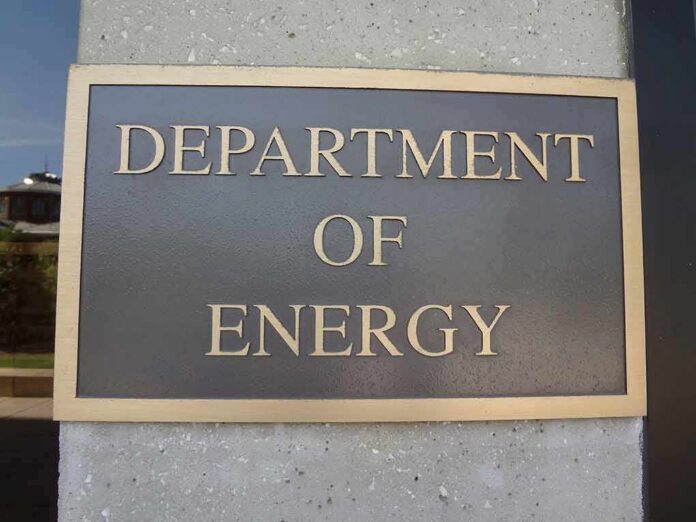
The federal government just offered a nuclear power company up to $4.2 billion to squeeze more electricity out of plants that already exist in Pennsylvania and Ohio.
Story Snapshot
- The Department of Energy offered Vistra Corp a conditional loan of up to $4.2 billion for three nuclear plants.
- The money targets Beaver Valley in Pennsylvania and Davis-Besse and Perry in Ohio.
- The upgrades aim to add 433 megawatts of power, enough for more than 3 million homes.
- Officials say the plan also extends reactor operations by up to 20 years.
- The deal still depends on Vistra meeting specific conditions before funds go out.
Energy Department Backs Nuclear Upgrades Across Two States
The U.S. Department of Energy’s Office of Energy Dominance Financing announced the conditional loan commitment on October 5, 2026. The money would pay for what the industry calls “uprates,” upgrades that let existing reactors safely produce more power without building new plants. Vistra, a Texas-based utility company, would use the funds across its nuclear fleet in the two states.
The three plants named in the deal are Beaver Valley in Pennsylvania and Davis-Besse and Perry in Ohio. Combined, the upgrades are expected to add 433 megawatts of new generating capacity to the regional power grid run by PJM Interconnection, the grid operator serving a large stretch of the eastern United States.
Jobs, Grid Demand, and Reactor Lifespans at Stake
Energy Secretary Chris Wright traveled to Ohio to make part of the announcement in person, framing the investment as a way to boost electricity production while keeping reactors running longer. The plan would extend plant operations by up to 20 years, enough to keep powering more than 3 million homes well into the future. Supporters say the move also protects local jobs tied to the plants.
The timing lines up with a broader surge in electricity demand, driven partly by data centers and artificial intelligence computing that require massive, steady power supplies. Utility companies across the country have been racing to lock in nuclear capacity, since reactors run around the clock and do not depend on weather like wind or solar power.
Money Comes With Strings Attached
Vistra must satisfy certain conditions before the government actually sends the money, since this is a conditional commitment rather than a finished deal. That distinction matters. News of the pending loan first surfaced through a person familiar with the matter on October 3, two days before the official announcement, showing how closely markets and reporters were tracking the negotiations.
Vistra’s stock price jumped about 4% after the Energy Department confirmed the agreement, reflecting investor confidence that the deal will move forward. The company still needs to clear regulatory and financial milestones tied to the loan terms before construction and upgrade work can begin at the three sites.
Why “Uprates” Are Not New Reactors
Despite the attention-grabbing dollar figure, this deal does not create brand-new nuclear plants. It increases output at reactors already running. The Nuclear Regulatory Commission has approved more than 170 power uprates since the 1970s, treating each one as a formal change to a plant’s operating license rather than a routine tweak. The first uprate ever approved came in 1977 at a Maryland plant, boosting output by 5.5%.
Because uprates change a reactor’s licensed power level, companies must seek Nuclear Regulatory Commission approval before any increase takes effect. That means the Vistra plants still face a regulatory review process even after the federal loan commitment clears, a step that will determine how much of the promised capacity actually reaches the power grid.
DOE OFFERED UP TO $4.2B FOR NUCLEAR.
VISTRA PJM FLEET
· DOE's EDF made a conditional loan commitment for uprates and modernization at Beaver Valley (PA), Davis-Besse and Perry (OH).
· The work preserves nearly 4 GW of baseload and adds 433 MW.
The interesting line is life… https://t.co/iF85Bk7H3J
— Odelia Energy (@odeliaenergy) October 5, 2026
Federal loan support for nuclear projects is not unprecedented. The government guaranteed $8.3 billion in loans for two reactors in Georgia years ago, and it has provided $12 billion in loan guarantees since 2014 for the first new large-scale reactors built in the country in three decades. The Vistra deal fits into that pattern of Washington using credit, not direct spending, to keep aging nuclear assets alive and growing.
For residents near Beaver Valley, Davis-Besse, and Perry, the practical payoff would be more reliable electricity and continued local employment tied to the plants. For taxpayers, the deal represents a conditional federal bet, backed by loan terms rather than a blank check, on keeping America’s existing nuclear fleet running longer and harder as power demand keeps climbing nationwide.
Sources:
townhall.com, energy.gov, powermag.com, energytech.com, altoonamirror.com, nampa.org, stocktwits.com, interestingengineering.com, tribuneindia.com, constructionreviewonline.com, investors.com