
The Supreme Court’s 6-3 ruling that the International Emergency Economic Powers Act does not allow presidential tariffs reshapes who controls America’s trade taxes—and who pays next.
Story Snapshot
- The Court said emergency economic powers do not let the president impose tariffs.
- President Trump’s global tariffs collected large sums before being struck down.
- Justices tied tariff power to Congress and demanded clear authorization.
- New lawsuits now target tariffs under other trade laws, keeping the fight alive.
What The Court Decided And Why It Matters
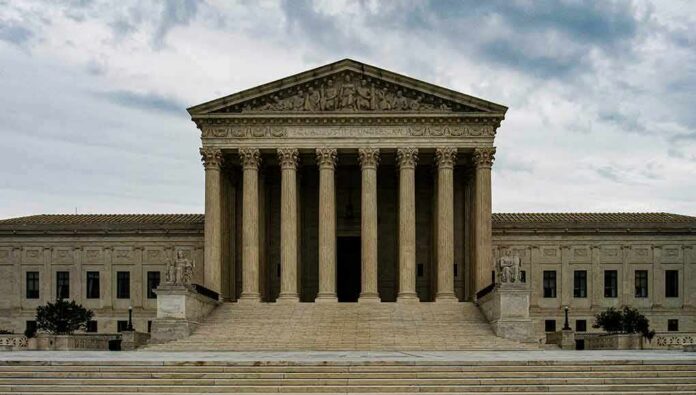
On February 20, 2026, the Supreme Court ruled that the International Emergency Economic Powers Act does not authorize the president to impose tariffs. Chief Justice John Roberts wrote that tariffs are a taxing power that belongs to Congress unless a law clearly says otherwise. The majority required “clear congressional authorization” before a president can set duties in peacetime. The decision narrows executive power on trade and resets the balance toward Congress.
The ruling came in Learning Resources, Inc. v. Trump, which challenged global tariffs that the administration tied to national emergencies over drug trafficking and trade imbalances. The Court rejected the government’s reading of the statute’s phrase allowing regulation of importation, holding that it does not stretch to tariff-setting. The opinion emphasized text, history, and the Constitution’s design for who may levy taxes in normal times.
How We Got Here: Tariffs First, Then A Legal Check
In 2025, the administration launched broad tariffs under emergency authority and collected significant revenue while litigation moved forward. Major outlets reported that collections mounted into the tens of billions before the Court’s decision halted the program. The rapid rollout showed how fast executive tools can move money and markets, even when courts later step in. That speed is why both supporters and critics saw this case as a high-stakes test.
After losing on the International Emergency Economic Powers Act, the administration explored other trade statutes to defend or retool global duties. Later court fights focused on tariffs justified under Section 301 and related laws, with importers arguing those measures also exceeded legal limits. The Court of International Trade has been weighing those claims, keeping the legal and economic uncertainty alive for businesses and consumers.
Why Both Right And Left See A System Problem
Supporters of tough tariffs say Washington ignored unfair trade, hollowed out factories, and let drugs flood communities. They argue that emergencies demand swift action when Congress stalls. Opponents counter that blanket duties act like hidden taxes that raise prices and invite retaliation. The Court’s message is simple: if the government wants broad, lasting tariffs, Congress must pass a law that says so in plain terms.
This split exposes a deeper frustration across the political map. Many Americans think powerful insiders play by special rules while families pay higher prices. The tariff whiplash—announce, collect, litigate, refund—feels like government by workaround. That cycle breeds doubt that leaders in either party will face the hard tradeoffs in public, write clear laws, and accept accountability for the costs and benefits those choices bring.
What Changes Next For Prices, Policy, And Power
Businesses now press for refunds and predict months of accounting clean-up. Households could see some price relief if duties fall away, though supply chains take time to adjust. Foreign partners will watch whether Congress steps in with a new, narrower tariff tool that targets real threats without sweeping in everyday goods. Clearer statutes could reduce lawsuits and give companies a stable playbook for planning.
The U.S. Supreme Court ruled that President Donald Trump overstepped his executive authority by using a 1977 emergency law to unilaterally impose sweeping global tariffs without clear congressional approval.
— Silver miner (@johnnylightnin) October 2, 2026
For Congress, the ball is back in its court. Lawmakers can leave policy to drift, or they can write targeted authority with guardrails, reporting, and sunsets. For the White House, the ruling trims emergency shortcuts and raises the bar for future trade actions. For voters, the lesson is larger: when the biggest economic moves happen by executive order, courts will keep cutting them back until elected representatives do the legislative work the Constitution demands.
Sources:
redstate.com, supremecourt.gov, yahoo.com, abcnews.com, cnbc.com, cfr.org