
Police say an 18-year-old was seen dropping a plastic tub that held a dismembered torso at a Georgia apartment complex.
Story Snapshot
- Police arrested 18-year-old Kingston Bradley after a body was found at a Smyrna apartment complex.
- A witness reported he dropped a plastic tub that held a dismembered human torso, then ran.
- Bradley is charged with concealing the death of another and is held without bond, officials said.
- The case began with a missing person call, a common path in early homicide probes.
What Police Say Happened at the Smyrna Apartments
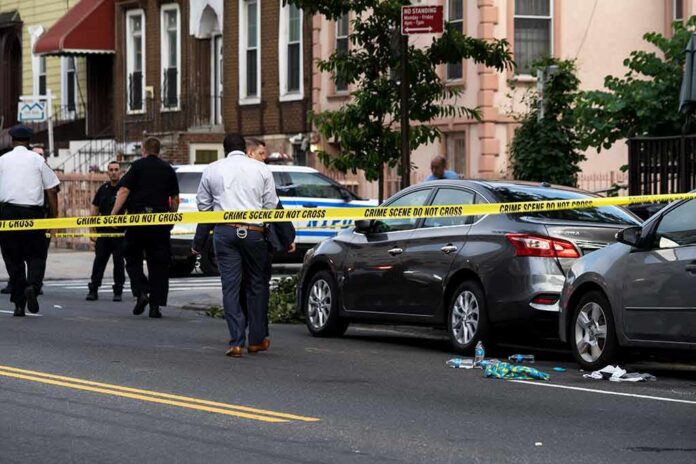
Smyrna police responded to a missing person call around 8:15 p.m. at the Park Valley Apartments on Valley Parkway. During that response, officers found the body of a woman and took an 18-year-old into custody. Police identified the suspect as Kingston Bradley. Local outlets reported that a witness saw Bradley carrying a heavy plastic tub, then dropping it and fleeing toward a nearby unit. Officers began a homicide investigation at the scene that night.
Reporters citing an arrest warrant said the tub contained a dismembered human torso. The witness account placed Bradley at the location with the container before he ran. Police later confirmed a charge of concealing the death of another. Coverage noted that Bradley was being held without bond at the Cobb County jail as the investigation continued. Authorities did not immediately release the victim’s name pending formal identification and family notification.
The Charges and What They Mean for the Case
Bradley faces one count of concealing the death of another, according to reporting that referenced the arrest paperwork. That charge focuses on actions taken to hide a death rather than to prove who caused it. Police described the broader effort as a homicide investigation. That means detectives and the medical examiner will work to determine cause and manner of death, identify the victim, and map a timeline. Additional charges could follow as evidence is processed.
Local coverage tied the charge to what officers and witnesses observed at the scene. The account of a dropped tub and a flight toward a nearby apartment will drive search warrants and forensic testing. Investigators often secure areas fast, look for cameras, and collect phones and records to build a timeline. Those next steps take time, and early information usually comes through warrants and brief police statements while lab work is pending.
Why Early Details Often Come From Warrants and Calls
Journalists often get first facts in homicide cases from missing person calls, dispatch logs, and arrest warrants. Federal court guidance notes that warrants offer an early window into a case, but they are built on probable cause and can change as more evidence is gathered. Police manuals also stress the first hours after a violent death, when securing the scene and finding witnesses can make or break a case.
🚨 This case out of Smyrna, Georgia is developing, and the arrest warrant is…a lot.
Police investigating a missing person found the dismembered torso of a woman inside a plastic storage tub Wednesday night.
According to the warrant, a witness saw 18-year-old Kingston Lammar… pic.twitter.com/kEjesaqJqK
— Clinical Menace (@clinicalmenace_) September 25, 2026
In Smyrna, the timeline fits that pattern. Officers arrived on a missing person call, found a body, and made an arrest the same night. The reported witness account and the contents of the tub shaped the first public narrative. For families and neighbors, this feels sudden and brutal. For detectives, it is the start of a slow, methodical process that must match lab results, video, and device data to what people saw and heard at the scene.
Sources:
nypost.com, newsbreak.com, ajc.com, smyrnaga.gov