

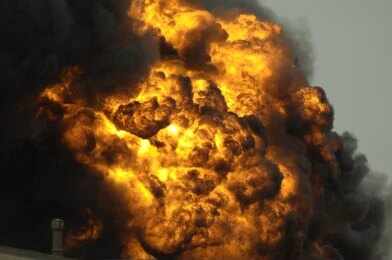
A massive blast at Qatar’s main gas hub has shaken global energy markets and exposed how fragile the world still is when it relies on hostile regimes and unstable regions for fuel.
Story Snapshot
- A huge explosion at Qatar’s Ras Laffan gas complex injured 54 workers and left 18 missing, raising fresh fears over global energy security.
- Qatari officials quickly blamed a “technical malfunction” during start-up at the Barzan gas facility and insisted there was no gas leak threat to the public.
- The plant was restarting after earlier damage tied to the Iran conflict, underscoring how Middle East instability keeps hitting fuel supplies.[2][8]
- Process-safety history shows many such blasts come from internal failures and weak oversight, yet Qatar has released no detailed forensic report.[19]
Major Blast At Key Qatari Gas Hub Rocks Workers And Markets
Authorities in Qatar say an explosion and fire at the Ras Laffan Industrial City gas complex left 54 people injured and 18 missing after a nighttime blast tore through the Barzan local gas supply facility.[3] Officials describe the event as an internal “technical incident” that happened during the start-up of operations at the factory, part of Qatar’s main liquefied natural gas hub that feeds both local industry and export flows.[1] Emergency teams rushed in and say they have the fire under control.[1]
The country’s Interior Ministry reported that search and rescue teams from civil defense and the Qatar International Search and Rescue Group are still looking for those missing in the wreckage.[5] The ministry also stated that no gas leaks or hazardous releases were detected that would threaten the wider public, even though the blast was powerful enough to rattle windows in Doha, about 70 kilometers away.[4][8] That mix of heavy damage on site but “no public risk” is now a central point in how the government is framing the disaster.[4]
Officials Push “Technical Malfunction” Line While Key Details Stay Hidden
Qatari leaders and the state energy company, QatarEnergy, have moved fast to label this a technical malfunction during start-up operations, using phrases like “technical accident,” “technical incident,” and “operational incident” in public statements.[3][5] Those words point toward a process failure inside the plant rather than an outside attack and are now repeated across much of the international media coverage. Yet authorities have not shared what exact valve, control system, or procedure failed, or released any root-cause report that would back up the claim.[3]
Several outlets note that the ministry’s description changed over time as casualty figures rose, shifting from early talk of few or no injuries to a confirmed count of 54 injured and 18 missing as information firmed up.[4][6] That kind of evolving message often happens in industrial crises, but it also feeds public doubts when a government controls the flow of information. In this case, Qatar is the only named technical voice so far, with no independent engineering body yet on record to confirm or challenge the internal-explosion narrative.[3]
Restart After Iran-Linked Conflict Shows How Geopolitics And Safety Collide
Reports stress that the Barzan facility was in the middle of restarting operations that had been halted earlier in the year after Iranian attacks or threats in the region disrupted Ras Laffan and other Gulf energy sites.[2][8] Workers were bringing systems back online when the blast occurred, a timing that matters because process-safety experts have long warned that start-up and shutdown periods are among the most dangerous phases at refineries and gas plants.[19][20] These phases often involve unusual flows, manual overrides, and complex coordination that raise the risk of failure.
At the same time, the facility itself sits at the heart of Qatar’s energy machine, a major liquefied natural gas export hub that global buyers depend on to keep lights on and homes heated around the world.[1][8] Previous Iranian missile and drone incidents aimed at Ras Laffan and nearby sites show that hostile actors understand this leverage and are willing to threaten or hit energy infrastructure to gain power in regional conflicts.[15] Even when the latest disaster is described as internal, it still happens against a backdrop of war, threats, and earlier strikes that keep markets nervous.
Pattern Of Industrial Disasters Raises Hard Questions On Oversight
Across decades of industrial history, many deadly refinery and gas plant explosions have later been traced not to enemy fire but to internal failures, ignored warnings, and weak safety culture.[19][23] Detailed studies of past disasters, such as the Texas City refinery blast, show how overloaded equipment, faulty alarms, poor maintenance, and rushed start-up procedures can combine into a massive fireball when flammable gas finds a spark.[19][20] Research on process industries finds that most large losses come from explosions during non-routine operations rather than steady, normal running.[23]
Qatar: Explosion at Ras Laffan gas facility leaves 54 injured, 18 missing. Fire broke out at Barzan plant during restart operations.#QatarNews #LNG #GlobalEnergyhttps://t.co/zaJuTFB29R
— Sambad English (@Sambad_English) June 22, 2026
What makes the Qatar case troubling is that authorities are asking the world to accept the “technical malfunction” label without sharing the kind of forensic breakdown that has followed serious accidents in more transparent systems.[3][19] There is no public incident report, no list of failed components, no timeline of alarms and operator actions, and no independent regulator’s findings on whether design, maintenance, or training fell short. For a hub this vital to global energy markets, that lack of detail leaves families of the injured, global consumers, and allied governments guessing.
Sources:
[1] Web – Qatar gas plant blast injures 54 people, 18 missing
[2] Web – Fifty-four injured and 18 missing after explosion at Qatar …
[3] Web – Qatar factory explosion leaves several injured, no gas leak …
[4] YouTube – Qatar Under Attack? Over 50 Injured, 18 Missing As …
[5] YouTube – An Explosion Followed By A Fire Broke Out At The Barzan …
[6] Web – Ministry of Interior reported an explosion resulting from a …
[8] Web – Ministry of Interior reported an explosion resulting from a ” …
[15] Web – The scale of the industrial disaster in northern Qatar has … – …
[19] Web – View of Forensic Engineering Investigation of Factors Contributing to …
[20] Web – America’s Deadliest Industrial Explosions — What Went Wrong and …
[23] Web – Industrial Disasters and Their Importance – BakerRisk