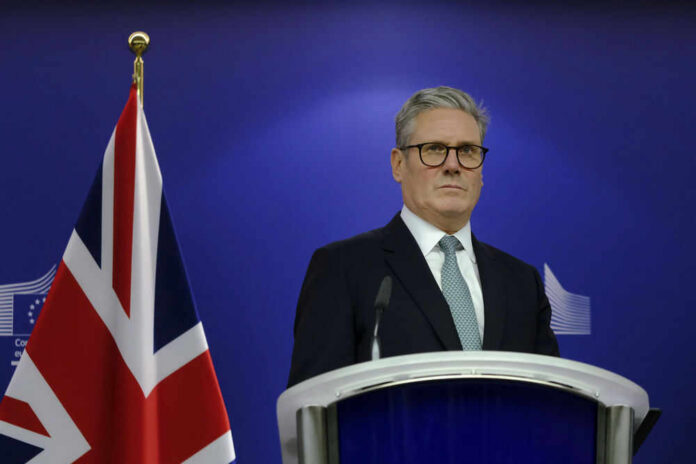
Keir Starmer’s resignation shows how fast party pressure can strip power from a prime minister, even before voters get a final say.
Quick Take
- Starmer said he would step down after hearing that his parliamentary party no longer saw him as the best leader for the next election.
- He will stay on as caretaker prime minister until Labour picks a successor.
- The move follows months of mounting pressure after weak local election results and internal revolt.
- The episode highlights how brittle modern British politics has become, with party rules and media pressure driving events quickly.
Why Starmer Stepped Aside
Starmer said he is resigning because his parliamentary party no longer believes he is best placed to lead Labour into the next general election. He told the public that he had heard that answer and accepted it “with good grace,” then said he had informed King Charles III and asked Labour’s National Executive Committee to begin the leadership process [1].
That statement matters because it turns the story from rumor into a formal transition. Starmer did not deny the pressure around him. He set out a path for an orderly handover, saying he would remain in office until a new leader is chosen. That makes this less like a sudden collapse and more like a controlled exit under heavy strain [2][3].
The Pressure Behind the Decision
Starmer’s exit did not come out of nowhere. Reporting before the resignation described a deep split inside Labour, with more than 80 lawmakers publicly urging him to go and several ministers quitting in protest [7][8]. Other coverage said the pressure began after disastrous local election results, which gave critics inside the party fresh evidence that his leadership was losing support [20][21].
The British system gives party members a fast way to move a leader out. The Institute for Government says a Labour leadership contest can begin if the leader resigns or if enough lawmakers back a challenger [9]. That structure helps explain why Starmer’s decision turned into a real political event so quickly. Once MPs started organizing around a change, the issue became survival, not just message control.
What Comes Next for Labour
Starmer said Labour should choose a new leader before Parliament returns for its next major phase of work. He also said he would stay in place until that contest ends, which is meant to keep the government from drifting during the handover [1][4]. In practical terms, that means Britain now enters a period of uncertainty in which ministers, party officials, and rival contenders will all try to shape the next phase.
Keir Starmer officially announces his resignation:
“I will resign as Leader of the Labour Party. I have spoken to His Majesty the King this morning to inform him of my decision.”pic.twitter.com/THHGmimGN8
— Chloe Smith 🇺🇸 (@ChloeSmith1728) June 22, 2026
The larger lesson is broader than one resignation. Britain has seen repeated leadership turnover in recent years, and this case adds to the sense that parties can now unravel fast when local losses, faction fights, and public distrust collide [6][7]. For readers on both left and right, the deeper problem is familiar: people keep seeing government leaders spend more time defending their own survival than fixing the problems that matter most.
Sources:
[1] Web – British Prime Minister Keir Starmer announces resignation
[2] Web – Keir Starmer’s first speech as Prime Minister: 5 July 2024 – GOV.UK
[3] Web – Starmer is on the precipice as pressure builds for the UK … – PBS
[4] Web – British Prime Minister Keir Starmer announced his resignation on …
[6] Web – UK Prime Minister Keir Starmer announces his resignation on …
[7] Web – U.K. Prime Minister Keir Starmer announced Monday that he will …
[8] Web – Keir Starmer’s Britain: Can the Centre Hold? – Taylor & Francis
[9] Web – John Healey and Al Carns: Resignation letters in full and … – BBC
[20] Web – Reports suggest British Prime Minister Keir Starmer is preparing to …
[21] Web – U.K. Prime Minister Keir Starmer faces calls to resign after …