
As corporate media fawns over celebrities and woke causes, President Trump just quietly honored three warriors who bled for this country in Vietnam and Afghanistan.
Story Snapshot
- President Trump awarded the Medal of Honor to Maj. James Capers Jr., Col. John W. Ripley, and Maj. Nicholas Dockery for extraordinary combat heroism.
- Capers’ Vietnam valor required a special act of Congress after nearly 60 years of delay, highlighting how the system long overlooked some front‑line Marines.
- Trump’s ceremony tied together Vietnam and Afghanistan, reminding Americans that real freedom is secured by men in uniform, not bureaucrats and activists.
- The strict Medal of Honor process shows these awards rest on hard evidence and sworn accounts, not political fashion or media spin.
Trump Honors Heroes Who Did the Hardest Jobs for America
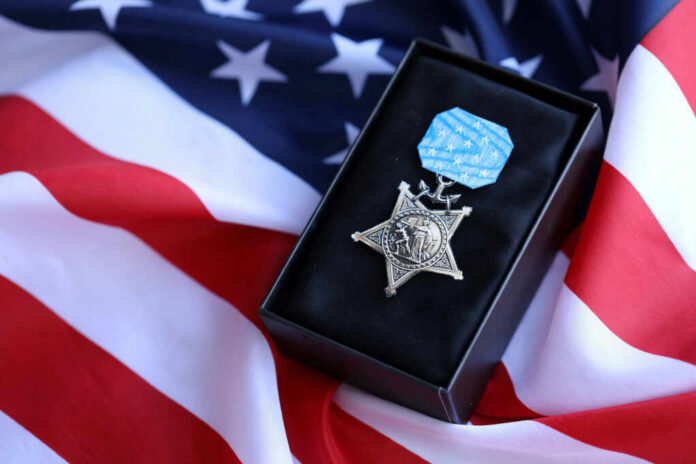
On June 18, 2026, President Donald Trump stood in the East Room of the White House and placed the Medal of Honor, our nation’s highest award for valor, around the necks of retired Marine Major James Capers Jr. and retired Army Major Nicholas Dockery, while honoring the family of the late Marine Colonel John W. Ripley.[2] These three men fought in Vietnam and Afghanistan, facing deadly fire so that other Americans could live.[1] In a town full of lobbyists and talkers, this ceremony focused on doers.
According to live coverage from the ceremony, Capers, Ripley, and Dockery were recognized for acts of “extraordinary bravery” that stopped enemy attacks and saved many lives in combat.[2] The Medal of Honor is only given for “conspicuous gallantry” at the risk of one’s own life, far above the normal call of duty, and only after a long review of reports and sworn witness statements.[9] That means these awards were not a photo op; they were the final step in a tough legal and military process.
James Capers Jr.: Vietnam Recon Marine Finally Gets His Due
Retired Marine Major James Capers Jr., now 88, waited nearly six decades for this moment.[1] As a young second lieutenant leading a Force Reconnaissance patrol near Phu Loc, Vietnam, in 1967, Capers and his men were dropped deep behind enemy lines.[1] Over four days, he repeatedly attacked a larger North Vietnamese force, called in deadly accurate fire on an enemy base, and blocked a planned assault on nearby Marines.[1] He did all this while suffering multiple serious gunshot wounds.
On the final day of that mission, Capers’ patrol was caught in an ambush.[1] Despite his injuries, he kept directing fire, organizing his Marines, and moving them toward an extraction zone under heavy enemy pressure.[1] White House descriptions of his citation say his actions directly saved the lives of the men under his command.[1] For years, paperwork and politics buried his case. Congress had to pass H.R. 3377, which President Trump signed in March 2026, to waive the usual time limits and authorize this Medal of Honor at last.[3]
John Ripley and Nicholas Dockery: Bridging Vietnam to Afghanistan
Colonel John W. Ripley, a Marine legend who died in 2008, received the Medal of Honor posthumously, with his son accepting the award from President Trump.[2][4] Ripley had already earned the Navy Cross for a mission in Vietnam that Marines still study today.[4] In that operation, he went “above and beyond the call of duty,” as Trump’s remarks put it, placing himself in extreme danger to stop enemy forces from overrunning friendly troops.[4] This upgrade to the Medal of Honor again shows how some Vietnam heroes had to wait decades for full recognition.
Trump awards three Medals of Honor to Vietnam, Afghanistan veterans https://t.co/dqUOCptjQ6
— USA TODAY Politics (@usatodayDC) June 19, 2026
Army Major Nicholas Dockery represents a newer generation of warriors who fought in Afghanistan.[2] As then–Second Lieutenant Nicholas Dockery, he faced Taliban fighters in brutal close combat, in an era when many politicians pushed endless wars but few in Washington carried the personal cost.[1][4] Trump’s ceremony linked Dockery’s fight in Afghanistan with the battles of Capers and Ripley in Vietnam, reminding Americans that the threats change names, but the courage looks the same: small units, under fire, refusing to quit.
Why the Medal of Honor Still Matters in a Divided Country
The Medal of Honor was created during the Civil War and remains the nation’s highest military award for valor.[19] By law, it is given only to service members who show “gallantry and intrepidity” at the risk of life, in combat against an enemy.[21] The nomination process often takes more than 18 months and requires detailed reports, sworn eyewitness statements, and approvals up the chain of command to the president.[21] This strict standard protects the award from political games that infect so much else in Washington.
For many readers, it is hard not to notice the contrast. Politicians in both parties have spent years pushing bloated spending, open borders, and culture wars that divide families, while men like Capers, Ripley, and Dockery quietly carried rifles in rice paddies and mountain valleys.[1][4] During his time in office, Trump has presented multiple Medals of Honor for battlefield bravery, often to veterans long ignored by earlier administrations.[3] Honoring warriors is not a partisan act; it is a return to priorities that put national defense, sacrifice, and duty back at the center of American life.
Sources:
[1] YouTube – Trump awards three Medals of Honor to Vietnam, Afghanistan veterans
[2] Web – President Trump awards Medal of Honor to Major James Capers Jr
[3] YouTube – LIVE: President Trump awards Medal of Honor to three veterans
[4] Web – President Trump Signs Bill to Authorize Medal of Honor for Maj …
[9] YouTube – LIVE: U.S. President Donald Trump Awards Medal of Honor to Three U.S. …
[21] Web – The Highest Military Honor — The Medal of Honor – AAFMAA.com