When Israel and Hezbollah quietly pause a brutal fight so an unelected mix of diplomats, generals, and foreign governments can salvage their own deal, it raises a hard question: who is really calling the shots over war and peace?
Story Snapshot
- Israel and Hezbollah have agreed to halt heavy fighting in southern Lebanon, but neither side has publicly confirmed the truce.
- The pause is less about protecting civilians and more about saving a fragile United States–Iran agreement to end their war.
- Both Israel and Hezbollah are demanding leverage — Israeli troops stay in Lebanon, Hezbollah wants them out — with Lebanon’s sovereignty caught in the middle.
- Americans are again paying in tax dollars and risk for a foreign “ceasefire” that may be a short pause, not real peace.
Fighting Paused to Protect a Bigger Deal
U.S. and regional officials say Israel and the Iran-backed group Hezbollah agreed Friday to stop attacks in southern Lebanon after a deadly burst of fighting killed dozens of people and four Israeli soldiers.[2] The clashes were so intense they threatened to derail a new agreement meant to end the war between the United States and Iran, pushing Washington, Tehran, Qatar, and others to scramble for a quick halt in Lebanon.[2][7] Officials describe a ceasefire that took effect around 4 p.m. local time, but stress it was arranged quietly and under pressure.[2][7]
Neither Israel nor Hezbollah has stepped up to a microphone to say, on the record, that they accept this new truce.[1][2][3] That silence should matter to anyone tired of politicians bragging about “historic” deals that fall apart in days. The pause came only after a heavy exchange of fire across the border, which shows both sides still believe force is the way to gain leverage. For now, officials talk about calm, while the men with the guns have not fully owned the deal.[2][6]
Lebanon’s Sovereignty on Paper, Not on the Ground
The wider United States–Iran agreement that this truce is trying to save says military operations in Lebanon are supposed to stop and that Lebanon’s sovereignty is to be respected.[2][3][5] Yet neither Israel nor Hezbollah is a formal party to that deal, even though they are doing the shooting and the dying.[2][3][6] This is a pattern many Americans recognize at home: powerful players negotiate over someone else’s land and lives, then insist that the people on the ground simply “comply.” In this case, Lebanon again becomes a battlefield others bargain over.
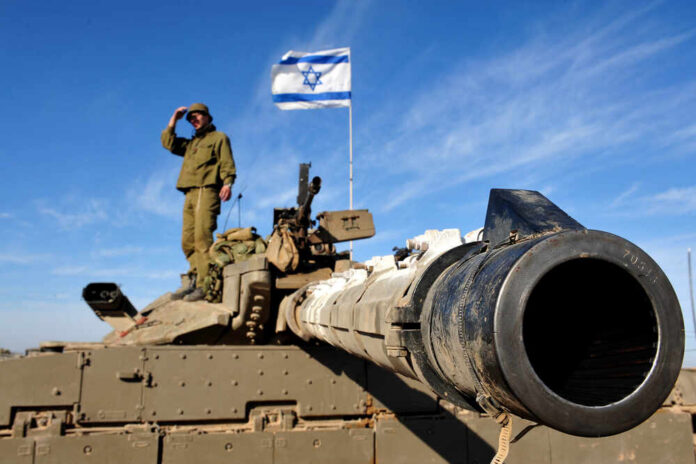
Israeli Prime Minister Benjamin Netanyahu has vowed that Israeli forces will stay in southern Lebanon until what he calls the Hezbollah threat is removed, and he insists on keeping a “security zone” there as long as Israel’s “security needs” require it.[1][3][5] Hezbollah, backed by Iran, says it will not halt attacks unless Israel commits to pull its troops out of Lebanon, and Iranian officials echo that demand as a condition for the broader deal.[2][3] Both sides talk about security, but neither is offering Lebanese citizens real control over their own border region any time soon.[3]
Talks Delayed, Pressure Rising on Washington
The latest bloodshed in Lebanon was serious enough that Iranian officials refused to travel to scheduled talks in Switzerland, insisting the fighting must stop before negotiations can resume.[2][4][6] Those talks are supposed to turn an interim United States–Iran ceasefire into a more lasting arrangement, including rules on missiles, drones, and regional militias. Instead, Washington is stuck in the middle again, trying to police another front line while American taxpayers still fund much of Israel’s war machine and United States forces remain on alert across the region.
For many Americans on both the right and the left, this looks like the same movie they have seen for decades. Leaders in Washington talk about “ending wars,” yet the United States keeps pouring weapons, money, and diplomatic capital into conflicts that never really stop.[20] Each new ceasefire is sold as a breakthrough but often functions as a brief timeout, not a real solution. The Lebanon front is now tied directly to whether Trump’s administration can claim a foreign policy win with Iran, which gives every armed group in the region another pressure point over U.S. politics.[2][8]
A Fragile Pause in a Rigged System
On the ground, people in southern Lebanon and northern Israel simply want the bombing to stop long enough to bury their dead and rebuild shattered towns. Yet the current pause came only after 47 people in Lebanon and four Israeli soldiers were killed in a single spasm of fire.[2][5] This is the brutal logic of these “managed” wars: civilians bleed first, then distant officials decide the cost is high enough to pause, but not to fix the underlying causes. That should sound familiar to Americans watching crime, borders, and debt ignored until crisis hits.
Middle East experts warn that modern ceasefires are often tools for “escalation management” instead of real peace, designed to contain risk while avoiding the hard political work of real settlements.[20] That is what many Americans now fear about their own government: a system that manages crises just enough to protect the powerful, while the working and middle classes pay the price. In Lebanon, as in Washington, ordinary people are told to celebrate a fragile pause, even as the deeper struggle over power, money, and freedom continues just out of view.
Sources:
[1] Web – Israel and Hezbollah Agree to Halt Fighting as Talks Between the US …
[2] YouTube – Lebanon and Israel extend fragile ceasefire, create security zones …
[3] Web – Israel, Lebanon agree to renew fragile ceasefire and create security …
[4] Web – A 10-day ceasefire agreed on by Israel and Lebanon goes into effect
[5] YouTube – Lebanon and Israel extend fragile ceasefire, create …
[6] Web – Ten Day Cessation of Hostilities to Enable Peace Negotiations …
[7] Web – A 10-day ceasefire agreed on by Israel and Lebanon goes into effect
[8] Web – What we know about the Israel-Lebanon ceasefire – Al Jazeera
[20] Web – The Art of the Ceasefire | The New Yorker