

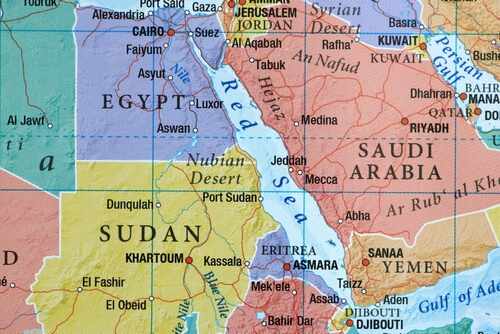
A little-known militia just claimed the power to decide which ships can sail a vital global trade artery—and said Israeli vessels are now barred from the Red Sea.
Story Snapshot
- Yemen’s Houthi movement declared a “total ban” on Israeli maritime navigation in the Red Sea [8][9].
- Houthi spokesmen have long warned that ships bound for Israeli ports are “legitimate targets” [3].
- Open-source tallies describe sustained Houthi attacks on commercial shipping since 2023, disrupting trade routes [6].
- Some claimed strikes lack independent verification, underscoring an information war alongside physical attacks [2].
Houthis Announce a ‘Total Ban’ on Israeli Shipping
Yemen’s Iran-aligned Houthi movement publicly announced a “complete and total ban” on Israeli maritime navigation in the Red Sea, framing the step as part of its campaign tied to the Israel-Hamas conflict [8][9]. Group statements assert that vessels linked to Israel, or headed to Israeli ports, fall within their target set. The declaration escalates months of threats and intermittent attacks, raising questions about how much a nonstate actor can practically police one of the world’s most critical choke points for energy and goods.
Houthi military messaging has for more than a year signaled intent to expand targeting to ships with Israeli destinations. A widely cited statement from a Houthi military spokesman in 2024 warned, “We will target any ships heading to Israeli ports in the Mediterranean Sea in any area we are able to reach,” underscoring an ambition that stretches beyond Yemen’s immediate waters [3]. The latest “ban” builds on that rhetoric, aiming to deter operators, insurers, and ports through declared red lines rather than formal control of sea lanes.
Documented Attacks Versus Verified Effects at Sea
Independent research has tracked dozens of Houthi strikes on commercial shipping since late 2023, producing rerouting, delays, and higher freight and insurance costs across multiple sectors [6]. Open-source chronologies describe the Red Sea crisis as an ongoing maritime conflict where the group has launched missiles and drones at commercial and naval vessels it labels Israeli-linked [4]. However, some claimed hits remain unconfirmed by maritime authorities, reflecting a pattern where information operations run in parallel with selective use of force [2].
Media reports have highlighted instances where Houthis claimed successful strikes but international monitors did not confirm damage to ships or facilities, stressing the fog that accompanies real-time naval incidents [2]. This dynamic—bold declarations, selective enforcement, and uneven verification—is characteristic of modern “gray-zone” maritime confrontation, where even limited capacity can yield outsized economic and political effects [6].
Implications for Trade, Energy Prices, and U.S. Voters
Shipping companies facing uncertain threat maps often reroute around Africa, adding time, fuel costs, and supply delays. Analysts have tied the cumulative effect of Red Sea disruptions to uneven shocks in global logistics and pricing, with downstream consequences for consumers and manufacturers already wary of inflation and fragile supply chains [6]. While a blanket, enforceable “ban” is difficult for a militia to maintain, intermittent attacks and warnings can still pressure insurers and charterers to avoid contested waters, amplifying costs beyond the immediate conflict zone [6].
Houthi Red Sea ban targets Israeli ships as Yemen’s rebels claim missile strikes on Israel amid renewed regional fighting.
— mudassarali (@mudassa35009702) June 8, 2026
For Americans who feel Washington prioritizes geopolitical theater over kitchen-table stability, this episode reinforces a broader worry: a handful of actors can rattle a global system the United States depends on, while the federal response often looks reactive, bureaucratic, and slow. Conservatives see exposure created by energy policies that limited domestic resilience; liberals see multinationals passing higher costs to workers and families. Both sides see a system where elites absorb shocks while ordinary people pay the bill.
What to Watch Next: Enforcement, Escorts, and Insurance
Key indicators will signal whether the “ban” shifts from rhetoric to durable constraint. First, watch for verified interdictions or boardings of vessels with documented Israeli destinations. Second, track changes by major insurers and shipping alliances as they reassess war risk premiums. Third, monitor whether naval escorts, convoying, or port-state measures expand or stall. Finally, evaluate whether claimed Houthi strikes are independently corroborated; persistent verification gaps would suggest information pressure more than sustained sea denial [2][6].
Sources:
[2] YouTube – Yemen’s Houthis target Israeli ships: Group closely monitor Red Sea …
[3] YouTube – Houthis Claim Strikes On Ship Linked To Israel In Red Sea And …
[6] Web – Houthis to Target Ships in Red Sea that Travel to Israeli Ports in …
[8] Web – Houthi ban US vessels from Red Sea in response to Yemen attacks
[9] Web – Yemen’s Iran-backed Houthis ban Israeli ships from Red Sea