
A massive cross‑border narco tunnel hidden behind a San Diego storefront shows how deeply cartel smuggling networks have burrowed under our border while Washington still argues about “secure borders” on cable news.
Story Snapshot
- Federal agents uncovered an extraordinarily long, sophisticated tunnel linking Tijuana to the Otay Mesa area of San Diego, tied to more than a ton of cocaine seized by authorities.
- The tunnel featured industrial lighting, ventilation, and a rail or track system, indicating a high‑dollar operation designed for repeated drug shipments into the United States.
- Prosecutors charged multiple individuals with conspiracy after linking the tunnel to a large narcotics cache, but public documents still stop short of proving which cartel leadership ordered or financed the project.
- The Otay Mesa discovery is the 13th large‑scale drug‑smuggling tunnel found along the California border since 2006, underscoring a persistent enforcement and border‑security failure.
How Agents Found One of the Longest Drug Tunnels on the California Border
Federal agents and border officers say the newly uncovered tunnel was mapped out as a nearly three‑thousand‑foot corridor burrowing from a residence in Tijuana to an industrial area near Otay Mesa in San Diego.[1] U.S. officials describe it as the longest known cross‑border drug‑smuggling tunnel ever found along the California‑Mexico line, a designation that reflects both distance and complexity. The shaft on the Mexico side was reportedly concealed under new tiles in a house, designed to look like an ordinary residence, not a major narcotics hub.[2]
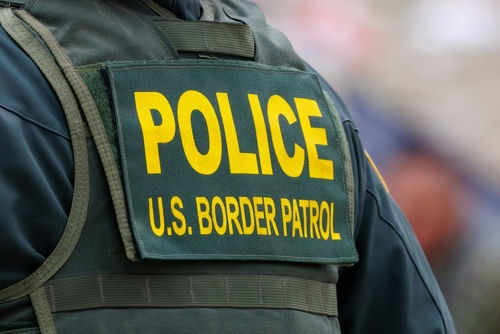
Customs and Border Protection (CBP) and the U.S. Border Patrol report that the tunnel stretched well over one thousand feet into United States territory, passing under portions of the Otay Mesa Port of Entry before surfacing in a warehouse or commercial lot area.[2] Agents say the passageway was roughly 42 inches tall and 28 inches wide, just big enough for people or compact cargo loads to move through.[1] Authorities coordinated with Mexican law enforcement to trace the origin point and then moved to seal the passage with concrete after documenting its layout.[1][2]
Industrial‑Grade Design: Lighting, Ventilation, and Rail Systems
Border agents say the tunnel was not a crude hole in the ground but a fully engineered corridor with electric lighting, ventilation, and a built‑in rail or track system intended to move heavy loads quickly from Mexico into California.[2] The interior included shoring, wiring, and other infrastructure that resembles earlier cartel‑built tunnels discovered in the same Otay Mesa corridor since the mid‑2000s.[2] These features strongly indicate that the route was meant for sustained, high‑volume narcotics trafficking, not a one‑time run or casual smuggling attempt.[2]
According to the U.S. Attorney’s Office for the Southern District of California, the discovery of the tunnel coincided with a seizure of what officials describe as more than a ton of cocaine, along with other narcotics, tied to the same investigation. Prosecutors say a box truck and nearby stash locations were part of the operation, suggesting the tunnel fed drugs directly into local distribution nodes before they could be moved deeper into the United States. Officials have charged six defendants with conspiracy in connection with the smuggling scheme, underscoring that the case is at the allegation stage, not yet a completed prosecution.
Cartel Attribution, Repeat Tunnels, and What the Public Still Does Not Know
The Department of Justice press materials and border‑agency briefings emphasize that this was the 13th large‑scale operational drug‑smuggling tunnel discovered along the California border since 2006, most of them clustered around Otay Mesa and the broader San Diego–Tijuana region. That track record shows a clear pattern: every time authorities shut down one tunnel, traffickers invest in another, exploiting the same geography and soil conditions and counting on slow‑moving bureaucracy in both capitals.[2] Officials frame these cases as part of a long‑running battle against sophisticated transnational drug groups.
Publicly available documents in this case detail the tunnel’s size, engineering, and the linked cocaine seizure, but they do not lay out forensic proof tying construction orders to a specific cartel leadership hierarchy. The government has not released communications, engineering records, or financial trails in open sources that would definitively show which organization financed or commanded the tunnel’s excavation and operation. For now, what is firmly documented is the physical tunnel, its advanced design, and a very large narcotics cache seized on the United States side of the line.
Sources:
[1] Web – CJNG Narco Tunnel Discovered in San Diego Storefront, Over 1 Ton of …
[2] YouTube – Border Patrol agents discover incomplete drug-smuggling tunnel …