
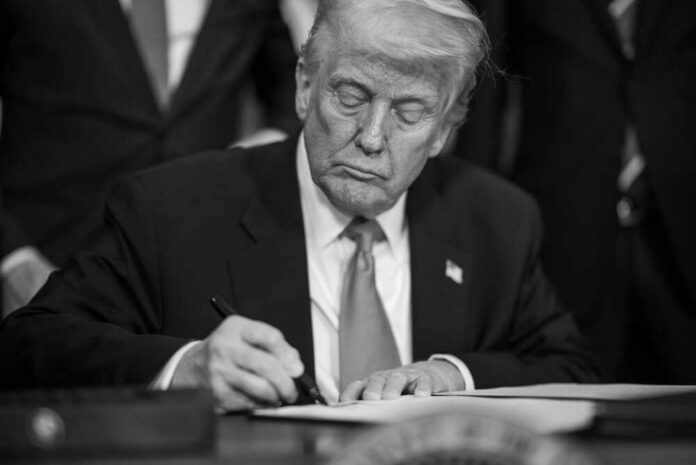
After 76 days of gridlock, President Trump signed a bipartisan bill to restore funding for critical DHS agencies, but Democrats’ exclusion of immigration enforcement exposes how partisan dysfunction leaves core government operations hostage to political disputes.
Quick Take
- President Trump signed a DHS funding bill on April 30, 2026, ending the longest agency-specific shutdown in U.S. history after 76 days of partial operations halts.
- The bill restored funding for TSA, FEMA, Secret Service, and Coast Guard but deliberately excluded Immigration and Customs Enforcement and Border Patrol.
- Democrats blocked full DHS funding unless Republicans agreed to exclude immigration enforcement agencies, highlighting how political leverage over border policy paralyzes government.
- Roughly 800,000 DHS workers faced furloughs and unpaid wages while critical agencies operated on emergency reserves nearing exhaustion.
A Government Held Hostage by Partisan Demands
The 76-day partial shutdown of the Department of Homeland Security represents a troubling pattern: Congress weaponizes funding authority to force policy concessions rather than legislating through normal channels. Democrats refused to fund immigration enforcement agencies unless Republicans accepted their conditions, effectively holding national security hostage. This approach—using appropriations as leverage for unrelated policy demands—demonstrates how both parties prioritize political wins over functional governance.
The Cost of Dysfunction
For more than two months, approximately 800,000 DHS employees endured furloughs and unpaid wages while agencies operated on fumes. The TSA faced staffing shortages threatening airport security, the Coast Guard neared operational paralysis, and FEMA’s disaster response capacity hung by a thread. Emergency reserves were nearly exhausted. The bill’s passage averted immediate crises, but the damage to employee morale and operational continuity reflects years of Congress abdicating its constitutional duty to fund government predictably.
Exclusion of Border Enforcement Raises Questions
The bill deliberately excluded funding for Immigration and Customs Enforcement and most of Customs and Border Protection operations. Democrats demanded this exclusion, conditioning their support on removing immigration enforcement from the appropriation. Republicans plan to fund these agencies separately through reconciliation, a process requiring no Democratic votes. This split approach—funding some DHS agencies while starving immigration enforcement—reveals how thoroughly border policy has become a political battlefield rather than a national security matter.
A Precedent for Piecemeal Governance
By accepting partial funding and deferring immigration agency appropriations, Congress sets a dangerous precedent: government agencies can be selectively defunded based on partisan opposition to their missions. This approach invites future standoffs, as either party can threaten shutdowns to extract policy concessions unrelated to appropriations. The Constitution grants Congress power of the purse, but that power was designed for budgeting, not coercion.
Both Parties Lose Sight of Core Obligations
While Republicans control both chambers and the presidency, they accepted a compromise that excludes core border enforcement agencies—suggesting Democrats wielded significant leverage despite their minority position. Senator John Fetterman, a Democrat, criticized his own party’s obstruction, calling it an “unnecessary failure” that harmed workers and TSA operations. His rare acknowledgment highlights a shared frustration: elected officials prioritize political positioning over solving problems Americans face daily.
The shutdown’s resolution offers no comfort. It reveals a government where appropriations are weaponized, critical agencies are held hostage to unrelated demands, and both parties treat funding as a political tool rather than a constitutional responsibility. Until Congress returns to funding government through regular order—with appropriations bills debated and passed on their merits—Americans should expect more shutdowns, more dysfunction, and more evidence that the federal government serves itself, not the people.