
President Trump’s blunt warning to Iran over the world’s oil lifeline is a reminder that energy security is national security—and the Strait of Hormuz is a choke point America cannot afford to leave to a hostile regime.
Story Snapshot
- Trump said Iran would be struck “at a much, much harder level” if it threatens the global oil supply, referencing the Strait of Hormuz.
- Oil markets have been volatile, indicating prices fell sharply after Trump’s remarks and related signals.
- U.S.-Iran nuclear talks remain delayed, while Washington keeps pressure on Tehran through sanctions authorities and military posture.
- China’s role as the top buyer of Iranian oil—often via “dark fleet” channels—remains central to the enforcement challenge.
Trump Ties Military Deterrence to Keeping Oil Moving
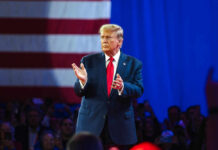
President Donald Trump delivered the warning from Florida on March 9–10, framing any Iranian move to restrict oil flows as a direct trigger for escalated U.S. strikes. Trump’s wording emphasized speed and severity, describing targets that could be taken out quickly and warning Iran would be hit “at a much, much harder level” if it interferes with oil supply. The comments placed the Strait of Hormuz at the center of U.S. red lines during Operation Epic Fury.
The “twenty times harder” wording circulating online appears overstated. The most consistently documented phrasing is “much, much harder level,” which still signals a willingness to widen or intensify military action if energy shipping lanes are threatened. That distinction matters because it separates viral headline language from verifiable quotes—and it helps audiences judge the seriousness of the warning on what was actually said, not what is being embellished.
Oil Price Whiplash Highlights Why the Strait of Hormuz Matters
Energy traders treat the Persian Gulf as a high-risk zone because the Strait of Hormuz functions as a narrow gateway for global crude shipments. Oil prices moved sharply around the time of Trump’s remarks, including reporting that prices fell from roughly $120 toward $90 per barrel. Even if exact intraday highs are debated, the underlying reality is clear: any credible threat to chokepoints can spike costs for American families through fuel prices and broader inflation pressure.
Trump also signaled a tactical approach aimed at stabilizing prices, that certain oil sanctions were temporarily waived to help bring costs down during Operation Epic Fury. That combination—military deterrence paired with short-term market management—reflects how energy policy and national defense collide in real time. For voters still burned by years of inflation and fiscal mismanagement, the message is that preventing supply disruptions is one practical way to keep price shocks from cascading through the economy.
Nuclear Talks Stall as “Maximum Pressure” Tools Stay in Play
The warning arrives with U.S.-Iran nuclear negotiations still unsettled, including delays described as being for “technical reasons” by Iran’s foreign minister. Trump administration’s continued reliance on sanctions and emergency authorities, including a February 2026 fact sheet describing steps to address threats posed by Iran. The strategy resembles Trump’s earlier “maximum pressure” posture: raise costs on Tehran while reserving the option to negotiate on U.S. terms.
Operation Epic Fury and earlier military actions—such as a 2025 strike operation against nuclear facilities—frame the backdrop for why Trump is speaking in deterrence terms rather than diplomatic language. Supporters of limited government often prefer fewer foreign entanglements, underscores a competing reality: when hostile actors threaten global energy arteries, the U.S. government’s constitutional duty to provide for the common defense intersects directly with protecting Americans from economic coercion.
China’s Iranian Oil Purchases Complicate Enforcement and Escalation
China remains the key external player because it reportedly buys the majority of Iran’s exported oil, with estimates ranging from about 1 to 1.4 million barrels per day and suggesting that 80–90% of Iran’s exports flow to Chinese buyers. Analysts emphasized that oil sanctions can be difficult to enforce when major non-Western economies prioritize cheap supply, and when shipments move through opaque networks often described as “dark fleets.”
This is where the policy debate becomes concrete: if Iran can keep selling oil through shadow logistics, Tehran retains revenue even under sanctions—reducing the pressure intended to change behavior. At the same time, escalating enforcement against major purchasers risks broader trade retaliation, and flags rare-earth export restrictions as one possible pressure point in a renewed U.S.-China clash. Those tradeoffs help explain why deterrence messaging on the Strait is paired with economic leverage tools.
What Americans Should Watch Next
Three near-term indicators will show whether this is deterrence that holds or a crisis that expands. First, watch for any reported interference with shipping near the Strait of Hormuz and for how quickly the U.S. responds. Second, track whether the temporary sanctions waivers become a longer-running price-control strategy or end as operations evolve. Third, monitor whether nuclear talks restart and whether China adjusts its Iranian oil intake under U.S. pressure.
Trump Promises to Bomb Iran ‘TWENTY TIMES HARDER’ if It Restricts Flow of Oil https://t.co/pkwHc9AePp
— Mediaite (@Mediaite) March 10, 2026
Trump is publicly linking any threat to global oil supply with a harder U.S. military response. For a country that has lived through inflation, supply-chain shocks, and years of elite excuses, the policy question is straightforward. Will deterrence and enforcement keep energy flowing without dragging America into an open-ended conflict—and will adversaries believe the warning is real?
Sources:
Trump threatens secondary sanctions on Iranian oil importers (including China)
Oil prices climb as Trump warns Iran “time is running out” for nuclear deal