
With Cuba’s economy crumbling just 90 miles from Florida, the Trump White House has moved to treat Havana’s communist regime as a direct national-security problem—not a distant humanitarian headline.
Story Snapshot
- President Trump declared a national emergency tied to Cuba’s alleged ties with U.S. adversaries and destabilizing regional activity.
- New pressure is colliding with Cuba’s worsening internal collapse: rolling blackouts, fuel shortages, and halted transport.
- U.S. policy is constrained by long-standing embargo laws that limit how quickly sanctions can be lifted without concrete political change.
- Reports of a potential “deal” hinge on concessions like prisoner releases and credible elections, but key details remain undisclosed or unconfirmed.
Trump’s national emergency order puts Cuba back on the front burner
President Donald Trump’s January 2026 executive order declared a national emergency focused on threats linked to the Cuban government, citing Cuba’s relationships with hostile actors and activities that the administration argues endanger U.S. security and regional stability. The order also frames Cuba as a driver of destabilizing outcomes, including migration pressures, while pointing to human-rights abuses. The practical effect is to widen the legal and political runway for tougher enforcement and sharper leverage.
Secretary of State Marco Rubio reinforced the administration’s urgency in February, warning of a “catastrophic economic crisis” unfolding close to U.S. shores. Rubio’s public posture signals that Washington is treating the situation as more than a routine foreign-policy dispute. For many Americans who watched the previous era’s soft-touch engagement fail to move Cuba toward liberty, the current approach reflects a return to clarity: U.S. policy will prioritize security and freedom over symbolic diplomacy.
Sanctions pressure meets a system already failing its people
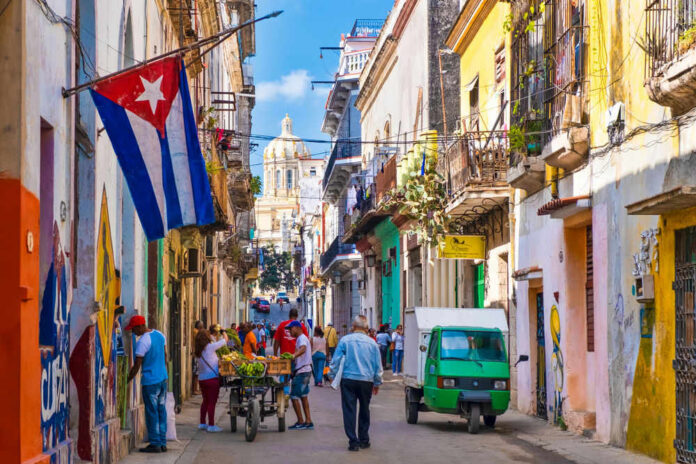
Cuba’s day-to-day reality in early 2026 is defined by scarcity. Rolling blackouts have reportedly reached as high as 18 hours in some areas, while fuel and food shortages have strained basic life and slowed transportation. Multiple sources tie the energy crunch to reduced oil flows and tightened enforcement actions affecting supply routes. What’s not in dispute is the outcome: a regime that cannot reliably keep the lights on is facing a compounding crisis with real humanitarian risks.
Analysts disagree on how to weigh external pressure versus internal mismanagement, but both can be true at once: U.S. sanctions aim to deny revenue and strategic breathing room, while Cuba’s centralized, state-dominated economy has long struggled to produce growth or resilience. Limited information makes it difficult to quantify how much each factor contributes week by week. Still, blackouts, shortages, and shrinking reserves fit a pattern of systemic failure that predates the latest escalation.
The “deal” talk: what’s known, what’s not confirmed
Reports describe Trump offering a potential arrangement to the Díaz-Canel government tied to political concessions, including prisoner releases and steps toward elections. The details of any proposal—timelines, verification mechanisms, and enforcement—have not been publicly disclosed. Separately, reporting mentions unconfirmed claims about contacts involving Alejandro Castro, Raúl Castro’s son and an Interior Ministry figure. Without confirmation, those claims remain suggestive rather than decisive.
One hard constraint is not negotiable: U.S. embargo policy is not simply a presidential dial that can be turned off overnight. The 1992 Cuban Democracy Act and the 1996 Cuban Liberty and Democratic Solidarity Act codified requirements that connect sanctions relief to concrete political change. That matters for Americans who want accountability, not vague promises. It also matters for Cuba’s rulers, who face a choice between real reforms that threaten their grip and continued repression that deepens collapse.
Why Cuba isn’t Venezuela—and why that matters for U.S. strategy
Some commentary casts Cuba as “next” after Venezuela’s leadership change, but key differences complicate any copy-and-paste playbook. Analysts note Cuba lacks Venezuela’s kind of resource-driven economic prize and does not have the same visible, unified democratic opposition structure ready to govern. Meanwhile, Cuba’s society has been described as “atomized” under decades of control, which makes rapid transition harder. Those realities raise the stakes for any plan that assumes quick stability.
The biggest near-term risk is disorder spilling outward: deeper shortages can trigger protests, crackdowns, or mass migration—pressures that hit the United States directly. The administration’s order also highlights concerns about Cuba’s relationships with adversarial powers, including intelligence and security cooperation that Washington says threatens Americans. For a conservative audience wary of globalism and government weakness, the central question is straightforward: will U.S. leverage produce verifiable freedom gains, or just another cycle of talks that leaves tyranny intact?
Sources:
https://www.chathamhouse.org/2026/02/how-far-will-trump-push-cuba
https://news.fiu.edu/2026/understanding-cubas-uncertain-future-with-fiu-experts
https://nacla.org/the-making-of-cubas-crisis/