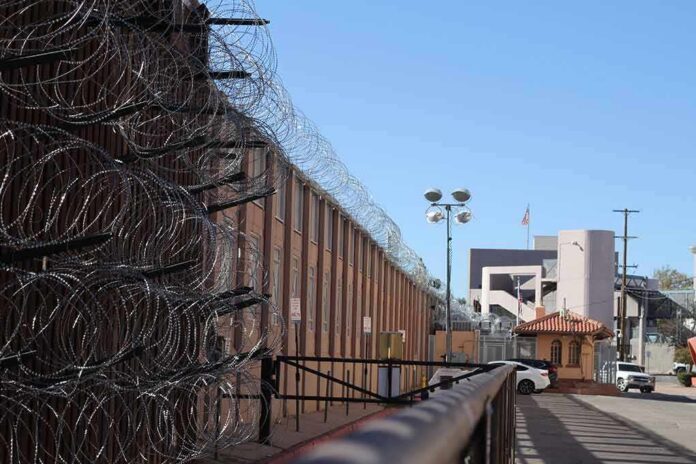
A federal judge cleared the way for new border wall construction by relying on a 1907 Theodore Roosevelt proclamation that set aside a 60-foot federal strip along the southern border.
Story Snapshot
- A judge cited a 1907 federal reservation to allow wall work along a tribal border segment.
- The Justice Department argued the 60-foot strip is separate from later tribal lands.
- The Tohono O’odham Nation sued to stop the project, claiming land seizure and trespass.
- Reports say the Roosevelt strip predates the tribe’s modern reservation by a decade.
What The Court Allowed And Why It Matters
Judge Richard Leon declined to block construction along a 62-mile stretch, citing a 1907 proclamation by President Theodore Roosevelt that set apart a 60-foot-wide federal reservation along the border for border purposes. The Department of Justice told the court that this strip exists independent of the later tribal reservation and remains available for federal use. Reporting on the ruling says the judge accepted that history as a legal basis to let work proceed for now.
The proclamation’s text states that “all public lands within sixty feet of the international boundary” are reserved from the public land laws and set aside as a public reservation. It also requires the land to remain clear of obstruction to protect the boundary line. That language does not mention a modern wall. But the court viewed it as sufficient to permit federal border-security construction within that strip at this stage, according to contemporaneous coverage.
The Government’s Argument About The Roosevelt Strip
The government’s filing lays out a narrow theory. It says the 60-foot Roosevelt Reservation runs from California through what became Arizona and New Mexico. It argues this strip was set aside for federal border work in 1907 and is distinct from later tribal lands, so building within that zone does not diminish the tribe’s reservation or change its boundary. That frame keeps the case about old federal land status, not a general claim over tribal sovereignty.
Separate reports support the timeline. Coverage notes the Roosevelt Reservation predated the Tohono O’odham Nation’s modern reservation by roughly ten years. That order of events strengthens the claim that the federal strip existed before the current tribal boundaries were set and still serves border purposes today. Together, the government’s brief and the reporting explain why the court saw a lawful path for targeted construction inside that narrow, historic corridor.
The Tribe’s Lawsuit And Cultural Concerns
The Tohono O’odham Nation’s complaint asks the court to stop the Department of Homeland Security from directing wall construction across the reservation. The Nation argues the project would take tribal land and water, shrink reservation boundaries, and amount to trespass by federal contractors. Tribal leaders also warn that construction risks harm to sacred and cultural sites, and they say past activity damaged important places nearby, heightening concern about new ground disturbance.
These are serious claims and deserve respect. The judge’s decision did not decide the full case on the merits. It denied preliminary relief and allowed work to continue based on the 1907 strip while the case moves forward. The facts that will matter next include where each fence segment sits relative to the 60-foot line, what surveys show, and how agencies avoid or mitigate harm to sacred sites. Those details were not fully public in the record cited here.
What Conservatives Should Watch Next
Border security remains a core federal duty. President Trump’s team is leaning on settled, century-old authority along the line to move quickly. The court recognized that legal footing for now. To keep that progress, the administration should publish clear maps, segment surveys, and cultural-protection steps. Transparent proof that work stays inside the Roosevelt strip and respects sacred sites will blunt claims of overreach, uphold the rule of law, and keep the focus on stopping cartel traffic and illegal crossings.
Sources:
nypost.com, tolc-nsn.org, tonation-nsn.gov, yahoo.com, govinfo.gov