

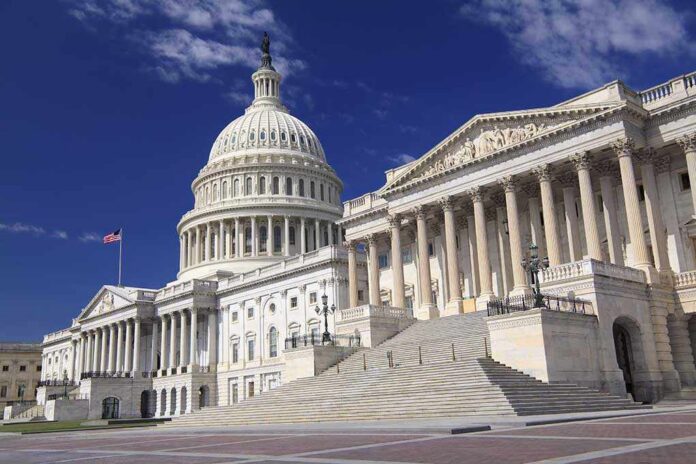
Democrats captured at least 258 House seats, locking in their largest majority since 1992 and reshaping power under a Republican White House.
Story Highlights
- Democrats surpassed 218 seats and reached at least 258, the biggest since 1992.
- NBC and NPR also called House control for Democrats based on Associated Press race calls.
- The majority reflects a large national gain, with dozens of districts flipping blue.
- Some races remained uncalled as counts continued, but control was not in doubt.
What The Election Changed In The House
The Associated Press reported Democrats secured at least 258 House seats, well above the 218 needed for a majority. That total would mark the party’s strongest showing since 1992, when Democrats also won 258 seats. The Associated Press results page separately showed 257 with several races uncalled, reflecting an evolving count as late ballots were added. NBC News and National Public Radio also declared Democrats would control the House, citing Associated Press race calls.
Democrats crossed the majority threshold days earlier and continued to add wins as counts progressed. The reported gains built on flips across multiple regions, including suburban seats that have swung back and forth in recent cycles. The scale of the shift echoes other modern midterm waves, such as Republican gains in 1994 and 2010 and Democratic gains in 2006 and 2018, underscoring how midterms often reorder power in the House.
How Big Majorities Meet Divided Government
The new House majority will face a divided government, with President Trump in the White House and Republicans holding the Senate. Research on divided government shows that passing major laws can be slow and often needs cross-party support, even when one party has a large House margin. That dynamic has repeated over the last three decades, as party leaders still needed votes from the other side to pass their top goals and send bills to the president’s desk.
House control brings agenda power, committee gavels, and the ability to set oversight priorities. Democrats can write and pass their bills in the House, move budget plans, and conduct investigations. But the Senate and the President decide what becomes law. History shows the House often changes hands in midterms, but turning wins into laws takes negotiation, patience, and clear priorities that can survive both chambers and a likely veto threat.
Counting, Calls, And What Is Still Unsettled
The Associated Press noted that a few races remained uncalled even after Democrats clinched control, including contests that required more counting before projections could be made. That does not change the bottom line: Democrats cleared 218 and then kept adding seats. Different snapshots from news outlets showed slightly different totals as ballots were processed, which is common in close or slow-count states during the certification period.
Democrats won their 258th House seat, the largest majority either party has won in a general election since 1992. https://t.co/zcThAhoqKj
— Cornelius Duncan (@corndnc12) November 23, 2026
Media organizations make race calls when the remaining votes cannot reverse the leader, and those calls guided the early chamber control headlines from National Public Radio and NBC. The final certified roster will settle any remaining seat-by-seat questions. For voters who feel Washington is not working, the test now shifts from election math to delivery: can leaders pass bills that lower costs, secure the border, strengthen elections, and improve daily life? The public will judge results, not tallies.
Sources:
youtube.com, kbtx.com, politicalwire.com, apnews.com, npr.org, 2news.com, electoralmeridian.org, calvoter.org, cambridge.org