
In a late pre-midterm ruling, the Supreme Court kept new mail-ballot limits on hold, signaling the rules cannot shape November’s vote.
Story Snapshot
- The Supreme Court left in place lower-court blocks on the U.S. Postal Service rule tied to President Trump’s order.
- A Boston federal judge and a federal appeals court had already halted the rule before the ruling.
- The justices did not decide the rule’s legality, only its use before the midterms.
- States and voting groups say the Postal Service lacks power to set mail-ballot rules.
What The Supreme Court Did And Did Not Decide
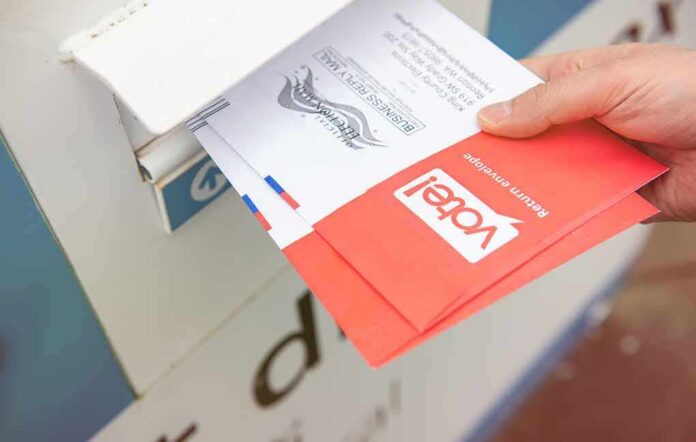
On Monday, the Supreme Court declined the Trump administration’s request to allow parts of a new mail-ballot rule to take effect before the midterm elections. The unsigned order keeps in place a Boston judge’s block on the U.S. Postal Service plan that grew out of President Trump’s March executive order. The justices did not rule on the rule’s legality. The Court limited its action to timing. That means the rule will not guide how ballots move by mail this November.
Earlier in August, the Court had permitted distinct parts of the broader effort to move forward, which led to fast shifts in the lower courts. But separate litigation over the Postal Service’s final rule soon led to new blocks. Monday’s decision clarifies the near-term result: the contested Postal Service provisions stay frozen while litigation continues. Voters and election officials will follow existing state rules for mail ballots, not the new federal design and handling mandates.
How Lower Courts Framed The Dispute
U.S. District Judge Indira Talwani issued a temporary restraining order and then a preliminary injunction, finding the challengers likely to win on claims that the Postal Service lacks authority to set who may vote by mail or to reject ballots based on envelope standards. The First U.S. Circuit Court of Appeals refused to pause that injunction, keeping the rule on ice pending appeal. These rulings stressed that states run elections and warned the federal rule could block eligible voters from casting valid ballots.
Challengers, including Democratic-led states and voting rights groups, argue the Constitution assigns election administration to states and Congress, not to the executive branch or the Postal Service. They say the rule tried to force states to follow new envelope designs and to risk non-delivery if they did not comply. Supporters of the administration argue the Postal Service can set mail-handling and safety standards. But courts so far have treated these mandates as crossing into election regulation.
Why This Matters For Voters And Trust
This fight lands weeks before voters choose a new Congress. Sudden rule changes can confuse people and strain already thin election offices. The Supreme Court’s order avoids a last-minute shift in how ballots move through the mail. That reduces the chance of lawful votes being tossed for envelope errors or new barcode rules. It also keeps power with local and state officials who know their systems and have trained staff on existing procedures.
For many Americans, the clash feeds a deeper worry: leaders in Washington keep rewriting rules without fixing core problems. People on the right want proof that every vote is lawful. People on the left want every lawful vote to count. Both sides see a system that lurches at the last minute. Monday’s ruling shows the courts can slow that lurch. The big legal questions remain. But for this election, the message is simple: follow state rules, mail ballots early, and track your vote if your state allows it.
Sources:
youtube.com, scotusblog.com, congress.gov, cnbc.com, npr.org, cnn.com, reuters.com, aclu.org, votebeat.org, supremecourt.gov