Congress is moving to choke off a global “paper swap” pipeline that the White House says is draining up to $26 billion a year in U.S. tariffs and undercutting American workers.
Story Highlights
- White House says illegal transshipment costs $19–$26 billion in lost tariff revenue.
- Congressional and agency actions target relabeling and routing goods through third countries.
- Customs agents report record evasion cases, including a network spanning several Asian countries.
- Beijing rejects the report, calling it a distortion of normal trade shifts.
What Congress And The White House Say Is Happening
House leaders and trade officials say Chinese manufacturers are routing goods through dozens of other countries to hide where those goods were really made. Committees cite false origin claims, repackaging, and minor processing that do not change the product’s true origin. The White House report calls this “fraud cloaked in paperwork” and estimates the United States loses between $19 billion and $26 billion in tariffs each year because of these schemes. Officials argue that these losses hit factory towns and honest importers first.
Lawmakers in both chambers have pushed bills to stiffen penalties, speed investigations, and fund tougher checks. A House committee letter to the Department of Justice, the Department of Homeland Security, and the United States Trade Representative describes “numerous instances” of illegal transshipment that evade tariffs and customs rules. Supporters say tighter enforcement protects jobs and levels the field for businesses that follow the rules. Critics worry about red tape, but backers argue the core fixes target clear fraud.
How Customs Investigators Are Building Cases
United States Customs and Border Protection (CBP) has expanded its use of the Enforce and Protect Act to crack down on duty evasion. In 2024, CBP found substantial evidence that Chinese cast iron pipe products came through Malaysia with false paperwork to dodge antidumping and countervailing duties. In 2025, CBP reported more than $400 million in duty evasion across cases, including its largest probe into a network using Indonesia, South Korea, and Vietnam to funnel Chinese goods into the United States. These findings give Congress a factual base for tougher laws.
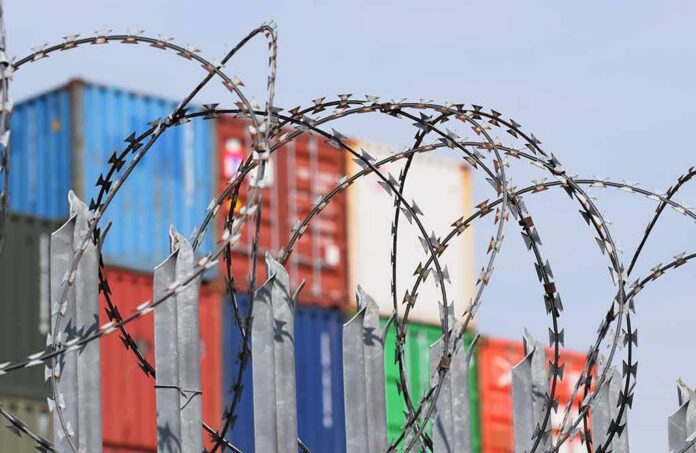
Investigators say the playbook is often simple. Shippers move containers to a third country. Middlemen relabel the goods, do minor finishing, or re-invoice them. The paperwork then claims the third country as the origin. CBP has also flagged past convictions where goods looped through North America to return as “new” origin products. Officials stress that transshipment itself is legal when it reflects real production moves. It becomes illegal when used to hide the true origin for a lower tariff.
Why Both Sides Of The Aisle Care — And Where They Differ
Representatives from manufacturing states say tariff evasion wipes out the benefit of trade remedies and pushes more plants to close. They argue that honest importers cannot compete with rivals using fake origin labels. Supporters of stronger enforcement say this is not a new problem, but it has grown as tariff gaps widened since 2018 and 2025. The White House report and CBP cases suggest a repeat cycle: higher duties raise the payoff for cheating, so enforcement must also rise.
Skeptics warn against sweeping claims that paint all supply chain shifts as fraud. They point to think tank critiques that past debates used hype and mixed legal transshipment with illegal relabeling. They argue that broad penalties could hit allies or real factory moves. Those concerns push for careful case work and due process. Still, even many skeptics support focusing on clear evidence of false documents and minimal processing that does not change origin.
What Beijing Says — And The Evidence Test
China’s Ministry of Commerce rejects the White House findings, saying the report distorts normal trade and smears supply chain diversification. Chinese officials argue that calling this a scam ignores real shifts in where goods are made. That pushback highlights a core tension: not every route through a third country is illegal. Yet CBP cases that document false labels, minor touch-ups, and linked shell firms place a factual floor under United States claims in specific sectors.
For readers across the political spectrum, two facts stand out. First, documented fraud hurts United States workers and honest firms, and it erodes trust in the system. Second, enforcement must be tight and targeted, not sloppy. Congress appears set to give investigators more tools and money. Success will hinge on tracing real production, not just paper trails, so that cheaters pay and lawful trade keeps moving. That is the promise. Delivery will be the test.
Sources:
redstate.com, uscc.gov, cleveland.com, hinson.house.gov, bbc.com, conference-board.org, finance.yahoo.com