
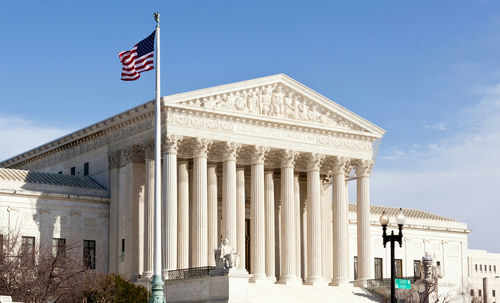
The Supreme Court just ruled 9–0 that Washington cannot strip gun rights from sober marijuana users simply for their status, marking one of the biggest Second Amendment wins since Bruen.
Story Snapshot
- Supreme Court unanimously blocked federal prosecutors from using mere marijuana use to ban gun ownership for tens of millions of Americans[2][14].
- Justice Neil Gorsuch wrote that the government’s case against Ali Hemani under the federal drug-user gun ban conflicts with the Second Amendment[2].
- The Court rejected loose “habitual drunkard” analogies and demanded real proof of intoxication, addiction, or dangerousness before disarming someone[2][4].
- The ruling still leaves key traps in place, like the federal background check form and gun bans for serious addicts or drug traffickers[2][14][15].
Unanimous Supreme Court Says Status Alone Cannot Cancel Gun Rights
The Supreme Court’s decision in United States v. Hemani is a sweeping rebuke to the idea that the federal government can cancel your gun rights based only on your status as a marijuana user[2][14]. Justice Neil Gorsuch, writing for all nine justices, held that prosecuting Ali Hemani under the federal unlawful drug user gun ban violates the Second Amendment because his only “crime” was admitting he used marijuana a few times a week while otherwise living peaceably[2][13][14]. The Court said the government cannot treat tens of millions of cannabis users as second-class citizens with fewer constitutional rights.
The law at issue, 18 U.S.C. §922(g)(3), makes it a federal crime for any “unlawful user of or addicted to any controlled substance” to possess a firearm or ammunition[14][16]. For years, federal prosecutors used that statute as a blunt tool, charging gun owners for past or occasional drug use with no proof they were impaired or dangerous while holding a gun[16]. In Hemani’s case, lower courts found the government had no historical support under the Bruen test for disarming a sober citizen simply because he used marijuana some days of the week[2][13]. The Supreme Court has now agreed, sharply cutting back how far §922(g)(3) can reach[2][14].
Court Rejects “Habitual Drunkard” Analogy and Demands Real Dangerousness
Trump administration lawyers defended the gun ban by pointing to old laws that punished “habitual drunkards,” arguing that marijuana users are similar and should be disarmed for public safety[1][13][16]. The Hemani opinion flatly rejected that comparison, saying, “To state the analogy is to expose its deficiency,” because those historical rules targeted people who were actively intoxicated and clearly dangerous, not ordinary citizens who sometimes drank or used other substances while sober and law-abiding[2][14]. The Court underscored that there is no founding-era tradition of permanently disarming occasional users absent proof of real risk[2][4][14].
An amicus brief from the Liberty Justice Center helped draw that line, explaining that the Founders recognized narrow authority to disarm those who were intoxicated or proven in court to be a credible threat, but did not support lifetime bans for sober citizens based on their “status” as users[4]. Justice Gorsuch’s opinion adopted this logic, insisting that “unlawful user alone is insufficient; there must be unlawful user plus something,” such as addiction, intoxication while armed, or concrete evidence of dangerousness[2]. That standard forces the government to show real facts before it can strip away a core constitutional right.
What This Means for Gun Owners, Marijuana Users, and Trump-Era Policy
For conservative gun owners, the ruling fits squarely into the post-Bruen trend of tearing down vague, status-based gun bans that lack historical backing[2][3]. The 2022 Bruen decision held that when the Second Amendment’s text covers someone’s conduct, the government must prove that any restriction matches our nation’s historical tradition of firearm regulation[4][8]. Hemani now applies that same history test to drug-user bans and finds the government’s case sorely lacking[2][14]. This is a major victory for those who have argued that bureaucrats cannot make up new classes of “unworthy” citizens whenever it suits their politics.
However, the Court was careful to say its ruling is narrow in some respects. It does not bless gun possession for serious drug addicts or people convicted of trafficking, and it does not erase every part of §922(g)(3)[2][14]. Federal prosecutors can still go after individuals where there is strong evidence of addiction, repeated intoxication with a firearm, or clear dangerous behavior. In other words, truly risky offenders remain in the government’s sights, but harmless marijuana users are no longer fair game simply for admitting they use cannabis on their own time[2][14].
The Hidden Traps: Federal Forms, State Cards, and Media Spin
Many patriots will rightly cheer this decision, but there are still landmines left by past big-government policies. The Federal Bureau of Alcohol, Tobacco, Firearms and Explosives Form 4473 still asks buyers if they are “unlawful users” of controlled substances, including marijuana, and lying on that form remains a federal crime under 18 U.S.C. §924(a)(1)(A)[14][15]. Legal scholars have noted that even state-compliant medical marijuana patients can be blocked from buying guns because cannabis is still illegal under federal law, forcing them into a painful choice between medicine and self-defense[15][18]. Hemani does not erase those problems yet, though it strengthens future challenges.
🚨 Can you use cannabis AND own a gun? The Supreme Court fight over the federal ban (§922(g)(3)) is heating up — and the Second Amendment may win. Tom & Miggy break down what every cannabis user needs to know about their gun rights. #cannabis #2A pic.twitter.com/TTDs3hGUUi
— tom howard (@tomweedlaw) June 23, 2026
Gun control groups and much of the mainstream media are already trying to spin the unanimous ruling as a “narrow exception” instead of a broad Second Amendment win, hoping to calm public concern over federal overreach[3][14]. Some commentators stress that the decision would not help high-profile defendants tied to hard drugs, implying that serious users can still be targeted while hinting that the government should keep wide power over everyday citizens too[3]. But for millions of law-abiding Americans who use marijuana in states where it is legal, Hemani sends a clear message: the Constitution does not vanish the moment a federal bureaucrat labels you an “unlawful user” on paper.
Sources:
[1] Web – SCOTUS Unanimously Ruled That the Second Amendment Trumps Anti-Drug …
[2] Web – UNITED STATES v. HEMANI | Supreme Court – Cornell Law School
[3] Web – [PDF] 24-1234 United States v. Hemani (06/18/2026) – Supreme Court
[4] Web – What’s at Stake in Hemani? Supreme Court Grants Cert to Review …
[8] Web – SCOTUS opinion on weed & guns > General Discussion …
[13] Web – Marijuana advocates light up Second Amendment fight at Supreme Court
[14] Web – Supreme Court wrestles with gun rights, marijuana, and the right to …
[15] Web – Marijuana advocates light up Second Amendment fight at Supreme …
[16] Web – Supreme Court wrestles with gun rights, marijuana, and the right to …
[18] Web – Supreme Court to hear arguments on legality of gun bans for …