

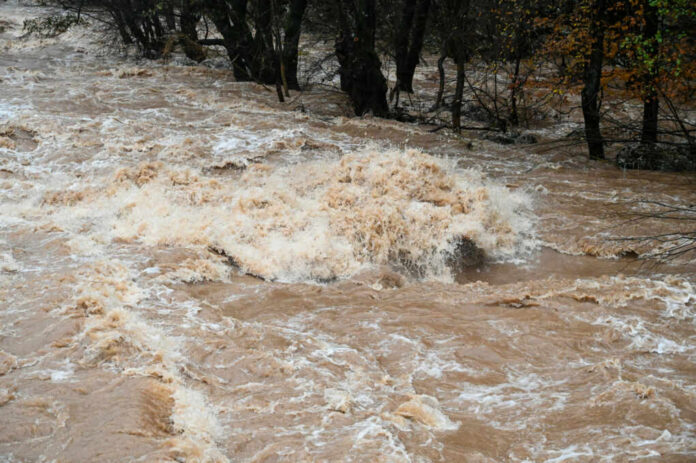
A so‑called “weak” first storm of the season is unloading enough rain on the Gulf Coast to turn neighborhoods into lakes and test years of broken promises on drainage, insurance, and federal disaster help.
Story Snapshot
- Tropical Storm Arthur, first of the Atlantic season, is a short‑lived storm but a major flooding threat.
- Texas and Louisiana are under tropical storm warnings, with up to 20 inches of rain in some areas.
- Nearly the entire northern Gulf Coast faces flash flooding, rip currents, and possible tornadoes.
- The storm exposes long‑ignored infrastructure problems and the need for local, not federal, resilience.
Arthur: A “weak” storm with a very strong flooding punch
Weather officials say Tropical Storm Arthur is the first named storm of the Atlantic hurricane season and is already soaking the Gulf Coast with intense rain and dangerous flash flooding risk.[7] The National Hurricane Center reports winds around 40 to 45 miles per hour, and they expect the storm to fade by late Wednesday or early Thursday.[5] That might sound mild compared with a major hurricane, but the real danger here is not wind. The main threat is heavy rain and flooding across a wide swath of the South.[5]
Forecasts call for five to ten inches of rain from the mid and upper Texas coast through Louisiana, Mississippi, Alabama, and into western Georgia and the Florida Panhandle, with isolated spots near twenty inches.[6] That much water in a short time can overwhelm bayous, ditches, and worn‑out storm drains. Swells and storm surge will also push water into low‑lying coastal areas, flooding places that are usually dry.[1] On top of that, dangerous surf and rip currents are expected along the northwestern Gulf Coast for the next couple of days.[6]
Who is in the crosshairs along the Gulf Coast
The National Hurricane Center says a tropical storm warning covers roughly 350 miles of coastline from parts of Texas into Louisiana.[1] That means tropical‑storm‑force winds and coastal flooding are likely in that zone. Forecasts show Arthur moving across the northwestern Gulf Coast, brushing Texas, Louisiana, and Mississippi as it speeds northeast.[4] Meteorologists warn that nearly 26 million people could be under flood watches from south Texas through Mississippi as this slow‑moving rainmaker spreads inland.[3]
For many families along the Gulf, this is a familiar story. Years of rapid growth, weak zoning, and poor upkeep have left drainage systems clogged and neighborhoods paved over. When these “weak” tropical storms park over the coast, they expose every failure. Arthur is already blamed for deadly flooding in parts of Texas, and forecasters expect more heavy rain as the storm tracks along the coast.[6] Even after the center falls apart, the deep tropical moisture can keep dumping rain far from the shoreline.
Why flooding from “small” storms keeps catching communities off guard
Federal weather experts have been warning that coastal storms and excessive rain are now among the most common causes of serious floods in the United States.[26] Along the Gulf, early‑season systems like Arthur often do not become powerful hurricanes, but they carry huge amounts of moisture. When they stall near land, they dump inches of rain per hour and trigger flash flooding well inland.[21] This pattern has hit the South again and again, even when winds stay below major storm levels.
Many local leaders still focus on wind when they talk about storm risk, but most damage in these events comes from water. Families see that every time they have to rip out drywall and flooring while distant agencies argue over flood maps. Federal guidance has urged Gulf communities to “know their risk” and prepare for inland flooding, not just coastal surge.[22] But in practice, big government programs often lag behind, leaving homeowners to fight confusing insurance rules and slow relief after each flood.
Personal responsibility, local control, and getting ready the right way
Conservative values fit well with what really works in storms like Arthur. Families who review their flood insurance, keep key papers ready, and have a simple evacuation or shelter plan are in a much stronger place when the water rises.[16] Neighbors helping each other, churches opening shelters, and local volunteer groups checking on seniors often matter more in the first 48 hours than any distant federal agency. These storms prove again that strong communities beat big bureaucracies when seconds count.
🚨🚨Tropical Storm Arthur formed Wed in the Gulf off Texas, becoming the first named system of the 2026 Atlantic hurricane season. The storm is forecast to bring life-threatening flash flooding to portions of Texas, Louisiana, Mississippi, Alabama, Georgia & Florida.🌴
— LeftLaneLois 🐸🐸Frogs Unite (@lois_left) June 17, 2026
Under the current Trump administration, federal disaster agencies still have a role, but the focus is on faster information, clearer warnings, and giving states and counties more control. The National Hurricane Center continues to issue regular public advisories and tropical storm warnings so local leaders can act quickly.[7] That is where limited, focused federal work makes sense: clear data, not top‑down social agendas. For Gulf Coast conservatives, Arthur is a reminder to push for better drainage, smarter building, and less red tape now—before the next storm arrives.
Sources:
[1] Web – Dangerous flooding from Tropical Storm Arthur, first of the Atlantic …
[3] Web – Tropical Storm Arthur Possible Off Texas Coast Briefly Tomorrow
[4] Web – Tropical Storm Arthur Forecast to Deliver Boatloads of Rainfall to …
[5] Web – Recap: Tropical Storm Warnings issued as first storm of season …
[6] Web – The National Hurricane Center has issued its first advisory on …
[7] Web – NHC – NOAA
[16] Web – ARTHUR FORMING… Tropical Storm Arthur is trying to … – Facebook
[21] Web – Odds increase for tropical trouble as life-threatening flood threat …
[22] Web – 1. During ENSO-Neutral patterns the Atlantic Subtropical … – …
[26] Web – Before hurricane season NOAA urges Gulf Coast and Pacific …