
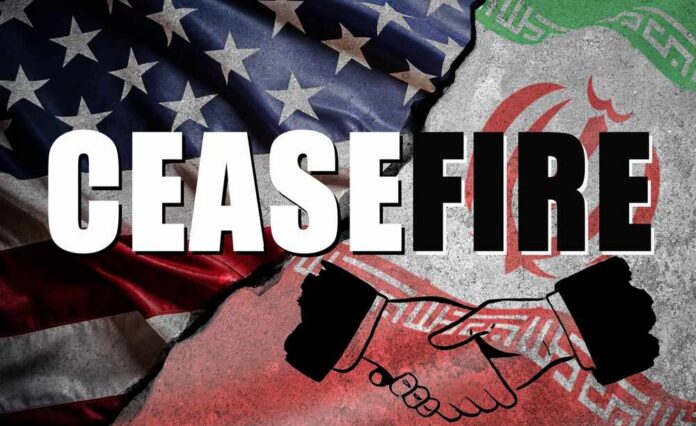
A fragile 60-day truce with Iran may reopen vital shipping lanes and ease sanctions, but it could also reward a hostile regime while America still holds the stronger hand.
Story Snapshot
- U.S. and Iranian negotiators reportedly agreed to a tentative 60-day ceasefire extension and new nuclear talks, still waiting on President Trump’s final sign-off.[1][6][7]
- The draft would ease the U.S. naval blockade, relax some sanctions, and reopen the Strait of Hormuz to commercial shipping while limiting Iran’s ability to charge tolls or harass ships.[1][2][5][6]
- The deal talks about Iran pledging not to pursue nuclear weapons, but key details on uranium stockpiles and inspections are not settled yet.[1][2][6]
- Iran has not officially confirmed the agreement in public, raising doubts about how firm this “truce of convenience” really is.[1][6]
Trump’s Team Weighs a 60-Day Truce That Keeps the Pressure On
U.S. and Iranian negotiators have reportedly settled on a draft 60-day memorandum of understanding that would extend the current ceasefire in the three‑month war and launch new nuclear talks, but it still needs President Donald Trump’s approval before it becomes real policy.[1][6][7] Vice President JD Vance confirmed there is a tentative agreement and said negotiators have “made a lot of progress” but are still going back and forth on key language, especially on nuclear issues.[1][2] For conservatives, this looks less like peace and more like a time‑limited pause to test whether Iran will blink first.
According to reports based on U.S. officials and regional mediators, the draft deal is designed as a short‑term pressure tool, not a surrender.[1][6] The 60‑day window would be used to negotiate what happens to Iran’s highly enriched uranium stockpile, how far enrichment can go, and what kind of inspections are allowed.[1][2][6] One U.S. official called it “an arrangement to bring everyone to the table,” not a final settlement, which fits Trump’s pattern of using time‑boxed deals to force the other side to show its cards before he chooses between more sanctions or military power.[6]
What Iran Gets: Oil, Shipping, and Sanctions Relief on the Line
Reports say the draft truce would gradually ease the U.S. naval blockade on Iranian ports and relax sanctions so Iran can sell more oil, in exchange for keeping the guns quiet and entering serious talks.[1][2][6] The memorandum reportedly states that Iran cannot impose tolls in the Strait of Hormuz and must remove all mines from the critical waterway within about 30 days, restoring commercial traffic under strict conditions.[1][2][6] That matters to American families because any disruption in the Strait can send gas and energy prices soaring, as we have seen before when global oil flows are threatened.
For many on the right, this is the trade‑off that stings: a regime that chants “Death to America” would get a path to more cash through oil sales and sanctions relief before it has fully dismantled its nuclear threats.[1][6] The draft reportedly says Iran would pledge not to pursue nuclear weapons, but experts point out that the exact limits on uranium stockpiles, enrichment levels, and snap inspections are still being negotiated, with no firm text released.[1][2][6] That leaves plenty of room for Iran to stall, pocket economic relief, and drag out talks, a pattern we have watched for decades as Tehran plays for time while keeping its proxy networks active across the region.[6]
A Truce of Convenience or a Real Step Toward Controlling Iran?
Public reports also admit this is not a final peace deal but a “platform” or framework for more serious talks, which means the shooting may pause while the core fight over Iran’s nuclear program and regional behavior continues underneath.[5][6] Analysts describe the broader picture as a deadlock where the hot war is mostly on hold, yet the underlying conflict and mistrust remain very much alive. Iran has even said in other contexts that there has been “no tangible progress” in talks, showing how quickly these supposed breakthroughs can fall apart once the cameras move on.
There are also serious warning signs about how fragile this truce really is. Reports say this is at least the third version of the proposal after President Trump sent edits back, and Iran has still not officially verified the terms in public, leaving a gap that critics can exploit.[1][6][7] At the same time, both sides have clashed around the Strait of Hormuz even while talking about reopening it, proving that deterrence, not trust, is what keeps Iran in check.[6] For constitutional conservatives, that means one thing: any deal must keep military strength, energy security, and America‑first leverage front and center, treating this 60‑day pause as a test of Iran’s honesty, not a reason to finally let our guard down.
Sources:
[1] Web – The Don settles for a truce of convenience with Iran…
[2] Web – U.S. and Iranian negotiators reach tentative deal to extend ceasefire …
[5] Web – Trump Extends Iran War Ceasefire – Council on Foreign Relations
[6] YouTube – US and Iranian negotiators reach deal to re-open strait of Hormuz …