The UAE, battered by nearly 2,500 Iranian missiles and drones, is abandoning neutrality to join military efforts reopening the Strait of Hormuz—while President Trump’s promises to keep America out of new wars ring hollow as our troops remain entangled in yet another Middle Eastern conflict that’s driving up energy costs and splitting his own base.
Story Snapshot
- UAE shifts from diplomatic caution to military action after Iran fires 2,500 projectiles at Dubai and Abu Dhabi, seeking UN-backed coalition to reopen blockaded Strait of Hormuz
- Trump administration claims attrition campaign is weakening Iran but contradicts itself—officials announce 2-3 week exit timeline while Iran continues launching attacks and imposing shipping tolls
- NATO allies refuse support for what Spain calls a “reckless” war, blocking airspace and bases as Trump threatens trade retaliation, exposing fragile coalition
- Strait blockade chokes 20% of global oil trade, fueling energy crisis and raising costs for American families—the very problem Trump vowed to prevent
UAE Forced Into War After Devastating Iranian Assault
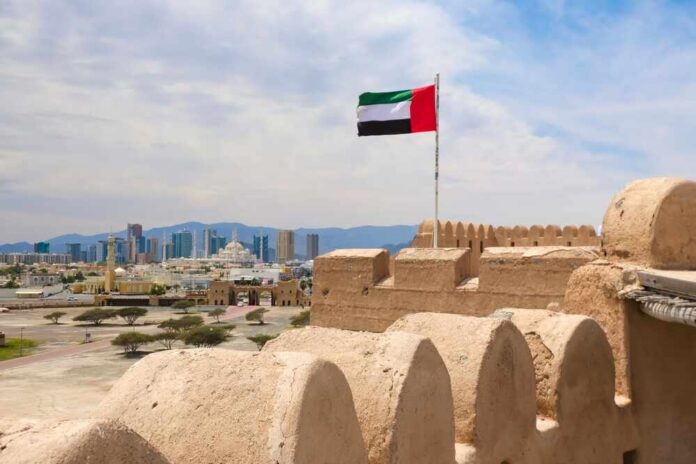
The United Arab Emirates absorbed nearly 2,500 Iranian missiles and drones targeting Dubai, Sharjah, and Abu Dhabi in recent weeks, forcing Abu Dhabi to abandon its historically cautious stance. UAE officials are now pushing for a UN resolution authorizing an international coalition to reopen the Strait of Hormuz, according to Wall Street Journal reporting. The Gulf ally is considering roles in mine-clearing operations and naval support, marking what analysts describe as the “most consequential decision” by a US partner in the region. This dramatic shift comes as Iran tightens its chokehold on the vital waterway carrying roughly 20 percent of the world’s traded oil.
Trump’s Contradictory Exit Strategy Raises Questions
President Trump announced plans to withdraw US forces from the region within two to three weeks, declaring allies like France and the UK must “TAKE” responsibility for securing the strait. Yet Pentagon officials simultaneously confirm ongoing strikes against Iranian production and launch sites, with Defense Secretary Pete Hegseth stating the US remains open to ground operations if necessary. General Dan Caine reported that missile and drone launches are “trending down” but acknowledged Iran continues rebuilding capabilities. This mixed messaging undermines Trump’s 2024 campaign promise to avoid new wars, frustrating supporters who voted against endless regime-change conflicts and the resulting economic fallout.
NATO Allies Refuse Burden While Americans Pay Price
Spain blocked US military flights through its airspace and denied access to bases, with Prime Minister Pedro Sanchez condemning the Iran operation as an “unjust” war. France similarly restricted facility use, leaving only the UK deploying additional defenses to the Gulf under Defense Secretary Healey’s direction. Trump responded by threatening trade action against Spain, echoing longstanding conservative frustrations with NATO “free riders” who refuse to shoulder security burdens. This fragmentation exposes the weakness of coalition-building for a conflict initiated without meaningful allied consultation, forcing American taxpayers and troops to carry the load while European partners benefit from any eventual reopening of oil flows.
Energy Crisis Compounds Economic Burden on Families
Iran’s blockade and newly approved shipping tolls through the strait are driving jet fuel shortages and threatening broader energy disruptions at a time when Americans already face inflation from years of fiscal mismanagement. Markets briefly rallied on war-de-escalation hopes, with the S&P and Dow surging 2.5 to 2.9 percent, but the underlying crisis persists. UAE civilians and businesses face daily disruptions from the Iranian bombardment, while global consumers brace for higher fuel costs. The administration’s claim of “decimating” Iranian capabilities rings hollow when Tehran continues launching attacks, imposing tolls, and maintaining effective control over a waterway critical to American energy security and economic stability.
The Trump administration’s attrition strategy has reduced but not eliminated Iranian missile and drone activity, with Hegseth advocating a “negotiate with bombs” approach while monitoring potential Russian and Chinese interference. However, the lack of clear coalition partners and contradictory exit timelines suggest no coherent endgame. Conservative voters who supported Trump specifically to avoid these interventions now watch energy costs climb and American forces remain deployed in another Middle Eastern quagmire. The UAE’s forced military pivot underscores how the administration’s unilateral approach created a vacuum that regional allies must fill, often at tremendous cost to their own populations—all while undermining the America First principles that resonated with the base in 2024.
Sources:
Iran International – US Officials Confirm Ongoing Strikes Against Iran
Scripps News – Trump Pressures Allies to Secure Oil Routes as Iran War Strains NATO
Fox News – Key US Ally Blocks Airspace for Military Flights Over Iran