

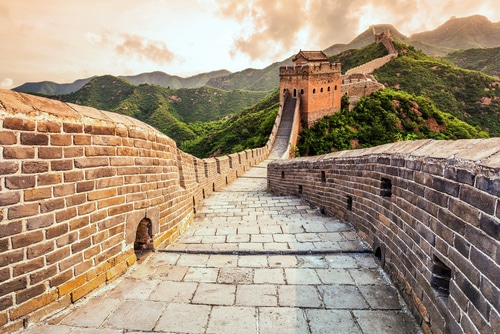

The Great Wall of China is a marvel of ancient engineering that is shrouded in myth and legend. Stretching over 13,000 miles, it is the longest wall in the world and a symbol of China’s long and complex history. Despite its name, the Great Wall is not a single wall but rather a series of walls, forts, and watchtowers built over many centuries by successive dynasties to protect the Chinese empire from invaders.
Myth has it that the Great Wall is visible from space, but in reality, it is not visible to the naked eye. It is a common misconception that has been debunked by astronauts and satellite images. However, this myth is a testament to the scale and awe-inspiring nature of the Great Wall.
The construction of the Great Wall began over 2,000 years ago during the Qin Dynasty
(221-206 BC), but it was during the Ming Dynasty (1368-1644) that the wall was extended and fortified. The Ming Dynasty added many of the watchtowers and forts that are still visible today, and it was during this period that the Great Wall became a symbol of China’s power and unity.
Despite its historical significance, the Great Wall of China was not always effective in keeping out invaders. The wall was breached and conquered many times throughout history, most notably by the Mongols who swept across the wall in the 13th century and established the Yuan Dynasty. Later, the Manchu Qing Dynasty (1644-1912) breached the wall and conquered China from the north.
The Great Wall of China is not just a physical barrier but also a cultural icon. It is a symbol of China’s ancient civilization and a testament to the ingenuity and determination of the Chinese people. In recent years, the Chinese government has invested in the restoration and preservation of the wall, turning it into a major tourist attraction that draws millions of visitors every year.
However, this increased tourism has also led to concerns about the impact on the environment and the potential damage to the wall. As visitors flock to the Great Wall, it is important to remember the historical significance of this ancient wonder and to preserve it for future generations.
The Great Wall of China is a testament to the ingenuity, determination, and cultural significance of the Chinese people. While it is not visible from space, it remains an awe-inspiring wonder of the world that has captured the imagination of people for centuries. It is a reminder of the importance of preserving our history and heritage for future generations.