

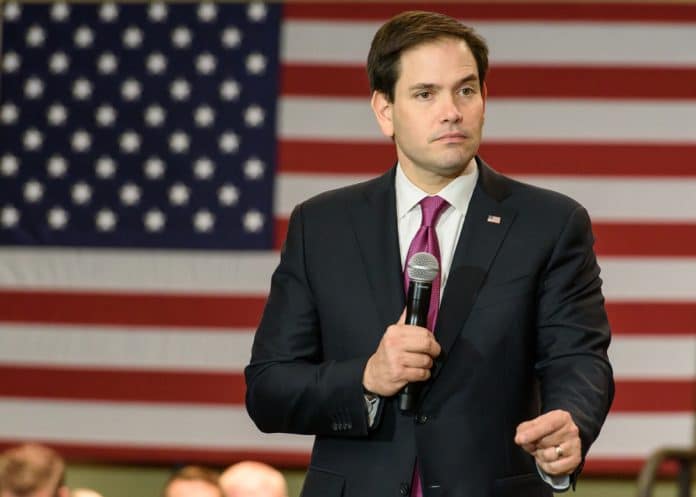

Brutal Rebuke Shakes Global Power Structure
Secretary of State Marco Rubio delivered a scathing critique of the United Nations at the Munich Security Conference, declaring the global body fails to address the world’s most pressing crises while calling for fundamental reform of institutions that have abandoned their founding missions.
Story Highlights
- Rubio challenged UN effectiveness at Munich Security Conference, stating it “has tremendous potential” but “cannot ignore” its current failures on major global crises
- Secretary emphasized Western renewal through border control, reindustrialization, and sovereignty rather than globalist multilateralism under Trump administration
- Speech called for Europe to “survive” by embracing heritage and self-reliance instead of dependency on ineffective international institutions
- Rubio affirmed continued Ukraine support while demanding allies increase defense spending and take responsibility for their own security
Rubio Challenges UN Failures in Munich Address
Secretary of State Marco Rubio confronted the United Nations’ inability to solve international crises during his February 14, 2026 keynote at the 62nd Munich Security Conference in Germany. Rubio acknowledged the UN “has tremendous potential” but insisted Americans “cannot ignore that today” the institution consistently fails to deliver answers to conflicts, humanitarian disasters, and security threats facing the West. This direct challenge represents a significant departure from previous administrations’ diplomatic language, signaling the Trump administration’s willingness to demand accountability from global institutions that have strayed from their original purpose of maintaining international peace and security.
Western Sovereignty Versus Globalist Paralysis
The Secretary’s speech emphasized that Western civilization must reject the “malaise of hopelessness” promoted by globalist elites who prioritize open borders and supranational governance over national sovereignty. Rubio called for Europe to control its borders and abandon policies that have facilitated mass migration threatening the cultural and security foundations of Western nations. This message resonates with Americans frustrated by years of watching international bodies lecture sovereign nations about accepting unlimited immigration while offering no solutions to the resulting social fragmentation, economic strain, and security vulnerabilities. The Trump administration’s approach prioritizes nations’ rights to determine their own futures rather than submitting to unelected bureaucrats in New York or Brussels.
Alliance Renewal Through Self-Reliance
Rubio urged European allies to embrace self-reliance and increase defense capabilities rather than depending on American military protection without reciprocal commitment. He reinforced that NATO partners must meet the two-percent GDP defense spending threshold while pursuing joint reindustrialization efforts that strengthen Western economic independence. The Secretary framed this not as abandonment but as strengthening the transatlantic partnership through shared responsibility and mutual respect for sovereignty. His remarks challenge the decades-long pattern where European nations underfunded their militaries while criticizing American foreign policy, expecting unlimited security guarantees without bearing proportional costs or risks.
Trump Administration Charts Path Forward
The Munich speech establishes early diplomatic priorities for President Trump’s renewed administration, contrasting sharply with the Biden era’s embrace of multilateral institutions regardless of their effectiveness. Rubio invoked Trump’s vision for a “new century of prosperity” built on reindustrialization, cultural confidence, and alliances among nations that value freedom and self-determination over global governance. During the post-speech question session, Rubio confirmed continued Ukraine support contingent on “just and sustainable” conditions while maintaining sanctions pressure. This approach reflects conservative principles of limited government extended to the international sphere, where American leadership means partnering with strong allies rather than propping up failed global bureaucracies that constrain national sovereignty and deliver no meaningful results.
The Secretary’s critique of ineffective international institutions addresses long-standing conservative concerns about globalism eroding constitutional principles and American independence. By demanding UN reform and calling for Western nations to prioritize their citizens’ interests over abstract multilateral commitments, Rubio articulates a foreign policy aligned with the values of patriots who believe America’s strength comes from its sovereignty, not submission to unaccountable global bodies. This message signals a decisive break from previous policies that treated international organizations as sacrosanct regardless of their failures, offering instead a common-sense approach where institutions must prove their worth or face American withdrawal of support and resources.
Sources:
Marco Rubio: US wants an alliance not paralyzed by fear – DW