

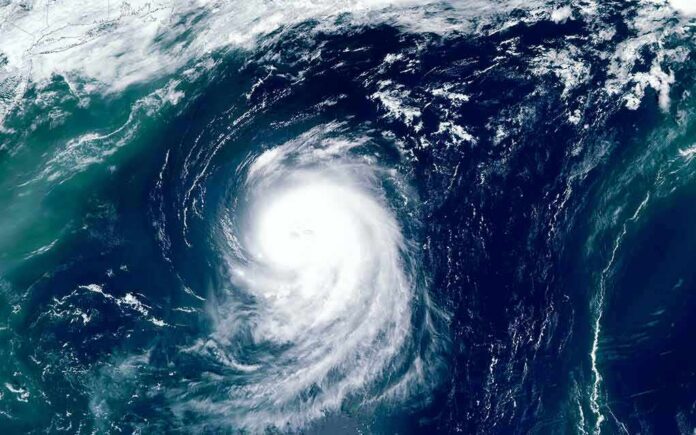
Hurricane Isaias is barreling toward the northern Gulf Coast with 80 mph winds, and forecasters say it will likely get stronger before it makes landfall.
Story Snapshot
- The National Hurricane Center says Isaias strengthened into a hurricane with maximum sustained winds near 80 mph.
- Forecasters expect the storm to keep intensifying and come close to major hurricane strength before reaching land.
- Hurricane and storm surge warnings now cover parts of Mississippi, Alabama and the Florida Panhandle.
- Landfall is expected late Friday or early Saturday along the northern Gulf Coast.
- State officials in Alabama and Florida have declared emergencies ahead of the storm’s arrival.
Storm Winds Climb Fast Over the Gulf
Isaias has already crossed the threshold into hurricane strength, with maximum sustained winds near 80 mph and higher gusts, according to the National Hurricane Center’s latest advisory. The agency said the storm would keep gaining strength through early Friday as it moves over warm Gulf waters toward the U.S. coastline.
Forecasters wrote that Isaias could come close to major hurricane status within 24 hours, a jump in intensity that would push the storm near Category 3 strength. The National Hurricane Center’s forecast discussion specifically flagged that “significant intensification” was still likely in the short term, even before the storm reaches the coast.
Track Points to Northern Gulf Coast Landfall
The hurricane is forecast to pass north of the Yucatan Peninsula before turning toward the U.S. mainland. National Hurricane Center forecasters said landfall would likely happen along the northern Gulf Coast late Friday or early Saturday, placing the storm’s most dangerous winds and surge directly in the path of coastal communities in Mississippi, Alabama and Florida.
Hurricane warnings now stretch from Ocean Springs, Mississippi, to the Bay-Gulf County line in Florida. Storm surge warnings cover an even wider stretch, running from the mouth of the Mississippi River to the Steinhatchee River in Florida, signaling the broad area at risk from rising water as the storm comes ashore.
Officials Respond With Emergency Declarations
National Hurricane Center Director Dr. Michael Brennan confirmed the storm’s rapid strengthening in a live update, telling viewers the system was expected to become a hurricane and then keep building strength before landfall. That assessment matched the timeline laid out in the agency’s written advisories over the past two days.
State leaders in Alabama and Florida have already declared emergencies, a step that frees up resources for evacuation, shelter operations and storm cleanup. Those declarations line up with the hurricane and storm surge warnings now in effect, underscoring how seriously officials are treating the threat to coastal residents.
Why Intensity Forecasts Carry Built-In Uncertainty
Predicting a storm’s wind speed days ahead of landfall is one of the hardest jobs in weather forecasting. The National Hurricane Center’s own verification records show that intensity forecasts made 24 to 48 hours out are often off by close to one full category on the five-step hurricane scale, even when the agency’s track predictions are accurate.
That gap between forecast and final outcome is normal and expected, not a sign of error. Forecasters rely on model guidance, satellite imagery and aircraft data to build their best estimate, but the true test comes only after the storm has passed, when meteorologists compare the advisory numbers against what instruments actually recorded on the ground and at sea.
For residents along the Gulf Coast, the takeaway is straightforward. The storm has already reached hurricane strength, warnings are in place across a wide stretch of coastline, and officials are urging people in the path to finish storm preparations before Isaias arrives late this week.
🚨 HURRICANE ISAIAS — 9:30 AM ET THURSDAY UPDATE 🧵
Isaias is strengthening in the Gulf. Life-threatening surge, destructive winds, flash flooding and outages threaten the northern Gulf Coast.
Landfall: late Friday or early Saturday. 1/
— Artanis (@ArtanisCap) October 8, 2026
Sources:
nhc.noaa.gov, prod-east-nhc.woc.noaa.gov, forecast.weather.gov