
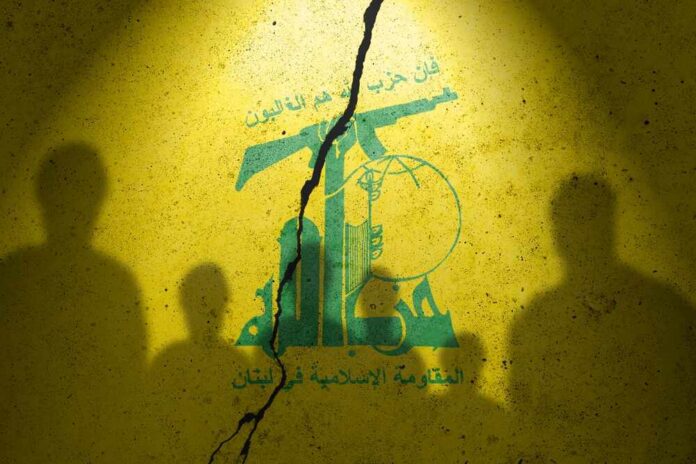
Hezbollah’s rockets hitting Israeli families during Passover are now colliding with America’s own war-weariness—right as Washington faces mounting pressure to get pulled deeper into a Middle East fight voters never asked for.
Story Snapshot
- Israeli Defense Minister Israel Katz warned Hezbollah leader Naim Qassem of an “extraordinarily heavy price” after more than 100 rockets were launched during Passover, including during the Seder night.
- Israeli reporting ties the escalation to a wider regional spike after Israel’s February 28, 2026, preemptive strike on Iran and subsequent exchanges involving Iranian missiles and proxy forces.
- Israel says it will not return to the pre–Oct. 7, 2023, security reality and signals continued military pressure in southern Lebanon up to the Litani River.
- U.S. conservatives are split: many support Israel’s right to self-defense, while others reject any slide toward another open-ended war that raises energy costs and expands federal power at home.
Katz’s warning after Passover rockets signals a harsher phase
Israeli Defense Minister Israel Katz issued a video warning aimed directly at Hezbollah Secretary-General Naim Qassem after rockets were launched at Israeli civilians during Passover celebrations, including during the Seder night. Reports describe more than 100 rockets fired since the holiday period began, with Israel’s leadership framing the timing as a deliberate strike on civilians during a sacred observance. Katz delivered the warning following a situational assessment with senior military leadership.
Israeli outlets highlighted Katz’s use of biblical imagery, comparing the attackers to Amalek, and emphasized personal threats directed at Qassem. The reporting also places Qassem’s leadership in the post–Hassan Nasrallah era, underscoring that Israel is speaking to the current command structure, not a legacy figure. While the messaging is unusually direct, the sources do not detail any specific immediate Israeli retaliation steps taken that same day.
How this escalated: Iran strikes, proxy rockets, and a multi-front spiral
Multiple reports connect the Passover rocket fire to a broader escalation track that intensified after Israel launched a preemptive strike on Iran on February 28, 2026. In the days leading into Passover, Israel’s military warned about possible coordinated actions involving Iran and Hezbollah. According to the timeline in the recent reports, Iran fired roughly 10 ballistic missiles shortly before the holiday began, followed by Hezbollah rockets during the Seder.
The same coverage anchors today’s violence to the post–October 7 landscape, when Hamas’ attack on Israel triggered a wider regional conflict and Hezbollah opened a northern front the next day. That context matters because it explains why Israeli leaders now reject any return to prior border arrangements and why they are treating holiday-time attacks as more than routine cross-border fire. The sources present the latest barrage as part of an active, continuing exchange.
Israel’s stated end state: no “pre–Oct. 7” normal and pressure to the Litani
Katz’s remarks also pointed to a longer-term Israeli objective in southern Lebanon, referencing security control up to the Litani River—an area tied to prior international expectations that Hezbollah forces remain north of that line. The reporting frames this as a refusal to accept the security paradigm that existed before October 2023. In practical terms, that signals sustained operations, not a quick punitive strike, especially if rocket fire continues.
At the same time, the published accounts leave key unknowns. No sources cited include a detailed response from Hezbollah leader Naim Qassem to Katz’s warning, and they do not confirm a specific operational plan or timetable beyond broad vows and deterrence language.
What U.S. conservatives are watching: war fatigue, energy pain, and constitutional skepticism
American conservatives following this closely are weighing two realities at once: Israel is facing rockets targeting civilians during a religious holiday, and the United States—now under Trump’s second-term administration—could face political and strategic pressure to take on a larger role if the Iran-proxy network escalates further. The sources describe an expanding Iran-Israel shadow conflict, and that kind of trajectory historically drives calls for U.S. involvement.
That’s where the base’s division becomes sharper. Many voters who backed Trump for border security, lower inflation, and an end to globalist foreign policy are also deeply skeptical of any drift into new regime-change wars. They remember how foreign entanglements can explode spending, increase domestic surveillance and security authorities, and squeeze families with higher energy costs.
Bottom line: Katz’s warning shows Israel signaling escalation and deterrence against an Iran-backed proxy force that struck during Passover, but still lacks clarity on near-term operational steps and the adversary’s response. For U.S. conservatives, the key question isn’t whether Israel can defend itself—it’s whether Washington can avoid getting dragged into another costly, open-ended conflict that undermines “America First” priorities at home.
Sources:
Israel says Hezbollah chief to pay ‘heavy price’ for Jewish holiday attacks
Israel says Hezbollah chief to pay ‘heavy price’ for Jewish holiday attacks
Hezbollah will pay heavy price for rocket fire during Passover, Katz vows
Israel says Hezbollah chief to pay ‘heavy price’ for Jewish holiday attacks