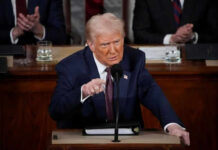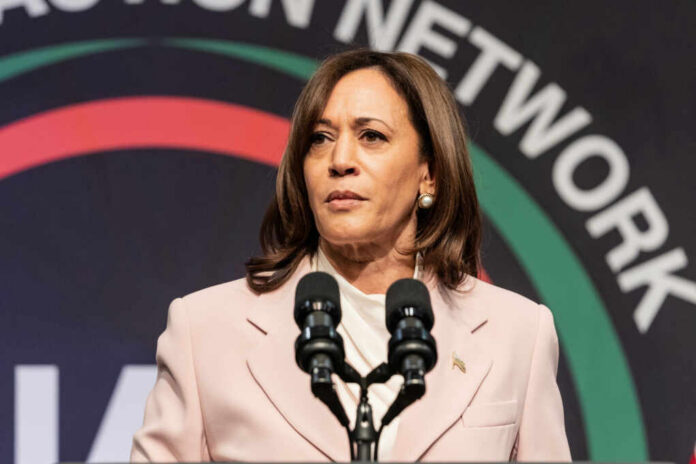
Kamala Harris is rallying donors to stop Trump from naming even one more Supreme Court justice—before there’s even a vacancy—turning the Court into the next front in America’s permanent political war.
Story Snapshot
- Harris promoted a fundraising push tied to Demand Justice, urging supporters to prevent Trump from picking “one, if not two” additional justices.
- Demand Justice outlined an initial $3 million effort that could scale to $15 million if vacancies open, pointing to the ages of Justices Clarence Thomas and Samuel Alito.
- The campaign reflects an escalated, preemptive strategy: building a war chest now to shape confirmation fights later.
- Trump’s first-term record—three Supreme Court appointments and 234 federal judges—explains why Democrats view the judiciary as the central battlefield.
Harris amplifies a preemptive campaign aimed at Trump’s next picks
Kamala Harris used social media to push a message that Democrats and allied activist networks have been sharpening since Trump first reshaped the courts: do not wait for a nomination fight—fund it now. Her post highlighted a plan backed by Demand Justice to organize early opposition to potential Trump Supreme Court nominees. The effort centers on the possibility of upcoming retirements and aims to build political pressure well in advance of Senate action.
Demand Justice described a $3 million opening phase and indicated the campaign could grow dramatically if vacancies occur, projecting totals up to $15 million. The group’s messaging has been tied to the idea that the Court must be stopped from becoming further aligned with Trump’s priorities. At the time of reporting, no vacancy had been formally announced, meaning the fundraising push is built around anticipated political opportunity rather than an active nomination.
Why the Supreme Court is still the central prize after 2024
Trump’s first term remains the modern benchmark for judicial impact: three Supreme Court nominees—Neil Gorsuch, Brett Kavanaugh, and Amy Coney Barrett—plus 234 federal judges confirmed with help from a Republican Senate. That run produced the current 6–3 conservative balance and helped cement a legal infrastructure likely to last decades. For Democrats, that history fuels urgency; for conservatives, it underscores that elections have consequences, including constitutional interpretation.
The broader context is a confirmation system already hardened by precedent. Senate Republicans blocked Merrick Garland in 2016 and then confirmed Barrett shortly before the 2020 election—moves that Democrats cite as proof the process is purely power politics. Democrats, facing fewer Supreme Court openings under Biden after Justice Stephen Breyer’s retirement and replacement by Ketanji Brown Jackson, have leaned more heavily on outside pressure campaigns, messaging operations, and donor mobilization to influence future outcomes.
What “dark money” pressure means for separation of powers
Demand Justice has been labeled a dark-money group in commentary about the campaign, and its strategy highlights a reality many voters dislike: major constitutional questions can become subject to donor-funded narrative warfare. Conservatives concerned about limited government and separation of powers will see a tension here. The Constitution gives presidents the power to nominate and the Senate the power to advise and consent, yet modern campaigns increasingly try to steer the process through pre-packaged media pressure rather than open debate on judicial philosophy.
What we know—and what remains uncertain—about vacancies and next steps
The campaign’s urgency is tied to speculation about potential retirements, with reporting noting the ages of Justices Clarence Thomas (77) and Samuel Alito (76). There is no confirmed vacancy and no nominee. That means the immediate story is less about a specific judicial candidate and more about a political infrastructure being built ahead of time—an attempt to shape perceptions of legitimacy before the constitutional process even begins.
For voters who are already exhausted by inflation, overspending, and years of ideological conflict, this fight can feel like another elite power struggle disconnected from daily life. Still, the Court’s rulings affect regulatory power, executive authority, and major social disputes, which is why both parties treat it like a governing weapon. The practical takeaway is simple: as Trump’s second-term administration governs, the next Supreme Court opening—if it comes—will trigger a rapid, heavily funded confrontation.
Sources:
Jonathan Turley: Kamala Harris backs radical plan to block Trump SCOTUS picks
How Harris, Trump would put their stamp on the courts