
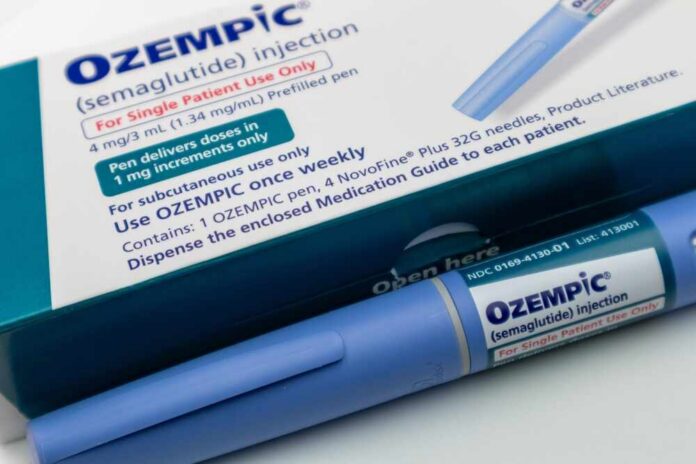
Popular diabetes and weight-loss drugs like Ozempic may slash cancer death rates by more than half, new research reveals, raising questions about whether pharmaceutical companies and federal health agencies have been sitting on a potential breakthrough for America’s deadliest disease.
Story Highlights
- UC San Diego study shows 58% lower five-year death rate in colon cancer patients taking GLP-1 drugs compared to non-users
- Research indicates cancer-fighting benefits occur independently of weight loss, suggesting direct anti-tumor mechanisms
- Evidence shows reduced risk across 10 of 13 obesity-related cancers, yet FDA has approved no cancer prevention claims
- Americans face $1,000 monthly costs for drugs that may prevent cancer while regulators demand more studies before expanding access
Dramatic Survival Improvements in Colon Cancer Patients
Researchers at UC San Diego analyzed data from 6,800 colon cancer patients and discovered those taking GLP-1 receptor agonist medications experienced a 15.5% five-year mortality rate compared to 37.1% for non-users. This finding represents a stunning 58% reduction in death rates, particularly pronounced among patients with body mass indexes above 35. The protective effect appeared strongest in advanced-stage cancers, where traditional treatments often fail. Lead researcher Raphael Cuomo described the results as showing a “strong protective effect” that appears to work through anti-inflammatory pathways and direct mechanisms beyond simple weight reduction.
Cancer Risk Reductions Beyond Weight Loss
A comprehensive JAMA Network Open study examining 1.6 million patients found GLP-1 drugs reduced risk for 10 of 13 obesity-associated cancers when compared to insulin treatment. Colorectal cancer risk dropped 35%, while breast cancer presentations decreased significantly in treated populations. Earlier research comparing GLP-1 medications to bariatric surgery patients revealed a 41% additional cancer risk reduction beyond what weight loss alone could explain. These findings challenge conventional assumptions that obesity drugs fight cancer solely by helping patients shed pounds, pointing instead to direct biological mechanisms like reduced inflammation and improved insulin sensitivity that may independently suppress tumor growth.
Breast Cancer Treatment and Prevention Potential
Data presented at the San Antonio Breast Cancer Symposium demonstrated GLP-1 drugs cut progression of ductal carcinoma in situ by 74% and reduced all-cause mortality by 46% among breast cancer patients. Laboratory studies published in peer-reviewed journals identified GLP-1 receptors on breast cancer cells themselves, showing these medications directly inhibit tumor cell proliferation by reducing Ki67, a marker of cancer cell division. Duke University researchers found GLP-1 drugs may restore anti-tumor immunity weakened by obesity, potentially making cancer vaccines more effective. For the estimated 42 million Americans with diabetes or obesity at elevated cancer risk, these mechanisms suggest prevention possibilities Washington bureaucrats have yet to acknowledge or facilitate through streamlined approvals.
Regulatory Roadblocks and Access Challenges
Despite mounting evidence from multiple large-scale observational studies, the FDA has approved no cancer prevention or treatment indications for GLP-1 medications, insisting on randomized controlled trials that could take years to complete. This regulatory caution leaves millions of high-risk Americans unable to access potentially life-saving drugs through insurance coverage, forcing out-of-pocket costs near $1,000 monthly. Memorial Sloan Kettering Cancer Center and other institutions acknowledge the promising data while calling for physician consultations before use, citing small preliminary signals of increased kidney cancer risk that require further investigation. The American Cancer Society recognizes potential benefits for breast, prostate, and colon cancers but defers to federal agencies demanding more proof—a familiar pattern where government gatekeepers prioritize process over potential cures while pharmaceutical companies like Novo Nordisk and Eli Lilly dominate a market exceeding $100 billion annually.
The disconnect between emerging real-world evidence and federal approval processes reflects broader frustrations with a healthcare bureaucracy seemingly more concerned with procedural perfection than addressing America’s cancer crisis. While researchers emphasize these drugs show “independent protective effects” operating through multiple anti-cancer pathways, patients face a familiar dilemma: promising treatments trapped in regulatory purgatory while costs remain prohibitive for average families. Whether this represents appropriate scientific caution or another example of government inefficiency favoring institutional inertia over innovation depends largely on one’s faith in federal agencies to balance safety against urgency—a faith many Americans exhausted long ago.
Sources:
GLP-1 Drugs Linked to Dramatically Lower Death Rates in Colon Cancer Patients – UC San Diego Today
GLP-1 Drugs Lower Obesity-Related Cancer Risk – Healthline
GLP-1s Research SABCS – BreastCancer.org
Obesity Weakens Cancer Immunity. Can GLP-1 Drugs Turn It Back? – Duke University School of Medicine
GLP-1 Receptor Agonists and Breast Cancer – PMC
Weight Loss Drugs – American Cancer Society
Weight Loss Injections and Cancer: 6 Questions Answered – MD Anderson Cancer Center