


ICE Confrontation Escalates in Minnesota
An anti-ICE activist’s TikTok confrontation in Minnesota is the latest reminder that social-media stunts are colliding with real federal enforcement operations targeting dangerous criminals.
Quick Take
- A Rochester, Minnesota, TikTok video shows activist Olivia Jensen confronting ICE officers during an active operation.
- Jensen accused agents of intimidation and called a Hispanic officer a “race traitor,” prompting officers to explain they were pursuing a suspected child molester—an on-scene claim not independently verified in the available research.
- The incident sits inside a broader surge of enforcement and protests, including DHS describing a 2,500+ arrest operation as its largest.
- Minneapolis-area tensions escalated after the fatal shooting of “legal observer” Renee Nicole Good during a January raid, with officials disputing what happened.
Rochester TikTok confrontation spotlights the new front line: enforcement meets influencer politics
Olivia Jensen posted a TikTok on February 13, 2026, documenting a confrontation with ICE officers in Rochester, Minnesota, after she followed them during an enforcement action. Jensen claimed agents were “running her plates” and trying to intimidate her by visiting a former residence. The video, as described in the provided reporting, shows her escalating the exchange by calling a Hispanic ICE officer a “race traitor,” shifting the encounter from oversight to provocation.
According to the account summarized in the research, the Hispanic officer responded that the team was attempting to apprehend a child molester, and a second (white) officer later delivered a pointed rebuttal suggesting Jensen was indifferent to victims of violent crime. The key factual limitation is that the underlying case details—who ICE sought and whether the suspect description is accurate—are not independently confirmed in the materials provided. What is clear is the dynamic: an activist filming, an operation underway, and officers prioritizing mission focus.
DHS describes a major enforcement surge as activists shift from protests to direct interference
The Rochester clip landed during a period of intensified immigration enforcement and organized anti-ICE activism across Minnesota and beyond. DHS described the current crackdown as the agency’s largest enforcement operation, reporting more than 2,500 arrests. That scale matters because it increases the odds of repeated street-level confrontations—at homes, in parking lots, and in public spaces—where agents must balance public scrutiny, operational security, and officer safety while still carrying out lawful orders.
Reporting from Minneapolis also describes arrests tied to protests outside the Bishop Henry Whipple Federal Building, with law enforcement alleging demonstrators threw objects, shouted profanities, and poured water on roads to create hazardous conditions. DHS has emphasized that assaulting law enforcement or destroying federal property can be charged as federal felonies, signaling a posture that treats interference as more than “speech.” Conservatives who watched 2020-era disorder unfold will recognize the pattern: activists test boundaries, institutions hesitate, and normal citizens absorb the consequences.
The Renee Good shooting remains a flashpoint—and the facts are still contested
Tensions rose sharply after January 7, 2026, when ICE agent Jonathan Ross fatally shot 37-year-old Renee Nicole Good during a federal immigration enforcement raid in Minneapolis. Good was described as a white U.S. citizen and “legal observer” who monitored law enforcement actions at protests. Federal authorities said Good attempted to ram officers with her SUV and that Ross suffered internal bleeding after being struck. Local leadership has disputed that framing, underscoring how politically charged the episode remains.
President Trump has characterized Good as a “professional provocateur” who deliberately drove at officers, while Minneapolis Mayor Jacob Frey dismissed that claim as “nonsense” and called the officer’s actions reckless. With investigations and legal processes appearing ongoing, the most responsible conclusion from the provided research is limited: officials disagree about intent, and the event has become a rallying symbol for anti-ICE organizers. That symbolism influences how activists interpret later confrontations, including filmed incidents like Rochester.
Organized “weekend of action” protests show how national networks amplify local clashes
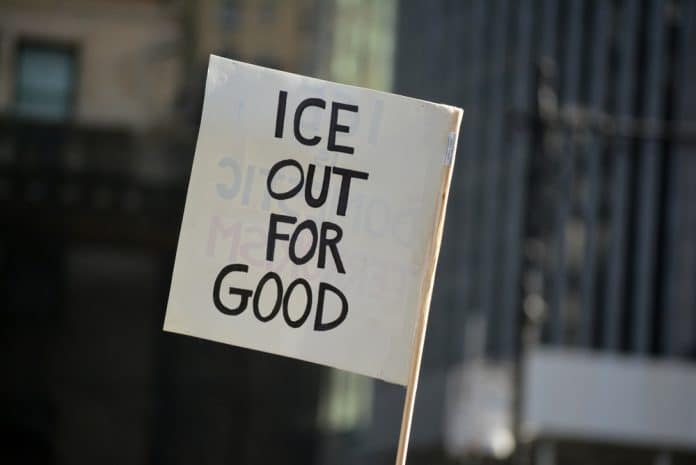
Anti-ICE activism is not confined to one city block or one viral video. The “ICE Out for Good” coalition—described as largely organized by Indivisible—called for a “weekend of action” around January 11, 2026, aiming to organize more than 1,000 anti-ICE events nationwide. Protests were reported in multiple states, including Texas, California, and Oregon, with arrests in several locations. This is the infrastructure behind what looks, online, like spontaneous outrage.
In Minnesota, another incident on January 10 involved ICE agents being confronted at a Minneapolis gas station by bystanders objecting to questioning a man about citizenship without a warrant, with reports describing agents forced to flee. Supporters of limited government and constitutional rights should separate two issues: Americans have the right to record and criticize the government, but they do not have the right to obstruct lawful enforcement or create dangerous conditions. The unresolved question is whether institutions will consistently enforce that line.
Sources:
At least 4 alleged anti-ICE agitators arrested in Minneapolis amid protests, agency says
Left-wing group backs tens of thousands of anti-ICE demonstrations nationwide