

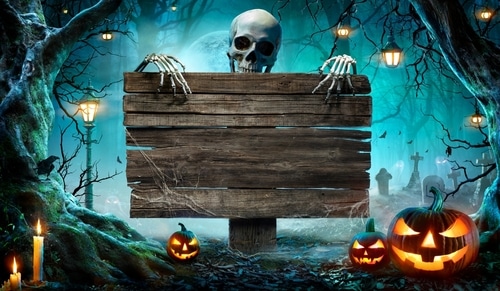

Halloween, also known as All Hallows’ Eve, is a holiday celebrated on October 31st. It originated in ancient Celtic traditions and has evolved over time to become a popular holiday in many countries around the world.
The history of Halloween can be traced back to the ancient Celtic festival of Samhain. Samhain marked the end of the harvest season and the beginning of winter, a time of year often associated with death. The Celts believed that on the night of Samhain, the boundary between the living and the dead became blurred, and spirits could easily pass into the human world.
To protect themselves from these spirits, the Celts would light bonfires and wear costumes and masks to scare them away. They would also leave food and drinks outside their homes as offerings to the spirits.
When the Roman Empire conquered Celtic territories in the 1st century AD, they incorporated elements of Samhain into their own festivals, including Feralia (a day to honor the dead) and Pomona (a celebration of the Roman goddess of fruit and trees).
In the Middle Ages, the Christian Church created All Saints’ Day and All Souls’ Day to honor Christian saints and the souls of the deceased. These holidays were celebrated on November 1st and 2nd, and incorporated some of the traditions of Samhain.
Over time, the traditions of Samhain, Feralia, Pomona, All Saints’ Day, and All Souls’ Day merged into the holiday we now know as Halloween. The holiday was brought to North America by European immigrants in the 19th century and has since become a popular celebration in many parts of the world.
Today, Halloween is celebrated in a variety of ways. Children often dress up in costumes and go trick-or-treating, while adults may attend costume parties or visit haunted houses. Traditional Halloween decorations include carved pumpkins, spider webs, and black cats.
Despite its pagan origins, Halloween has become an important part of many cultures and continues to evolve over time. Its enduring popularity is a testament to the power of tradition and the enduring fascination with the supernatural and the unknown.