
A small Chinese-made training plane just struck Beijing’s tallest skyscraper, and China’s frantic effort to erase the evidence is raising bigger questions than the crash itself.
Story Snapshot
- A Sunward SA 60L Aurora light aircraft hit the upper floors of Beijing’s 109‑story CITIC Tower, sending debris and glass down to the streets.[8]
- Chinese officials confirmed the pilot was killed and more than a dozen people were injured, but are withholding key details like the cause and the pilot’s identity.[7][9]
- Police blocked roads, evacuated the tower, and reportedly forced bystanders to delete videos and photos as online clips vanished inside China.[4][8]
- The crash pierced some of the world’s most restricted airspace, raising hard questions about security, censorship, and what the public is allowed to know in a crisis.[1][8]
What Happened Over Beijing’s Financial Heart
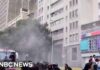
On Friday evening local time, a small Sunward SA 60L Aurora light aircraft slammed into the upper floors of the CITIC Tower, the tallest building in Beijing and the headquarters of the big state-owned CITIC Group.[1][8] Witnesses described a thunderous impact as the plane hit around the mid-levels of the 1,700‑foot skyscraper, roughly the size of a car.[2][8] Videos shared online showed fragments of the aircraft and glass raining down, with at least two windows visibly shattered and part of the tail section on the ground.[2][8]
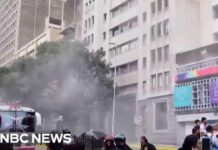
Debris landed on nearby roads and green areas, reportedly breaking a taxi window and sparking small fires near the base of the tower.[8][9] Emergency crews rushed in within minutes as thick smoke rose from the ground floor area where wreckage lay scattered.[2][5] Fire engines, police vehicles, and ambulances ringed the site, while parts of the building were evacuated and surrounding roads were sealed off to both cars and pedestrians.[4][8] For many Beijing residents, a normal workday turned into a scene of confusion, fear, and unanswered questions.[2]
Casualties, Mystery, And Airspace Questions
The aircraft has been identified as a Chinese‑built Sunward SA 60L Aurora, registration B‑12PP, typically used for pilot training, recreational flights, and aerial photography.[2][6] International and local reports say only the pilot was onboard; Chinese authorities later confirmed that the pilot was killed and at least 13 people were injured on the ground and inside the tower.[7][9] Early numbers were messy, with some social posts claiming nine injuries before officials settled on 13, highlighting how unclear the situation was in the first hours.[10]
Flight tracking data posted by Flightradar24 showed the plane departing Shifosi Airport east of the city and then sharply deviating from its planned path, ending just east of the CITIC Tower shortly before 6 p.m. local time.[1][17] That matters because central Beijing’s airspace is tightly controlled, with civilian flights and drones normally banned over the downtown business district.[1] People familiar with Beijing’s rules noted how unusual it is for any small general aviation aircraft to be flying in this zone at all, much less striking a flagship skyscraper tied to a major state-owned financial conglomerate.[3][8]
Censorship, Control, And Why This Feels Familiar
While foreign outlets like CNN, the New York Times, and others pushed out videos and eyewitness accounts, state-linked channels and Chinese officials stayed silent for hours after the crash.[17][8] Only the next day did the local Chaoyang District government issue a short statement on the social media platform WeChat, confirming the pilot’s death and the 13 injured but offering no motive, no cause, and no name.[7][9] That limited and delayed response fits a pattern many Americans recognize: when something goes wrong, the people in charge talk as little as possible.
UPDATE: PILOT KILLED, 13 INJURED IN BEIJING SKYCRAPER PLANE CRASH
Chinese authorities have officially confirmed that the pilot was killed after a small aircraft crashed into the China Zun skyscraper in Beijing. https://t.co/NiwVBoZnhN
— Inside the conflict (@InsidConflict) June 27, 2026
Reports from on the ground say police officers blocked bystanders from filming, ordered people to delete photos and videos, and pushed crowds away from the area.[4][9] Clips that briefly appeared on Chinese platforms were quickly scrubbed, leaving foreign media and reposts on global sites as the main record of what happened.[4][8] This kind of tight information control fuels suspicion across the political spectrum. People in both the United States and China see powerful insiders closing ranks and deciding what the public is “allowed” to know after a major incident.
Why Americans Should Care About A Crash In Beijing
For Americans already worried about an unaccountable “deep state,” the Beijing crash hits familiar nerves. A small training plane breached some of the most guarded airspace in the world and struck the financial core of China’s capital.[3][8] Yet the public still does not know whether the crash was an accident, a suicide, a protest, or something more organized. The pilot’s identity remains officially withheld, and there is no released investigation report, flight recorder data, or structural damage assessment.[7][8]
Many readers in the United States are frustrated by our own government’s slow, filtered responses to crises, from industrial accidents to national security failures. Watching China move quickly to control images, limit reporting, and drip out only basic facts reminds people here that secrecy and spin are not limited to one party, one ideology, or one country. Instead, it looks like a shared habit of modern governments and large corporations that fear public anger more than they respect public trust.
Security, Transparency, And The Bigger Pattern
Experts say incidents like this are rare but not unheard of; there have been fewer than 15 known cases in the past decade of small aircraft entering restricted urban airspace and hitting major structures in cities like New York, London, and Moscow.[1] What makes Beijing’s case stand out is the combination of extreme airspace control, the symbolic target, and aggressive censorship that followed. That mix turns a single crash into a test of how much ordinary people are allowed to see and judge for themselves.[1][8]
For Americans on both the left and the right who feel the system is rigged by elites, this story is another reminder: when power is concentrated, hard questions get buried. Whether it is Beijing blocking videos or Washington dodging straight answers, citizens are left piecing together events from leaks, foreign media, and social posts. The Beijing crash shows how fragile transparency can be—and why many worry that, when something truly important goes wrong, the full truth may never reach the people who live with the consequences.
Sources:
[1] YouTube – Small aircraft crashes into Beijing skyscraper, eyewitnesses say
[2] Web – Small airplane reportedly crashes into Beijing’s tallest skyscraper
[3] YouTube – Small Plane Crashes into Beijing’s Tallest Building Citic Tower | WION
[4] YouTube – Small Plane Crashes Into Citic Tower In Beijing As Police Seal Off …
[5] Web – Plane crashes into Beijing’s tallest building; damage reported – NPR
[6] Web – Small aircraft crashes into Beijing’s tallest building, killing pilot …
[7] Web – On June 26, 2026, a Sunward SA 60L Aurora light aircraft (B-12PP …
[8] Web – Small plane crashes into Beijing’s tallest skyscraper – ABC News
[9] Web – Small aircraft appears to strike Beijing’s CITIC Tower, with dramatic …
[10] Web – Developing | China confirms death of pilot in Citic Tower plane crash
[17] Web – Plane Crashes Into Beijing’s Citic Tower Skyscraper—City’s Tallest …