
As NATO generals huddle behind closed doors in Brussels, American taxpayers and troops are once again expected to underwrite Europe’s security while many allies still hesitate to pull their own weight.
Story Snapshot
- NATO’s 194th Chiefs of Defence session in Brussels gathers top brass to talk “unity” and “deterrence” while Americans keep paying most of the bill.
- Admiral Giuseppe Cavo Dragone opens the meeting, stressing resilience as NATO stretches from Ukraine to the Indo‑Pacific. [1][3][6]
- The public gets slogans and video clips, not full transcripts, limiting real accountability for what is promised in America’s name. [2][4][8]
- Trump’s push for fair burden‑sharing collides with a Europe still comfortable relying on U.S. power as global threats grow.
NATO Chiefs Converge in Brussels While U.S. Still Carries the Load
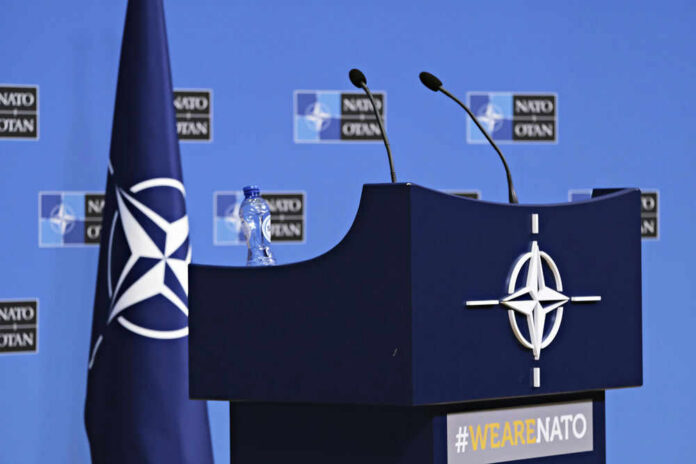
Brussels hosted the 194th NATO Military Committee in Chiefs of Defence session on 21–22 January 2026, bringing together the senior military officers from all thirty‑two allied nations at NATO headquarters. Admiral Giuseppe Cavo Dragone, who chairs the NATO Military Committee, presided over the gathering, joined by Supreme Allied Commander Europe General Alexus Grynkewich and Supreme Allied Commander Transformation Admiral Pierre Vandier. Officially, they met to address today’s “security challenges and opportunities” across the alliance. [1][6]
NATO describes this committee as its highest military authority, meaning the people in that Brussels room are the ones ultimately shaping the detailed plans that could put American troops into harm’s way. [6] The chiefs received assessments on readiness, deterrence, and defence from the Supreme Allied Commander Europe, and on modernization priorities from the Supreme Allied Commander Transformation, underscoring that these talks directly influence posture, deployments, and spending priorities across the entire alliance. [1][3]
Opening Remarks Emphasize Unity, Resilience, and Endless Commitments
Admiral Cavo Dragone opened the session with remarks that, according to NATO and affiliated reporting, highlighted alliance unity, resilience, and adaptability in an increasingly complex security environment. [1][3][8] NATO’s own video products and previous opening‑session recordings show him thanking chiefs for their “leadership” and stressing that NATO must remain ready to deter threats across all domains. [4][8] A separate report described him characterizing the current security environment as persistently challenging as the committee “opens 2026.”
NATO’s write‑ups emphasize that the chiefs focused on deterring adversaries, accelerating the delivery of key capabilities, and maintaining credible defence across land, sea, air, cyber, and space. [1][3] The alliance also wrapped these remarks in familiar language about “dynamic” and “united” responses to threats, portraying the session as proof that the alliance remains cohesive despite tensions over spending and policy. [1] A video press conference afterwards repeated that the meeting showed NATO’s unity and commitment to tackling modern security challenges.
Ukraine, the Indo‑Pacific, and the Ever‑Expanding Mission Set
Beyond headline talk of unity, the chiefs of defence turned to specific theatres, including Ukraine and the broader neighbourhood. NATO’s release notes that they met within the NATO‑Ukraine Council format and discussed continued support as the war grinds on, a commitment that in practice keeps leaning heavily on American money, equipment, and intelligence. [1][3] The session also brought in representatives from Georgia, highlighting ongoing interest on Russia’s periphery. [3][6]
The agenda did not stop at Europe’s borders. NATO says the Chiefs of Defence also engaged with Indo‑Pacific partners, signalling an expanding geographic focus that reaches into the backyard of China and North Korea. [1][3][6] That kind of outreach may sound strategic in Brussels, but it raises obvious questions for Americans about mission creep, open‑ended commitments, and whether Europe is truly prepared to share the risk if confrontation spreads across two major regions at once.
Thick on Messaging, Thin on Transparency for Voters Back Home
For all the talk about defending democracy, the public record of what was actually promised in Brussels remains surprisingly thin. NATO has confirmed the meeting, the participants, and the general themes, and it has posted live or recorded video of opening remarks and joint press conferences. [1][2][4][5] Yet the alliance has not published a verbatim transcript of Admiral Cavo Dragone’s January 2026 opening statement, leaving citizens to rely on short summaries and edited clips rather than the full text. [2][4][8]
This is not unusual in NATO communications, where highly produced messaging about “unity” and “readiness” tends to dominate coverage of these meetings. [1][3] However, when the stakes involve American forces, taxpayer dollars, and the possibility of escalation with nuclear‑armed adversaries, that lack of detailed documentation and independent scrutiny should concern anyone who believes in accountable government. Without full transcripts, it is hard for lawmakers and voters to test whether NATO’s public claims actually match the promises made behind the scenes.
Trump’s Burden‑Sharing Fight Meets Europe’s Dependence
NATO’s own narrative repeatedly stresses that the alliance protects “almost one billion people,” language that echoes earlier comments from past NATO Military Committee chairmen about building on a proud history to preserve peace. [7] Yet that story glosses over the uncomfortable reality that the United States still bankrolls a disproportionate share of the alliance’s military muscle, even as European economies remain sluggish and welfare states grow. These Brussels meetings cannot be separated from that long‑running imbalance.
Under President Trump’s second term, Washington has made it clear that free‑riding is no longer acceptable and that allies must meet real defence‑spending and capability targets, not just issue communiqués. The Brussels session shows that NATO can gather its generals and strike a united tone, but it does not prove that every capital is finally prepared to pay its fair share or accept serious risk. Until Europe backs its words with concrete commitments, conservatives will be right to watch these polished NATO events with cautious skepticism and demand that American interests come first.
Sources:
[1] Web – Top NATO military authorities meet in Brussels
[2] YouTube – LIVE: NATO military committee meeting in Brussels
[3] Web – NATO Military Committee defense chiefs meet to discuss global …
[4] YouTube – Opening Remarks of the NATO Military Committee in Chiefs of …
[5] YouTube – NATO Chiefs Of Defence Hold Press Conference In Brussels | Ukraine
[6] Web – Military Committee in Chiefs of Defence Session – updated – NATO
[7] Web – Milley Attends NATO Military Committee Meeting in Brussels
[8] Web – Opening remarks | NATO Video